Yearly Archives: 2009

A 60 second RU history lesson: the Rutgers Latin motto ‘Sol iustitiae et occidentem illustra’

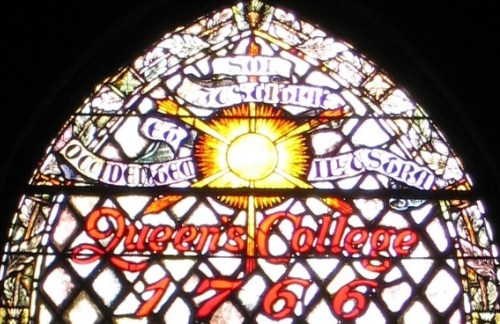
charterwindowThe Charter Window in Rutgers’ Kirkpatrick Chapel

Better late than never.

As it so happens, yesterday—26 March 2009—marked the 373rd anniversary of the founding of the University of Utrecht in the Netherlands. Perhaps you celebrated it. If not, here’s a 60 second history spot on why it matters for Rutgers folks…

On 26 March 1636, goes the story, Utrecht’s students saw their two year old “Illustrious School”—sort of like a medieval junior college—upgraded to university status. From that point on they were able to obtain academic and doctoral degrees—and (among other privileges) to escape taxes on beer and wine.

Now here is where we must turn to a 1995 pamphlet by Roelof van den Broek, Hy leeret ende beschuttet. Over het wapen en de zinspreuk van de Universiteit Utrecht, which Professor Leen Dorsman, official Historian of Utrecht University, generously summarized for the benefit of Rutgers Classics.

Already from its start in 1634 the Illustrious School seems to have used a sun emblem with Latin motto ‘Sol Iustitiae Illustra Nos‘ (“Sun of Righteousness, Enlighten Us”). For instance, the professor of classical studies (Justus Liraeus) used the phrase in his inaugural lecture. Perhaps the verb “illustra” was meant to evoke the “Illustrious School” itself.

In any case, on Opening Day in 1636, Utrecht University’s first “Rector Magnificus” was presented with those visuals and text on the official seals and crest of the new university.

The points shooting out from the sun in the contemporary Utrecht logo are in fact not sunrays but stylized flames. In the emblem of the original 17th century Sol one can also see some small engraved lines between the flames: those represent the rays of the sun. This all goes back to an older tradition in which God was presented as a sun with flames and rays (i.e., the power to both burn and radiate). The shield in the center of the sun is that of the town of Utrecht.

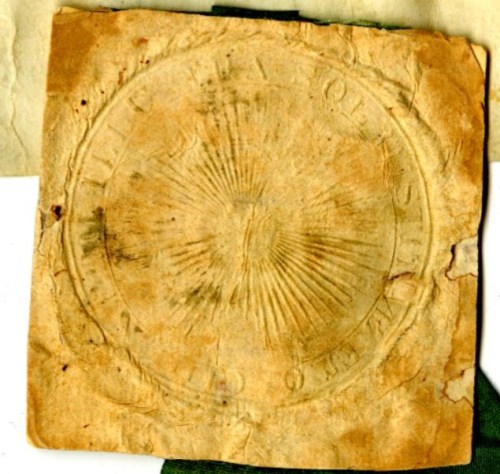
And here is where the Rutgers angle comes in. The seal of Rutgers (est. 1766 as Queen’s College) is directly adapted from that of Utrecht, but without the town shield, and with a slightly altered motto: ‘Sol Iustitiae Et Occidentem Illustra‘ (“Sun of Righteousness, Enlighten also the West”). The Latin is a conflation of the Biblical texts of Malachi 4:2 and Matthew 13:43.

twologos1

Now, the ‘Illustra‘ motto is not found in the earliest charter of our university, dated 20 March 1770. [That’s another anniversary that you just missed—Ed.]

However it does show up on the earliest extant Rutgers diploma, which is that of Simeon DeWitt, Class of 1776.

dewitt2Seal from the diploma of Simeon DeWitt, Class of 1776, with “Sun of Righteousness” and Latin motto. Credit: Thomas Frusciano / Rutgers Special Collections and University Archives

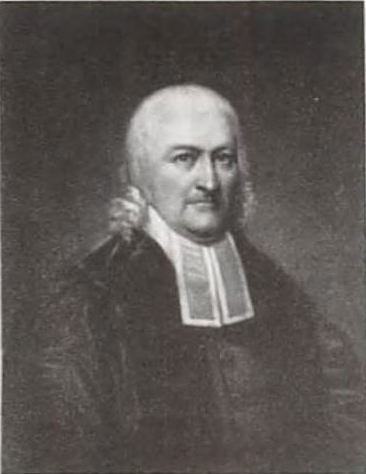
So it certainly does go back to the earliest decades of the institution. Indeed, it was almost certainly one Rev. John H. Livingston (1746-1825) who suggested that Queen’s College adopt the Utrecht seal and motto.

livingston

The Reverend John Henry Livingston, president of Rutgers 1810-1825

But there’s just a bit more to say… Continue reading

RU Classics luvs LOL’able Facebook ‘Aeneid’

For parodies of Vergil, the Golden Age really was the seventeenth and eighteenth centuries.

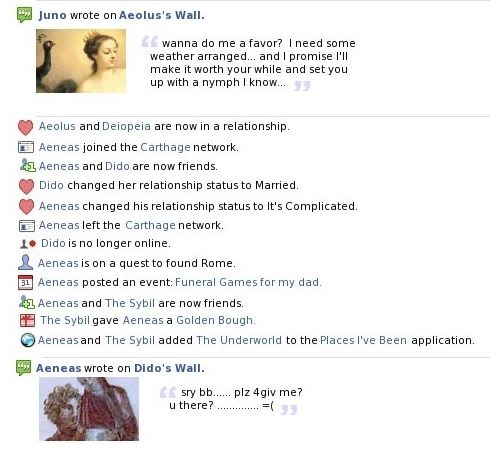
Or so it seemed, until University of Maryland Classics grad students Erika Grace Carlson and Heather Day dropped their Facebook Aeneid on a wholly unprepared world.

aenfacebook1

Midway through the first week of March, Facebook Aeneid had gone completely viral here at Rutgers Classics. Many undergraduates termed it “genius” (often with further modifiers).

Indeed, for Carlson and Day to get across much of the narrative and tone of Vergil’s Aeneid in something like 300 words does take brilliance. Especially while simultaneously summing up the content of the better part of 175 200 million Facebook pages.

The Rutgers Classics Department Blog was determined to find out the background to this coup. So here is Erika Carlson telling the story of the duo in an exclusive interview…

RU: Can you tell our millions of readers a bit about yourselves?

EGC: Heather and I are both grad students in the Master’s program at University of Maryland. Last semester, we bonded over our pasts at small liberal arts colleges (her past at Wheaton, mine at Bryn Mawr), our shared love of BBC America, and our similar senses of humor. While Heather wants to teach high school Latin, and I’m aiming for a PhD so I can eventually teach Classics at the college level, we’re both very concerned with finding ways to reach out to our students, present and future.

aenfacebook2RU: How on earth did you get the idea for the Aeneid Facebook parody?

EGC: Admittedly we’d seen fake Facebook feeds before—there was one that retold Hamlet which served as our primary inspiration.

But we figured, why should we let English majors have all the fun? Greek and Roman literature seemed just as, if not more, rich with incidents that could be easily translated into internet drama. At first our discussion was mostly hypothetical—if we could take a Classical text and make it into a Facebook feed, which one would work best?—but by the time we’d worked out that Aeneas and Dido were an “It’s Complicated” on Facebook, we were pretty sold on the idea.

hay_carlsonMaryland Classics grad students Heather Day (left) and Erika Carlson

RU: How long did it take you to put the Aeneid Facebook page together?

EGC: The text took about an hour and a half, and we finished that early last November. Making the photoshopped image took a few months after that, because I’d work on it for an hour or two at a time on select weekends. Admittedly, I was being a bit of a perfectionist in trying getting the look just right, and dragging my feet. Fortunately, Heather was TAing myth during Maryland’s winter semester, and gave me an ultimatum to finish it on Inauguration Day, so I got it finished just in time for the Aeneid lesson.  Heather distributed it to her students in paper form the very next day. Continue reading

Tenure-track positions at RIC, Vanderbilt for RU Classics PhDs Golden, Johnson

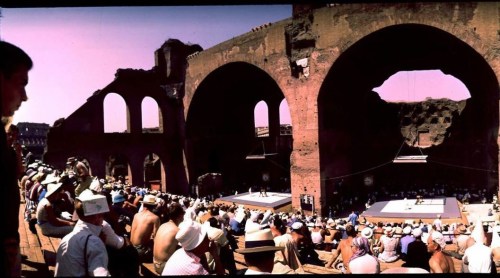
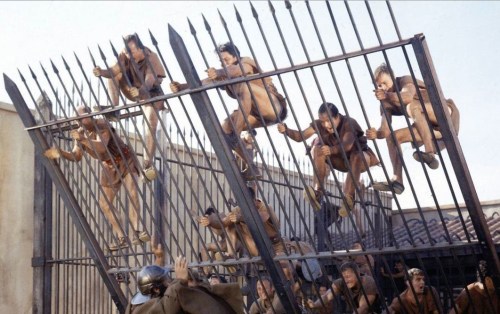
maxentiusGreco-Roman wrestling at the Basilica of Maxentius, Rome Olympics, August 1960. Credit: George Silk/LIFE

Perhaps no year in recent decades has posed more of a struggle for academic job seekers that the current one. And for PhDs in Classics and Archaeology, the 2008/9 season has proved especially tough.

So it’s doubly good news that in the last weeks two recent Rutgers PhDs in Classics have landed highly desirable tenure-track positions. [Is this true? I haven’t seen it in Famae Volent—Ed.]

Gregory K. Golden (BA Penn, MA Chicago, MLitt Oxford [New College], PhD 2008 Rutgers) will join the History faculty of Rhode Island College (Providence RI) as an assistant professor. This current year Greg has been teaching Western Civilization for the Rutgers-Newark Department of History as well as Medieval Latin for Rutgers-New Brunswick Classics.

Michael Johnson (BA Truman State, MA UNC-Chapel Hill, Fellow of the American Academy in Rome’07, PhD 2007 Rutgers) moves to Nashville TN in September 2009 to start as an assistant professor of Classical Studies at Vanderbilt University. Mike is presently in his second year as Visiting Assistant Professor at Davidson College in North Carolina.

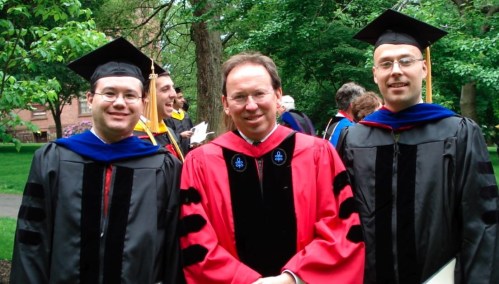
goldenbrennanjohnsonRU Commencement May 08, from left: Golden, TC Brennan, Johnson

Here’s a factoid worth noting. All Rutgers PhDs in Classics this decade have received immediately on graduation an academic appointment in their field. As of September 2009 virtually all will be tenured or tenure track. Here’s the roster:

PhD 2008 Ryan C. Fowler
Dissertation: “The Platonic Rhetor in the Second Sophistic”
Now: Grinnell College, Visiting Assistant Professor, Classics and Philosophy

PhD 2008 Gregory K.Golden
Dissertation: “Emergency Measures: Crisis and Response in the Roman Republic (from the Gallic Sack to the Tumultus of 43 BC)”
Now: Rutgers University, Instructor, History and Classics
Soon: Rhode Island College, Assistant Professor, History (from Sep. 2009)

PhD 2008 Andrew G. Scott
Dissertation: “Change and Discontinuity within the Severan Dynasty: The Case of Macrinus”
Now: Hendrix College, Assistant Professor, Classics

PhD 2007 Michael Johnson (FAAR’07)
Dissertation: “The Pontifical Law of the Roman Republic”
Now: Davidson College, Visiting Assistant Professor, Classics
Soon: Vanderbilt University, Assistant Professor, Classical Studies (from Sep. 2009)

PhD 2004 Debra Lynn Nousek
Dissertation: “Narrative style and genre in Caesar’s Bellum Gallicum
Now: University of Western Ontario, Assistant Professor, Classical Studies

PhD 2003 Lawrence Melvin Kowerski III
Dissertation: “Simonides on the Persian Wars: a study of the elegiac verses of the ‘New Simonides’”
Published as: Simonides on the Persian Wars: a study of the elegiac verses of the “New Simonides” (Routledge 2005)
Now: Hunter College (CUNY): Associate Professor of Classics

PhD 2002 Karen E. Klaiber Hersch (FAAR’01)
Dissertation: “Nuptiae Romanae: the wedding ceremony in Roman literature and culture”
Now: Temple University: Assistant Professor of Greek and Roman Classics

PhD 2002 Ilaria Marchesi
Dissertation: “A complex prose: the poetics of allusion in the epistles of Pliny the Younger”.
Published as: The art of Pliny’s letters: a poetics of allusion in the private correspondence (Cambridge University Press/America 2008)
Now: Hofstra University: Associate Professor of Classics and Comparative Literature

And joining the ranks of Rutgers PhDs in May 2009…

Christopher Marchetti
“Aristoxenus’ Elements of Rhythm: Text, Translation, and Commentary” (defended 6 March 09)
Now: Flint Hill School (Oakton VA), Upper School Classics Teacher

For information on the Rutgers graduate program in Classics, contact the Graduate Director, Professor Serena Connolly.

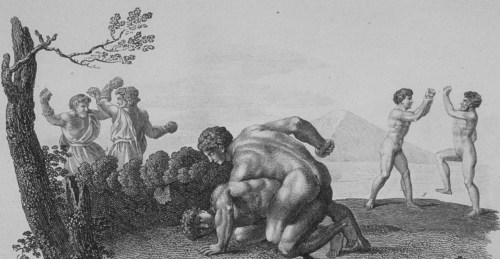
romanwrestlingFrom A.J. Mitterbacher, Das Kriegswesen der Römer (Prague 1824)

Now in 5th year, Rutgers Summer Program in Greece better than ever for 2009

clairmontgreece1Credit: Christoph Clairmont

And here’s yet another RU anniversary worth noting…

This year marks the fifth consecutive time that Rutgers University will run its Summer Program to Greece. This year’s dates are from 6 July to 10 August.

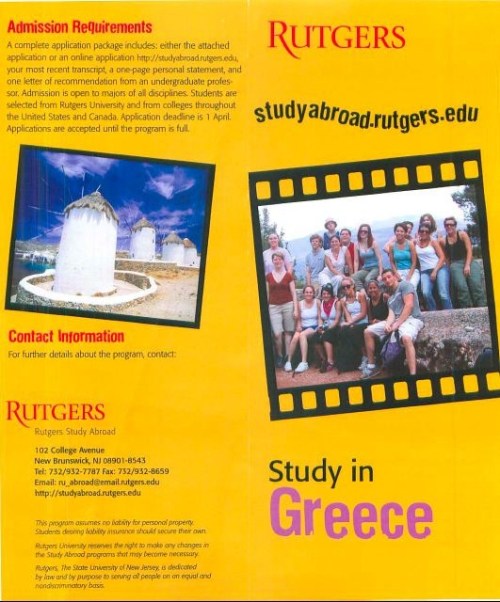
For this five week course, students earn six credits: three in History and three in Classics. Majors in any subject are welcome. Language of instruction is English. You can download a brochure and application here.
rugreece
In this undergraduate travel program students spend about half the time in Athens, with expert guided tours of the National Archaeological Museum, the Agora Museum, the Byzantine Museum, and the Benaki.

The other half of the course takes place outside Athens—Crete, the Peloponnese, and northern Greece (including Delphi, Thessaloniki, and the monastery at Meteora).

While in Athens participants stay in and use facilities provided by College Year in Athens (shared rooms with kitchens). Outside of Athens the lodgings are carefully selected hotels, with the occasional overnight ferry.

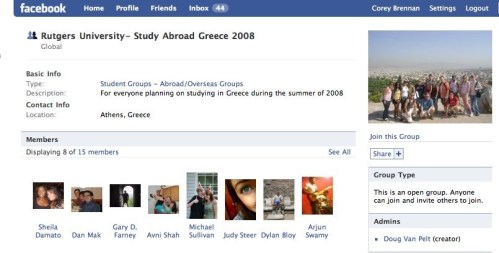
You will have three experienced professors guiding you throughout the course, whose specialties range from ancient Greek through Byzantine history. Directing the Program is Professor Gary Farney, from Rutgers University-Newark, who runs its Program in Ancient and Medieval Civilizations, and has been with the RU Greece program in each of its five years. Also returning is Professor Dylan Bloy, Gettysburg College, a specialist in Greek and Roman interactions, with extensive archaeological field experience in mainland Greece and Crete. And rounding out the triumvirate is Professor Stephen Reinert, an expert in Byzantine history, who is no less that the Dean of the Rutgers Study Abroad Program.

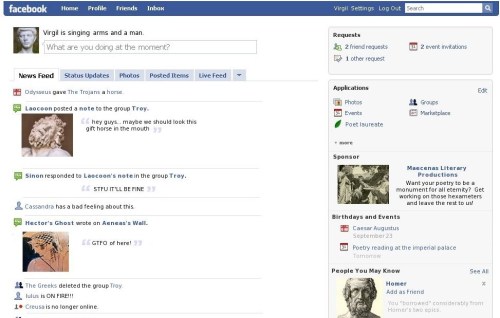
facebookgreeceFrom the Facebook group for participants on the 2008 RU Greece program

But wait…there’s more! Continue reading

RU ready for 25 April? Classics Greek & Roman Fashion Show gets prime Rutgers Day site, Facebook group

romfashion2Sorry guys—you didn’t preregister to model at the RU Classics Fashion Show

It’s coming up quick.

Rutgers Day is just over a month and a half away—Saturday 25 April to be specific. It’s billed as “a family, friendly, fun exhibition of all of the things we do at Rutgers–our teaching, our research, and our service to the state of New Jersey. We are inviting the citizens of New Jersey to come to New Brunswick, visit the campus, and see what we do.”

Oh yeah, and it’s free. In all there are 380 programs, including performances, workshops, mini-lectures, demonstrations, info booths, lots of children’s activities, plus Ag Field Day and the 35th annual NJ Folk Festival.

If the weather’s good, a crowd of 40,000 or 50,000 is expected. Learn all about Rutgers Day here.

And what’s Rutgers Classics doing on this dynamite day?  The obvious thing: hosting a Greek and Roman fashion show.

deschamps1

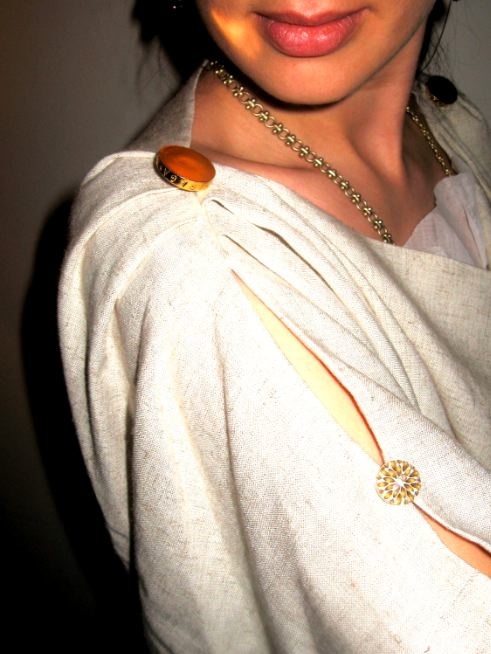
dress2aFrom the Spring 09 Rutgers Roman women’s line, as designed by J. Deschamps

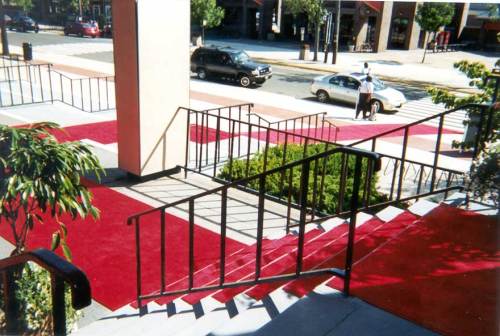
It all goes down in the very center of the College Avenue Campus, on the steps of Brower Commons—with a red carpet runway extending 60 Roman feet. (Pity the program taking place simultaneously across the street: “Meet the NFL Players”.)

cf4The Greek and Roman Runway @ Brower Commons

Students and departmental friends will be making and/or modelling some of the most historically accurate classical merch that’s been seen on our planet since the days of Herodes Atticus.

And that’s not all. DJ Korenelius will spin and emcee at this hyperbolic event. Hear his Rutgers Day promo here.

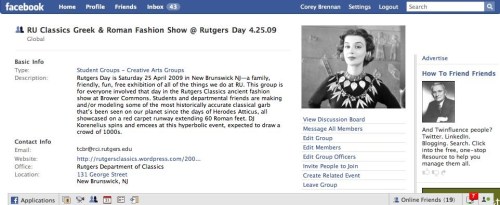
And click here to join the Facebook group RU Classics Greek & Roman Fashion Show @ Rutgers Day 4.25.09. The group provides all the latest “Project Runway 29 BC” news and photos, and (coming soon) some exclusive DJ Korenelius stress edits. [What’s a “stress edit”?—Ed.]

facebookpage

Do you want to help make the clothes? Do you want to model them? Do you want to do both? Call 732.932.9493 or email here.

Expected to become an annual event, the first-ever Rutgers Day action begins that Saturday 25 April at 10 AM and ends at 4 PM. More news soon to come!

ruclassicsfashionbanner

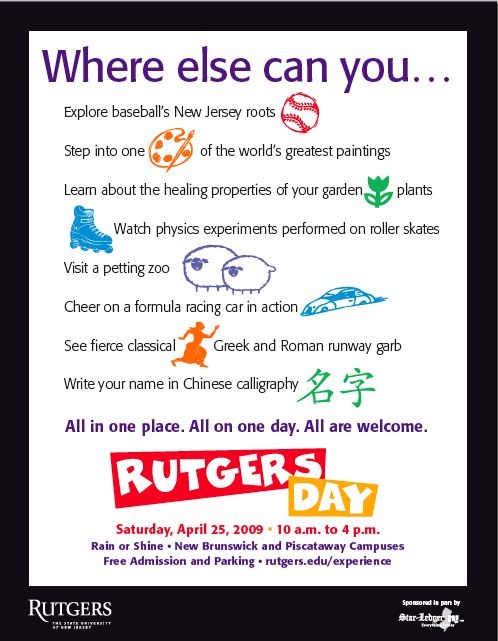
rutgersdayflyerCheck out Line 8—that’s us!

A RU anniversary: Project Theophrastus and RUSCH still going forward—and no end in sight

theoportrait2

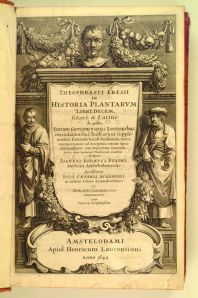
Here’s an anniversary certainly worth noting. It was in 1979 that Project Theophrastus was founded at Rutgers University.

And now thirty years on, its director—Professor Emeritus of Classics William Fortenbaugh—is still at the helm. Plus he continues to edit a formidable publication series—Rutgers University Studies in Classical Humanities (RUSCH)—that’s widely regarded as a sine qua non for persons working on the intellectual history of the Hellenistic age.

Now, for generations the Peripatetic philosophers of the Hellenistic period did not receive careful study. That was due partly to the fact that many of the relevant writings exist only in fragmentary form. But it was also because—let’s face it—the Hellenistic period has always seemed to many less glamorous than the earlier Classical period of Pericles and the Parthenon.

But that perception is changing rapidly, and the Hellenistic Schools have become a major focus of philosophical discussion. We now have much improved editions of Stoic and Epicurean texts as well significant scholarship concerning the Old and New Academy. And Rutgers University has been at the very center of the story of that shift.

theophrastus

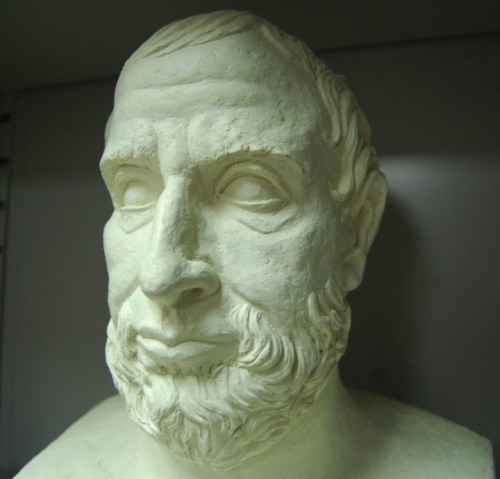
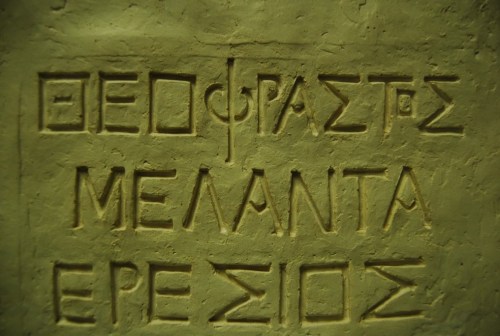
A bit of background on the Project. Bill Fortenbaugh had a grand idea back in the 70s: to set up an international collaborative venture, one that would collect, translate and comment on the surviving texts of the Greek philosophical writer Theophrastus. A native of the town of Eresus on the island of Lesbos, Theophrastus was a pupil of Aristotle and his successor as head of the Peripatetic School. Funding from the National Endowment for the Humanities got the ball rolling for the new Project Theophrastus, and the rest—as they say—is history.

theophrastusinscription

One important way that the Project then moved forward was through international biennial conferences—an unbroken chain from 1979 to the present, with more in store. Continue reading

New at RU, Thursday 26 Feb: Harvard’s G.F. Pinney sheds light on “The Dancers on the Acanthus Column at Delphi”

dm13

Not attending the 2009 annual meeting of the College Art Association next weekend in Los Angeles?

Well, then come by the Rutgers Student Center (126 College Avenue, New Brunswick) on Thursday 26 February at 4.30 PM.  The room? There are three of them in fact, because we’re expecting a capacity crowd: 411 ABC.

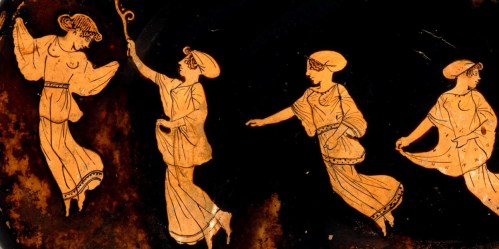
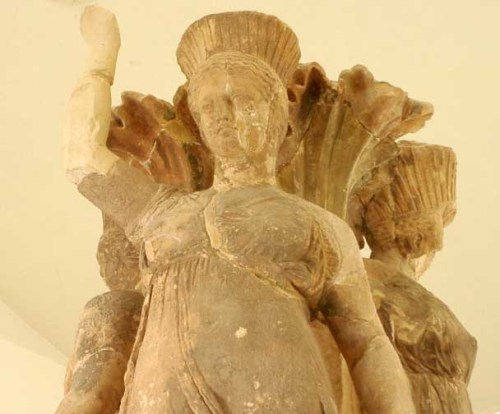
There Harvard’s Gloria Ferrari Pinney will lecture on the “Column of the Dancers”, now in the spectacular museum at Delphi in Greece.

That’s a column, carved from high-grade marble, that features on its upper part statues of three dancing young women, with acanthus leaves below.

47
The assemblage is an Athenian offering of the fourth century BC to the sanctuary Originally it had a tripod on the top—supported by the women’s heads—on which rested a bronze cauldron.

And for this remarkable (and somewhat mysterious) work of art Gloria Ferrari Pinney will offer a new interpretation.

dm2

Continue reading

A new resource for teaching about Roman women—with contributions by RU’s Liz Gloyn

flavianFrom the epic archives of LIFE magazine, now hosted by Google. Credit: Carlo Bavagnoli

What’s new in Latin pedagogy? Ask Liz Gloyn, RU Classics PhD candidate—and one of three University graduate students honored as a Rutgers-Newark Scholar/Teacher for 2008-9.

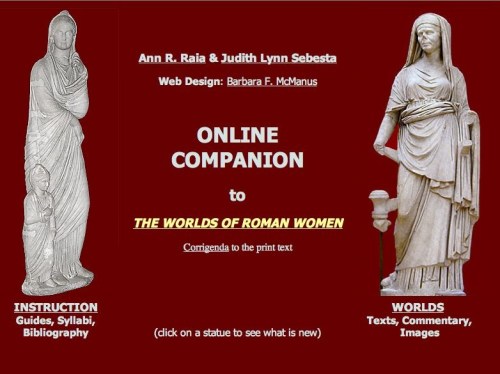
Gloyn, who came to Rutgers Classics after taking two degrees at Cambridge University, is the latest collaborator to join a vital new project, the Online Companion to The Worlds of Roman Women.

worwonline

The Companion is a compendium of unadapted Latin texts by or about Roman women. All ranks and status groups are featured, and each passage is glossed and hyperlinked.

This Online Companion complements the Worlds of Roman Women print reader that Focus published in 2005. Ann Raia, Cecelia Luschnig and Judith Lynn Sebesta edited that volume; Raia and Sebesta with Barbara McManus put together this online aid.

01303worldsofromanwomen

Explains Gloyn, “The Companion supports students by providing free text-commentaries, making new and unusual texts available.” Plus for each passage there’s an essay that provides the relevant context for women’s activities, concerns, and social roles in ancient Rome. Here Gloyn contributed the essay and commentary on Paulina, the wife of Seneca, and is currently working on a passage about Seneca’s heroic aunt.

The Companion is divided up into ten different “worlds”—for instance Childhood, or Marriage, or the Body, or Flirtation. The site also includes numerous images of material evidence from the ancient world—statues, wall paintings and women’s artefacts.

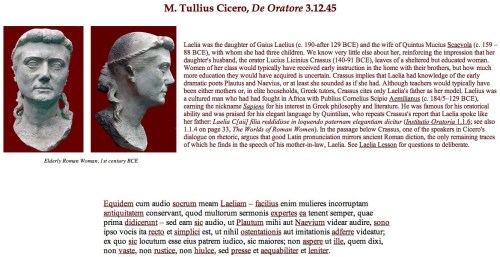
laelialessonSample learning unit: here, the disquisition on Laelia’s speech in Cic. De Oratore

There’s a pedagogical section as well, where teachers can share the innovative ways they have used the Companion. Instructors can use and contribute syllabi, lesson plans and classroom activities, which “gives faculty the opportunity for collegial interaction on Latin pedagogy”, says Gloyn.

“I’ve very much enjoyed the collaborative process,” Liz continues, “and am delighted to be part of the project”.

bavagnoli11Pompeian scene from LIFE 25 March 1966. Credit: Carlo Bavagnoli.

Rutgers Focus highlights Classics Department’s undergraduate teaching

Just spotted in the latest issue of Rutgers Focus, the university’s faculty and staff publication…
focusphoto1

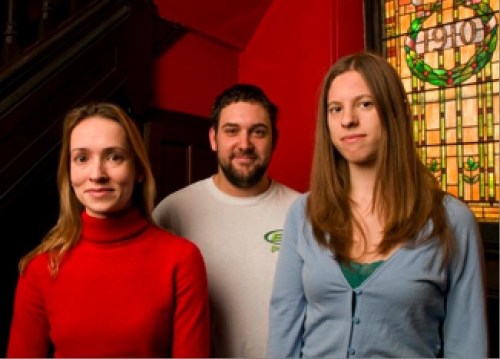
From left, Assistant Professor of Classics Serena Connolly, and majors Adam Petrosh and Etel Sverdlov. Credit: Nick Romanenko

Sona si latine loqueris (Honk if you speak Latin)
By Coleen Dee Berry

Latin? Ancient Greek? Virgil and Sophocles? That’s like sooo … 2,000 years ago, right? Not any longer. The study of classics is in the middle of a 21st-century renaissance. Latin, in particular, has staged a comeback, and now is virtually tied with German as the third most frequently taught language, after Spanish and French, according to the American Council on the Teaching of Foreign Languages. Last year more than 150,000 high school students applied to take the National Latin Exam. Only 6,000 students signed up for the test when it was first given in 1977.

Rutgers Classics Department in the School of Arts and Sciences mirrors this national trend. Since 2000, the department has doubled both its faculty – from three full-time professors to six – and its students. Last year 1,271 students enrolled to take classes, representing 45 declared classics majors.

Guiding Rutgers classics through this revival is Department Chair T. Corey Brennan, who may epitomize the new ancient scholar. Brennan’s interests include ancient sports, and he is at work on a biography of elite women of the Roman Republican era. But he is also a musician who was a guitarist and songwriter for the alternative rock band, The Lemonheads. Brennan recently received a prestigious appointment to a three-year term as the Andrew W. Mellon Professor-in-Charge at the American Academy in Rome, which will begin July 1.

“We’re really lucky here at Rutgers, in that we’re benefiting from the high school Latin programs of New Jersey, which both individually and collectively are among the very best in the country,” Brennan said. “But the classical languages are just about 20 percent of our offerings; in our culture and literature courses in translation, we’re trying to encourage undergraduate research into all aspects of the ancient Mediterranean experience.”

Nationally, enrollment in classics courses at the college level has shown a slow but steady growth in the past decade, according to a 2006 study by the Modern Language Association. High school students find Latin helpful in their preparation for SATs; college students in the fields of law and medicine and other sciences find a study of Latin useful.

“I took it [Latin] in high school to help me with my SAT scores and got hooked,” said Etel Sverdlov, a Rutgers junior from Lexington, Kentucky, and a classics major. “I’m more interested in the history than the actual language part of it, but it helps if you read the history in the [original] language.”

Popular culture also has aided the classics revival, with films such as Russell Crowe in Gladiator, Brad Pitt in Troy, and 300, about the famous Spartans in the Battle of Thermopylae, showcasing ancient Rome and Greece.

Then the enormously popular Harry Potter series made liberal use of Latin terms. The first book, Harry Potter and the Philosopher’s Stone, published in 1997, was translated entirely into Latin in 2003 as Harrius Potter et Philosophi Lapis by Peter Needham, a retired Latin professor from Eton College in England. An ancient Greek translation was also produced around the same time. The translations, according to the British publisher Bloomsbury, were done as an academic exercise, to stimulate interest in the languages and provide students of those languages with modern reading texts.

This past October, when New York Times columnist Maureen Dowd decided to write part of her “Are We Rome? Tu Betchus!” op-ed piece partially in Latin, she chose Rutgers–Newark associate history professor Gary Farney to help her translate for the article, which found echoes of the fall of Rome in American society.

For many years, the study of classics was Rutgers University, Brennan noted. When Rutgers began in 1766 as Queen’s College, classics was the sole course of study for the college’s first century and the only bachelor of arts major available until some years after the First World War.

Today at Rutgers, study of the classics includes not only the languages of Latin and ancient Greek but also courses on Greek and Roman sports, ancient law, medical terminology, Greek drama, and ancient warfare and diplomacy.

“It’s definitely not your parents’, or grandparents’, Latin classroom,” said Sherwin Little, president of the American Classical League, which was founded in 1919 to promote the study of classical languages.“Teachers are making their curriculum more relevant to students today by emphasizing its role in archeology, mythology, and linguistics.”

In addition, Latin is no longer just for the best and brightest at elite schools. At the Indian Hill High School in Cincinnati, Ohio, where Little teaches, students with learning disabilities are offered a two-year Latin sequence “When I started working with special needs kids, I was shocked that they didn’t know that Venus stood for love. I discovered they did not get that ‘enrichment,’ ” Little said. Latin’s regular structure and relatively low idiomatic content helps in teaching special needs students language, he said.

In Assistant Classics Professor Serena Connolly’s New Brunswick course, “Literature in the Republic,” students take turns reading aloud and translating the text. “Latin is a language that you learn to read, more than you learn to speak it. Few programs emphasize speaking – one of the few I know of is in Finland,” Connolly said “When you think that you’re reading something written more than 2,000 years ago, it’s kind of exciting,” said Stephanie Johnson, a history major with a Latin minor, before she plowed into a passage of Roman historian Sallust’s Bellum Catilinae.The readings in Latin tell a very modern story – of politicians grilling witnesses in the Roman Senate to root out a conspiracy in 63 B.C.

Adam Petrosh, a junior from Mays Landing and a classics major, said his high school Latin teacher got him hooked on classics and, in turn, he hopes to become a Latin teacher when he graduates, “to keep the interest going.”

Auditing Connolly’s class last semester was Tom Fodice, a retired municipal attorney for Jersey City. He said his interest in Latin was sparked by his law practice and its legal terms. “So much of our legal system originated in early Roman law,” Fodice said.

Classics, by definition, remains timeless, supporters of the discipline agree. “English has evolved so much that, if you went back to Chaucer’s time, you would not be intelligible,” Connolly said. “But you could go back to ancient Rome and speak Latin and still be understood.”
rutgerslbus

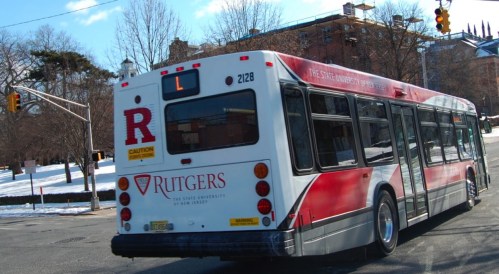
Maybe some day: a Rutgers L (for ‘Latin’) bus. But for now it’s going to Livingston Campus. Credit: T. Corey Brennan [And you can blame him for the caption too—Ed.]

R time in Philadelphia: Rutgers Classics faculty, students, alums enliven 2009 APA/AIA Annual Meetings

It was the only party at the 2009 Meetings of the American Philological Association/American Institute of Archaeology with a barcoded invite.

foxguild

And for good reason.

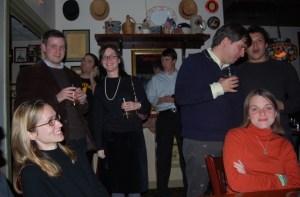
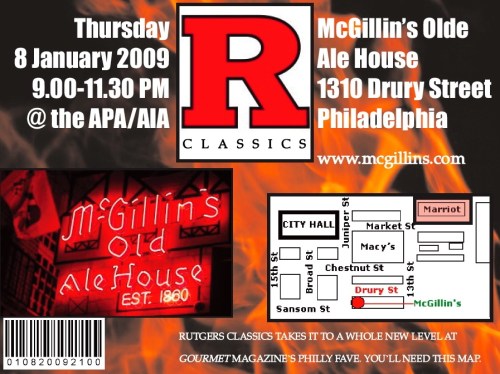
It all went down on Philly’s tiny Drury Street, where almost 100 faculty, past faculty, students, alums, and friends of the Rutgers Classics Department managed to cram into both levels of  the legendary McGillin’s, Philadelphia’s oldest continuously operating public house (est. 1860). [How did that place manage to stay open from 1920-1933? Ed.]

The indisputable highlight? That came close to midnight on Thursday 8 January 2009, when Classics visiting assistant professor Matt Fox (performing under the pseudonym “Matt Foxx”) rocked the house with the Dylan songbook.

ruapauiucIllinois @Urbana-Champaign massively in the house for Matt Fox at the RU Classics party

But the next morning it was down to even more serious business for Rutgers Classics, for the start of three days of conference talks and responses. You can see a full list here.

Next year? The 2010 APA/AIA locale is Anaheim California…perhaps a Matt Fox show at the NHL Ducks’ Honda Center.

gg_gfruapabroughtonsruapagroup1ruapastairs

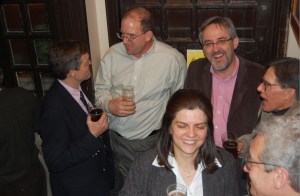
From top: Greg Golden (PhD 2008) and (RU-N History) Gary Farney; Nathaniel Broughton, Margaret Broughton Tenney, Alan and Laurie Broughton; 7.5% of the Yale Classics Department, recent past and present; and Claude Eilers (McMaster, facing camera), with RU friends on McGillin’s stairs

ruapaas_ksruapamjruaparl_ldruapatfroom

From top: Andrew Scott (PhD 2008, now Hendrix College) and grad student Kate Shea at the Friday 9 Jan presentation of the published TRS Broughton autobiography, which they co-edited with Ryan Fowler (PhD 2008, now Grinnell College), Alan Broughton, and TC Brennan; Michael Johnson (PhD 2008, now Davidson College); grad students R. Loer and L. Danvers; SRO crowd at start of Thomas Figueira talk for Friends of Ancient History panel

ruapaphila091