Yearly Archives: 2013

Back once again: Rutgers Day, in its 2013 edition! Saturday 27 April, and of course RU Classics is there

Layout 1

Have an hour or two or six to spare on Saturday 27 April? Join us for Rutgers Day 2013, a one-day show-and-tell for the citizens of New Jersey…and Pennsylvania, New York, and indeed the rest of the US and the planet. Now in its fifth year, Rutgers Day offers performances, tours, exhibits, hands-on activities, and perennial favorites like Ag Field Day, the Engineering Open House, the New Jersey Folk Festival, and the RU Football Scarlet and White Game (this year benefiting Hurricane Sandy NJ relief). In a word, it’s a great, fun way to explore the University’s dedication to research, education, and service.

And while you’re at it, make sure to stop by the Rutgers Classics Club‘s installation on Douglass Campus—on Red Oak Lane across from the bus stop. This year will feature a quiz show, and ancient arts and crafts—mask decorating, clay pot design, and the art and science of making laurel wreaths. So there really should be something for everyone.  Continue reading

Postcard from Providence: Gregory K. Golden, RU Classics PhD 2008, writes of College of Rhode Island and his new book with Cambridge University Press

FirefoxScreenSnapz001

James P. Adams Library, College of Rhode Island

Well, here’s a welcome blast from the past…it’s Gregory K. Golden (BA Penn, MA Chicago, MLitt Oxford [New College], PhD 2008 Rutgers) who in 2009 joined the History faculty of Rhode Island College (Providence RI) as an assistant professor. Previously Greg had taught Western Civilization for the Rutgers-Newark Department of History as well as Medieval Latin for Rutgers-New Brunswick Classics. And he has some great news: this month Cambridge University Press publishes his first book, Crisis Management in the Roman Republic, based on his RU Classics dissertation! But without further ado, here’s Greg…

“Greetings from Providence, RU! It’s been a while since I last set foot on the banks of the Raritan. After a year on the adjunct merry-go-round after finishing, I got a tenure-track job in the History Department at Rhode Island College in Providence in 2009.” Continue reading

On Thursday 4 April 2013, Catherine Conybeare (Bryn Mawr) lectures at RU on Rome’s ambiguous fall

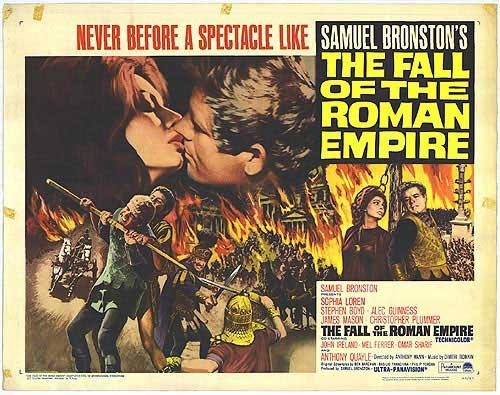
the-fall-of-the-roman-empire-film-poster

Alas, this 1964 epic is set in the late second century CE, treating precisely the same era as Gladiator (2000). Running time? 3 hours 28 minutes.

On Thursday 4 April 2013 at 4:00 pm in the Ruth Adams Building (room 003) the Rutgers Classics Graduate Student Association welcomes Professor Catherine Conybeare (Bryn Mawr College) for a lecture entitled “How to Lament an Eternal City: The Ambiguous Fall of Rome.” The Ruth Adams Building is located on Rutgers’ soon-to-be-leafy Douglass Campus. Continue reading

At RU on Friday 15 March, Peter Meineck (NYU, Aquila Theatre) speaks on cognitive recognition in Greek drama

SafariScreenSnapz004

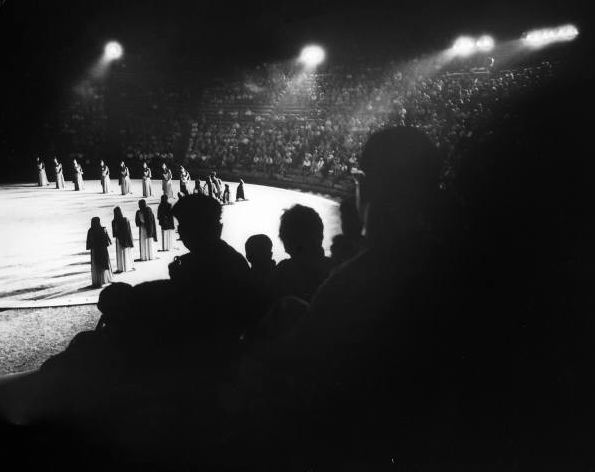
Performance at Epidaurus, December 1962. Photo: Gjon Mili (LIFE/Google)

Here’s a real newsflash. On Friday 15 March  at 4:00 PM, the Rutgers Classics Graduate Student Association welcomes Professor Peter Meineck to speak on aspects of cognitive recognition in Greek drama. Peter Meineck is Clinical Associate Professor of Classics at New York University, Honorary Professor of Classics at the University of Nottingham, and Founder of Aquila Theatre. The title for his talk ? “The Theatre that Moved the Soul: Understanding the Power of Ancient Greek Drama through Modern Cognitive Science”. It all takes place in the Ruth Adams Building Room 001 (across the hall from the Classics Department), on Rutgers’ historic Douglass Campus. Continue reading

It’s March 4th. RU celebrating ‘Exelauno Day’? Here’s the origin of this classicists’ holiday

PreviewScreenSnapz001

From The Warriors (Paramount 1979). It’s based on Xenophon’s Anabasis—really!

Picture this. You’ve been laboring over introductory ancient Greek for a full six months, and you’re starting to empathize with those ancient rowers chained to the bottom bench of an Athenian trireme. There’s still snow on the ground and the sun is setting at  5.50 PM. Baseball opening day is almost a month away. You shuffle into your early morning class on the 4th of March, and at the start of the hour your Greek teacher yells….”HAPPY EXELAUNO DAY!”. If you’re lucky, the instructor has brought cupcakes along. Or better yet, she or he absolves the students from some usual ordeal, such as writing the principal parts of highly irregular verbs on the blackboard to general ridicule.

You see, ‘exelauno‘ is a pun. One of the meanings of the Greek verb exelaunein (that’s the infinitive form) is “to march forth”. It’s particularly common in Xenophon’s Anabasis, a masterpiece of early fourth century BC prose that’s one of the more gripping first-person military narratives that has come down to us from any age. And since “march forth” sounds just like “March 4th”…well, it’s not hard to see the point of the joke. These days, lots of classics folks at all levels of study in North America acknowledge the “holiday”, to varying degrees. But who first came up with this idiotic incredibly clever and witty addition to the classicists’ calendar? Continue reading

On 21 Feb 2013, RU Classics welcomes Holly Haynes (TCNJ) to speak on “Tacitus with Groucho Marx”

PolForum-TL-4

Professor Holly Haynes of The College of New Jersey. Credit: The Signal

On Thursday 21 February 2013, the Graduate Student Association of RU’s Department of Classics welcomes Professor Holly Haynes to speak on an intriguing topic, “The In- and Outside of History: Tacitus with Groucho Marx”. Professor Haynes’ lecture takes place at 4 PM in Ruth Adams Building 003, located on Rutgers’ beautiful Douglass Campus at 131 George Street.

An Associate Professor of Classical Studies at the College of New Jersey, Professor Haynes specializes in the politics and literature of the early Roman Empire, with a particular interest in historiography. Continue reading

Benedict XVI resigns Papal office—in Latin; our philological observations on the Pope’s momentous 10 February 2013 ‘declaratio’

PopeWestminster

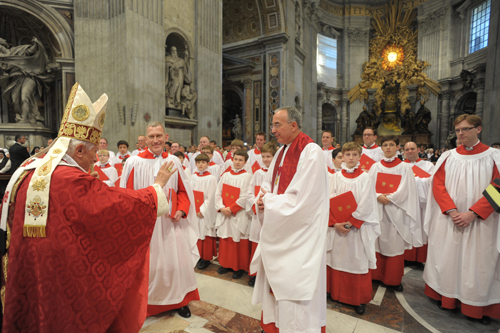
Pope Benedict XVI welcomes the Choir of Westminster Abbey to St. Peter’s Basilica, 29 June 2012. Credit: Westminster Abbey Press Office

It’s not often you find an announcement this important being made in Latin!

Here is the full text of Pope Benedict XVI’s historic 10 February 2013 ‘declaratio‘ in which he announced—in Latin—his intention to resign from the Papacy at the end of that month…. Continue reading

At RU Classics on 7 February 2013, Emily Wilson (Penn) discusses problems in translating Euripides

SafariScreenSnapz001

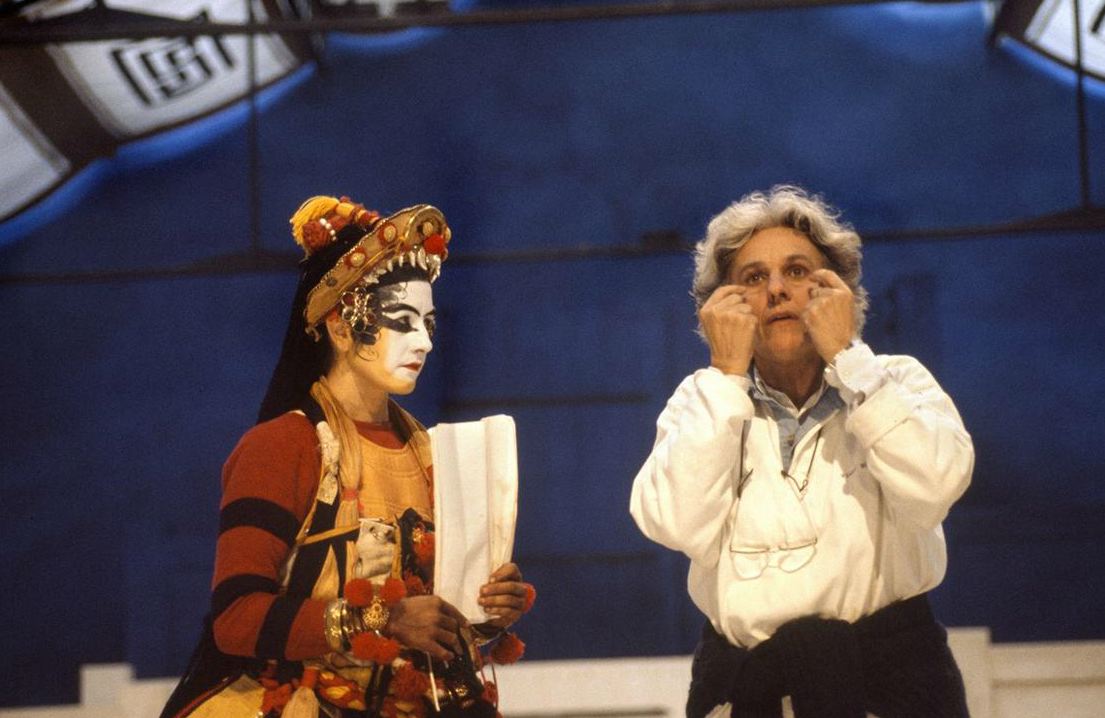
Théâtre du Soleil performs “Iphigenia in Aulis” (1990, Magnum Photos)

It’s the first Rutgers Classics Graduate Student Association lecture of spring semester 2013—and you’re invited. The place? Ruth Adams Building 003 on Rutgers’ beautiful Douglass Campus in New Brunswick. The time? 4 PM on Thursday 7 February. There and then Professor Emily Wilson of the University of Pennsylvania will present a lecture entitled “Puns, Laughs, and Lamentations: Some Problems in Translating Euripides.” Continue reading