Who’s new at RU: Andrea De Giorgi, Katherine Wasdin to join Rutgers Classics for 09/10

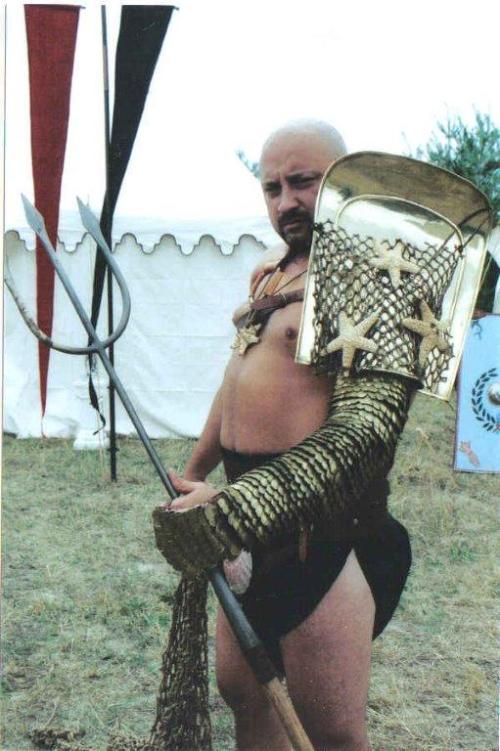
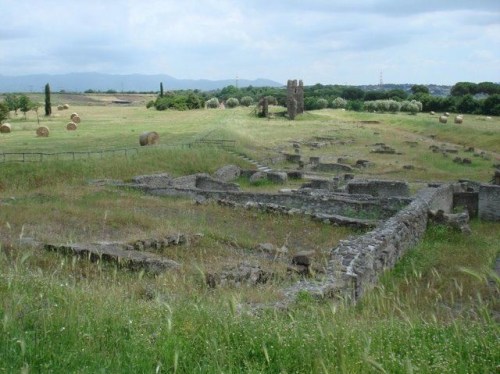
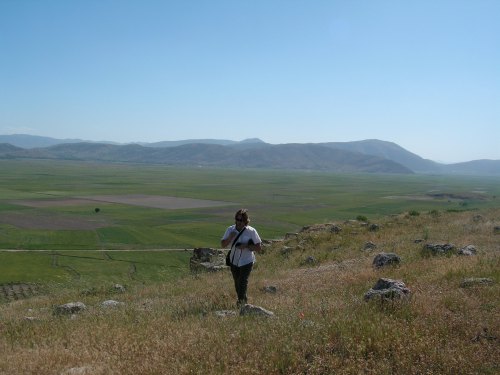
DeGiorgiPICT0107Andrea De Giorgi surveys Seleukia Sidera (aka Claudiocaesarea)

Looking for a heads-up on what to expect from Rutgers Classics in 09/10?

Well, for a start, Andrea De Giorgi (re)joins us next September as a visiting assistant professor. In 2006/7 Andrea held a postdoctorate fellowship in the department and also taught two large lecture courses on ancient religions. He then spent 2007-2009 teaching in the Department of Classics at Case Western Reserve University. At Rutgers in 2009/10 he will offer a range of courses in Roman social history and visual culture, as well as in Latin literature.
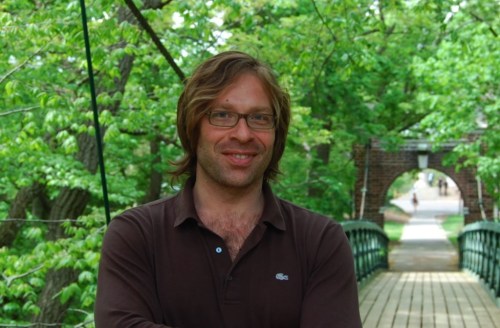
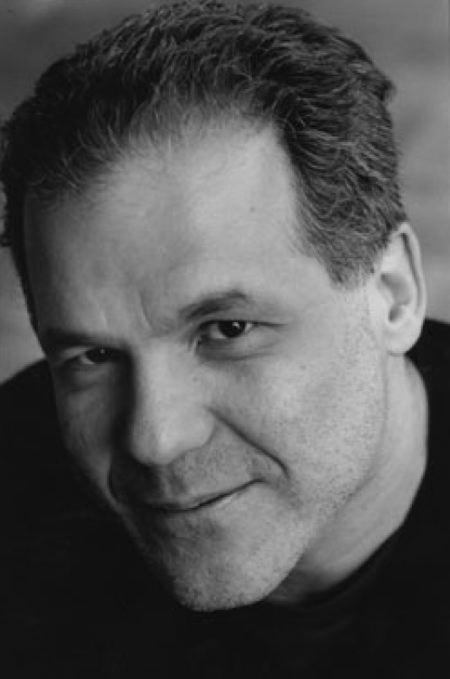
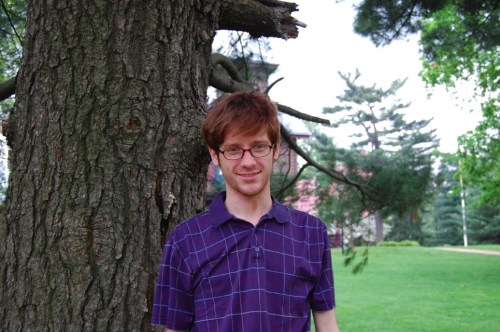
DeGiorgiPhotoAndrea De Giorgi on the Douglass Campus of Rutgers University

Andrea De Giorgi was educated in Classics at the Università di Torino and received his PhD at Bryn Mawr, in its Department of Classical and Near Eastern Archaeology. Andrea’s dissertation—a study of the city and country of Roman Antioch on the Orontes—will appear shortly as a monograph. He’s also co-editing two works: the new Oxford Historical Atlas of the Classical World, and a study on Hellenism in Cilicia.

De Giorgi is also co-director of the newly established Isparta Archaeological Survey and is currently involved in the study and publication of the collections for Anazarbos (Cilicia) and Antioch on the Orontes at the Princeton Museum. Other than in Turkey, he has directed and participated in a variety of archaeological projects in Italy, Syria, Cyprus, UAE, and the Republic of Georgia.

Speaking of Georgia, but in this case the US Peach State…new visiting assistant professor Katherine Wasdin was born and raised in Bremen, Georgia, but has for many years now lived in New England. She was an undergraduate Classics major at Brown University (BA 2003), and will receive a fall 2009 PhD from the Department of Classics of Yale University.
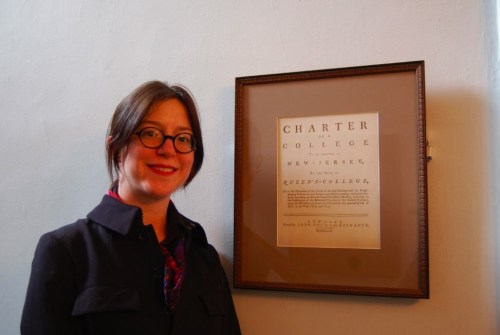
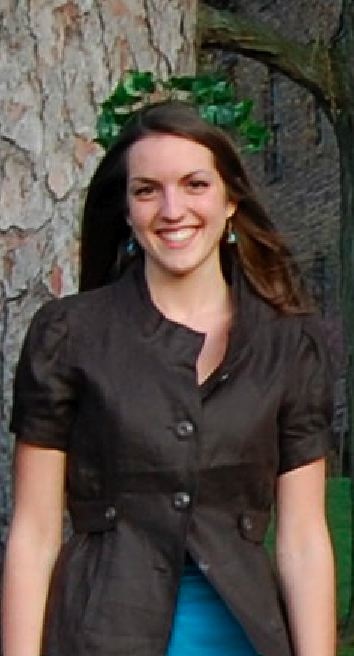
WasdinPhoto1Katherine Wasdin at the Old Queen’s building on the RU campus, with 1770 charter of the university

Wasdin’s Yale dissertation, “The Reluctant Bride: Greek and Latin Wedding Poems,” analyzes poems about and for weddings from the archaic Greek poet Sappho, through the Attic dramatists, Theocritus, Catullus, Statius, and all the way to Claudian, writing in the late fourth century of our era. Katherine’s particular focus in this ambitious study is on the development of imagery and the interplay between literature and culture.

Wasdin is also serving as co-editor for a collection of essays—to be published in the Yale Classical Studies series—on the reception of the Classics. That volume arose from a conference held at Yale in April 2007, that she co-directed. Though her dissertation topic is wide-ranging, Wasdin has particular interests in the literature of the Roman Empire, which she looks forward to teaching in the fall.
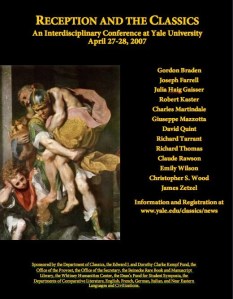
Reception

Andrea De Giorgi and Katherine Wasdin bring the total number of Classics faculty in the Rutgers department to nine for 2009/10.

Next year, Professor (II) Thomas J. Figueira—marking his 30th year in the Department—will offer his celebrated courses in Classics and in History. Joining him are assistant professors Emily Allen (new for 2009), Leah Kronenberg, and Timothy Power. Visiting assistant professor Matt Fox continues in the department for a third year, this time with special responsibility for Classics teaching and program development in Rutgers’ Division of Continuous Education and Outreach.

Serena Connolly will be on leave for 2009/10, on a Mellon Fellowship for Assistant Professors at the Institute for Advanced Study in Princeton. On 1 July 2009 Corey Brennan is taking up a temporary position on the staff of the American Academy in Rome (the post of Andrew W. Mellon Professor-in-Charge) that runs through June 2012.

Azzan Yadin, associate professor in Jewish Studies and a member of the Rutgers graduate faculty in Classics, will serve as acting chair in the department for 2009/10.

Teaching assistants are RU Classics graduate students Andriy Fomin, Charles George, Eleanor Jefferson, Rachel Loer, and Constantin Pop.
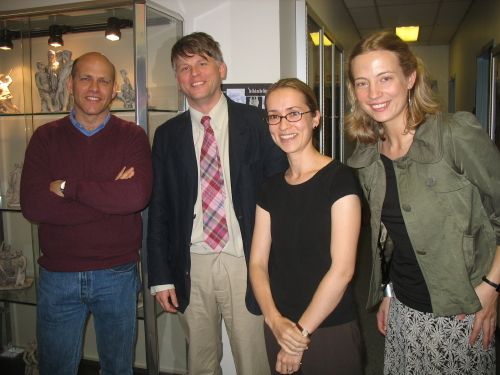
IMG_2392_3From left: Azzan Yadin, Timothy Power, Serena Connolly, Emily Allen. Credit: L. Kronenberg
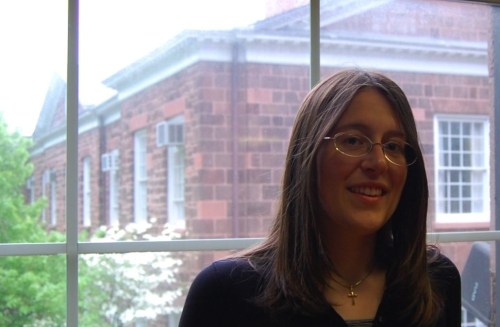
RU Classics grad student Liz Gloyn wins University and Louis Bevier Dissertation Fellowship for 2009/10

This past Thursday 30 April, the Graduate School—New Brunswick announced the winners of its twelve University and Louis Bevier Dissertation Fellowships for the 2009-2010 academic year.

One of just four Rutgers graduate students in the Humanities to be chosen as a Bevier Fellow was Classics graduate student Elizabeth Gloyn, for her dissertation “Seneca and the Ethics of the Family”.

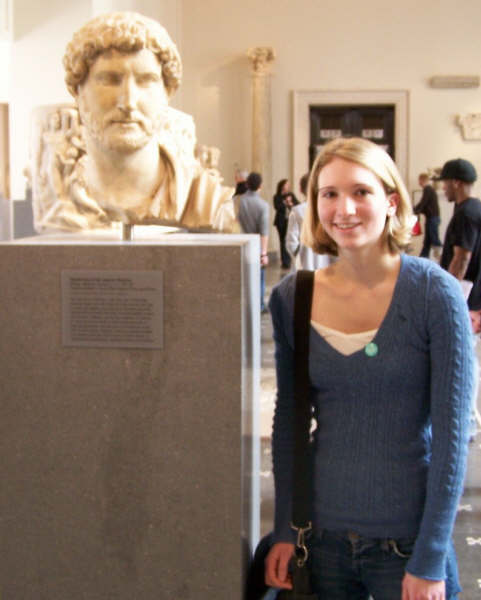
gloynmuseum
Liz Gloyn, who received her first two degrees (BA Hon., M.Phil.) from Newnham College Cambridge, is finishing up her year as a member of the inaugural class of Rutgers Scholar-Teachers at Rutgers-Newark, where she has spent the spring semester teaching Latin 102 and Gender & Sexuality in the Ancient World.

“Although I’ll miss teaching,” Liz said, “I’m looking forward to working on my dissertation through the coming academic year. I’m about to begin work on my third chapter, which will examine Seneca’s views on marriage.”

Gloyn has other academic plans for the upcoming year. She will be presenting a talk at the 2010 American Philological Association meeting in Anaheim, during a workshop entitled “New Ventures in Classics Pedagogy: The Challenge of Teaching about Rape”.

She also hopes to find time to work on her pet project, the reception of the Classics in collectible Barbie dolls. You can see two amazing examples here and (especially) here.

But before all of that, Gloyn plans to take a well-earned break over the summer vacation, “spending time both back in the UK and in Aruba.”

oqlampCommemorative centenary lamp from Old Queen’s, built in 1809, and which celebrated its 200th anniversary this past week

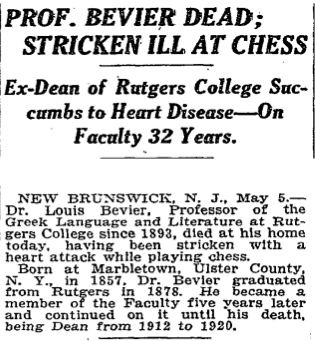
The Bevier Fellowship is in memory of Rutgers classicist Louis Bevier Jr. (1857-1925). He was a descendant of Louis Bevier, a Huguenot who settled in New York state in 1665 and was one of the twelve patentees of the New Paltz Palatinate.

Louis Bevier, Jr., graduated from Rutgers College in 1878, and then studied for three years at Johns Hopkins University. His dissertation, on “The Genuineness of the First Antiphontean Oration”, written under the great Basil Gildersleeve, was just the fourth in the Hopkins Classics program to be awarded a Ph.D.

After traveling and studying in Europe (Leipzig and Bonn, also at the infant American School of Classical Studies at Athens), Bevier became an instructor in Modern Languages and Latin at Rutgers, and in 1893 was elected Professor of Greek. His Brief Greek Syntax (1901) found itself reprinted by Caratzas in 1981.

Bevier was deeply interested in promoting college athletics and in 1905 was one of the principal founders of the National Collegiate Athletic Association (formerly the Intercollegiate Athletic Association of the United States), when the burning issues of the day were student football injuries and summer baseball for pay. In 1912 Bevier became the second-ever Dean of Rutgers College, a position he held until his death in 1925.

As it happens, this very day (5 May 2009) is the 84th anniversary of Bevier’s death at his home at Bishop Place in New Brunswick.

bevierobitFrom The New York Times, 6 May 1925

This Friday 8 May, RU Classics hosts lecture by cultural critic Lee Siegel

leesiegelLee Siegel. Credit: Jill Krementz

This Friday, 8 May at 1 PM, Rutgers Classics sponsors yet another mega-event: a guest lecture by cultural critic Lee Siegel. His topic? “Brother, Can You Seize a Diem: The Precious Worth of Useless Knowledge in Desperate Times”. It all goes down Friday at the Ruth Adams Building Room 207 (131 George Street), New Brunswick. [Note new location.] Special thanks to the office of the Vice President for Undergraduate Education at Rutgers-NB for making all this possible.

Siegel is the author of three books, most recently, of Against the Machine: Being Human in the Age of the Electronic Mob (Random House 2008). He has also been the television critic for The New Republic, book critic for The Nation, art critic for Slate, staff writer at Harper’s and Talk, contributing writer for the LA Times Book Review, associate editor of ARTnews, and associate editor of Raritan. In 2002, Siegel received the National Magazine Award for Reviews and Criticism. He writes frequently for the New York Times and the Wall Street Journal.

For academic year 2008/9 Lee Siegel has been a visiting professor in Rutgers’ Departments of American Studies, History, and Journalism and Media Studies in its School of Communication, Information and Library Studies. In the fall he taught Literary Criticism, and this current term a class on Screen Culture.

What can we expect Friday afternoon? “There’s been much handwringing lately”, writes Siegel, “about how the economic crisis is having a terrible effect on the situation of the humanities in higher education. This is somewhat hysterical since the word ‘crisis’ and the word ‘humanities’ are almost synonyms. The humanities are always in crisis because the world does not smile upon means that are ends in themselves, on instrinsic rather than extrinsic worth.”

“Now, at a time when the pragmatic verities are being put into question, humanists should rejoice”, argues Siegel. “Instead there seems to be growing despair. However, this institutional anxiety is really the result of an institutional arrogance. The ‘humanities’ are in ‘crisis’ because the humanities are not just woefully dependent on institutions, but pridefully allied with them. They have become inseparable from their institutions and have grown indifferent to their own sources in life..”

So what is to be done? Budgets may be cut, jobs may seem to be scarce, but certain people will always aspire to be free by making clarity of consciousness a vocation. At this moment, when clarity in any sphere of life is rare, all the humanities need do to flourish is to run up the flag of active contemplation, creative indolence, and urgent irrelevance–to speak confidently about their original, non-institutional nature. And this entail a different way of looking at culture, which I will attempt to do in this talk.”

Want to get to Ruth Adams Building? Campus buses: EE College Ave to Cook/Douglass; F College Ave to Cook/Douglass via George Street; also REXB Busch to Cook/Douglass Express; REXL Livingston to Cook/Douglass Express. Or see driving directions here.  Parking (metered) is best in the Parking Deck behind the Douglass Campus Center. For more details, see the Rutgers Classics homepage > Contact Us.

Lee Siegel visited Google’s Mountain View, CA, headquarters to discuss Against the Machine on 28 April 2008, as part of the Authors@Google series. You can view the event in its entirety below.

RU Classics undergrads take (Greek) gold, (Latin) silver, bronze in NY Classical Club sight translation exams

When the New York Classical Club gathered this past weekend (Saturday 2 May) at Hunter College for its 2009 Spring Meeting, it was great to see two Rutgers undergraduates take away three of the prizes for the Club’s annual Undergraduate Greek and Latin Translation Examinations.

nelsonDavid Nelson’09

First prize ($250) in Greek and second prize ($150) in Latin went to David A. Nelson, a senior at Rutgers-New Brunswick majoring in Classics and minoring in Music. He lives in Ridgewood, New Jersey.

This is David’s second distinction within just a week’s time; at a ceremony on Sunday 26 April at the campus’ Nicholas Music Center he was one of a select group of School of Arts and Sciences students inducted into Phi Beta Kappa.

Allison Striano tied for third ($75) in the Latin competition. Allison is an SAS sophomore with a Biological Sciences major and Latin minor.  Her career aspiration is to become a dentist; around campus she is involved with the Pre-Dental Society and the SAS Transfer Center. Allison hails from Nutley NJ, and is a recent inductee into Eta Sigma Phi, the Classics honor society. As for the NY Classical Club competition, she says she “hopes to participate again in coming years”.

striano4Allison Striano’11, with Eta Sigma Phi laurel.

Each of the competitive examinations consists of one prose and one poetry passage appropriate for undergraduates.  Cicero and Virgil are typical authors for the Latin exam; tragedy and Attic prose are often given in the Greek exam.

Lawrence M. Kowerski III (Rutgers Classics PhD 2003, now associate professor, Hunter College) is the President of the New York Classical Club. David Sider, Professor of Classics at NYU, oversaw the exam competition.

douglassstatusThat way to the Ruth Adams Building, home of RU Classics.

Ancient fashion show, gladiatorial combat thrill crowds at April 25th Rutgers Day

rdfootpads

“Some 50,000 people braved Route 18 traffic and funneled onto free buses for the first-ever ‘Rutgers Day,’ an event that folded the already popular New Jersey Folk Festival and Ag Field Day into one massive, multi-campus event, adding hundreds of activities, from sports and cooking classes to science demonstrations and cultural programs.” So reports yesterday’s Star-Ledger, of the 25 April Rutgers Day mega-event.

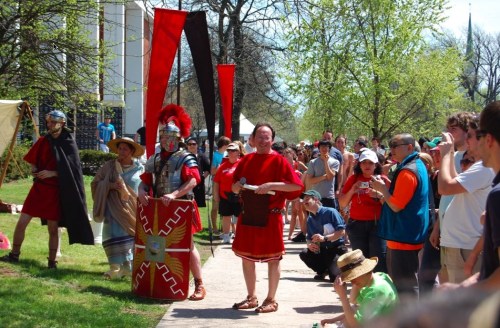
And of course, Rutgers Classics was (quite literally) at the center of it all, on the steps and lawn of Brower Commons on the RU College Avenue Campus.

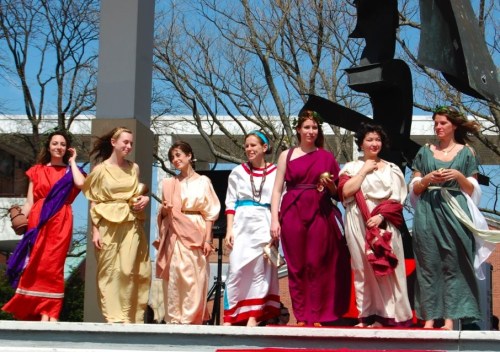
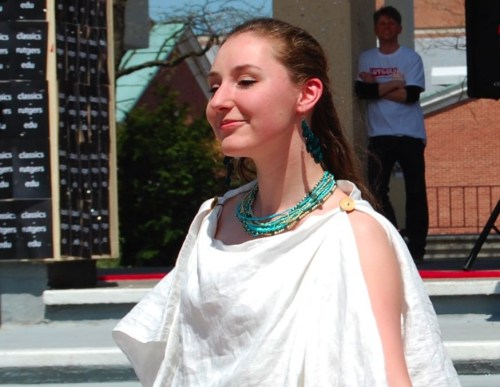
For the occasion, NYC designer Jessica Deschamps created from scratch a drop-dead line of Mycenaean, Greek & Roman couture for Rutgers student models. Plus a number of RU students, alumni/ae and friends rocked their own creations on a scarlet runway extending a full 60 Roman feet (some of those feet being vertical).

rdstudent1A sampling of original ancient designs by Jessica Deschamps

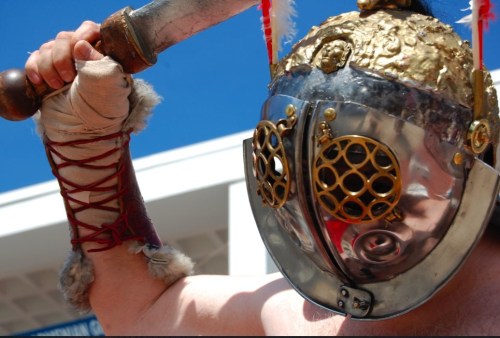
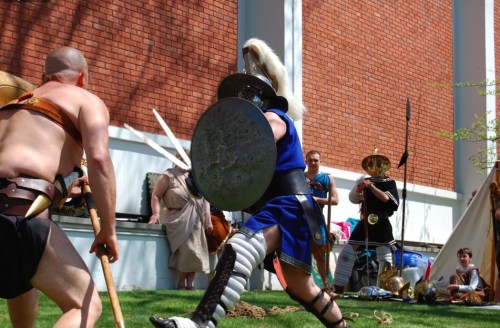
And that was just for starters. The men and women of the amazing Ludus Magnus Gladiatores, the planet’s top gladiatorial reenactment team, also more than made the scene, performing all day on the runway and-fully armed and swinging—in a makeshift arena. Members of Legio XX (Washington DC) and Legio XXIV (Philadelphia) further pumped up the authenticity factor.

rdlupus

rdscroll

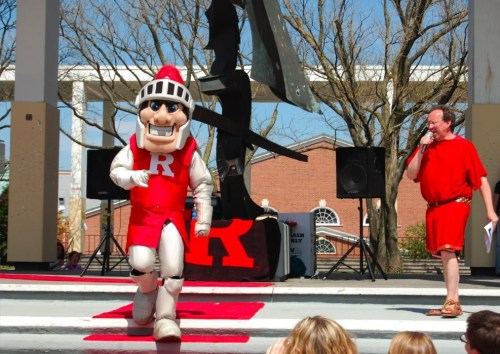
An astonished crowd viewed five shows in all—including a jaw-dropping 1 PM gladiatorial “Live Steel” match, all in 84 degree weather. DJ Korenelius (a.k.a. Rutgers Classics acting chair T. Corey Brennan) spun the tunes and emceed the proceedings. The only thing missing, as one spectator observed, was a lion or two.

rdmetalmatch

Thanks especially to the Sisters of the Rutgers Theta Tau Chapter of Alpha Chi Omega Sorority; NYC designer Jessica Deschamps; RU Classics assistant professor (and Undergraduate Director) Timothy Power and Administrator Kathryn Neal; Mr. Brian Beyer and the Latin students of Montgomery (NJ) High School, who made all the props for the day; RU Classics grad student Amy Bernard and the students of Green Brook (NJ) Middle School; Creative Director William Whelan (d-stroy advertising); and John J. Ebel Esq. plus each of the other men and women of LVDVS MAGNVS GLADIATORES.

Representing Rutgers (directly or indirectly) on the runway: Nicholas and Samuel Brennan; Victoria Carey’11; Diane Cerulli’09; Stephanie Chevanne; Alissa Coyne’09; Anastasia D’Amico’09; Rosemary Devine’12; Shayna Faraday’11; Cherrie Francisco’10; Ashley Garrison’09; Nathan Goldin’11; Mehreen Ismail’11; Stephanie Johnson’10; Robert Jordan’11; Jad Kaado’09; Niki Kothari’11; Avantika Khullar’10; Christen Marcinek; Kathleen Mullen’09; Rowena Errazo Naeseth’95 with Allen, Emma and Tyler Naeseth; Jennifer Perez’10; Christen Rafuse’10; Alexandra Sigona; Etel Sverdlov’10; Lirra Tolentino’10; and Mariame Zaid’11.

All these and many others were wonderfully helpful in making happen this fashion show and gladiatorial exhibition—a combination perhaps unique in world history.

rdfaraday

rdscarletknoght

For more images—and a three minute video—of the RU Classics Throwdown at Rutgers Day, look further…

Continue reading

It’s Rome’s birthday AVC MMDCCLXII—with Rutgers Day coming at you this weekend!

It was 2762 years ago today…well, at any rate, according to the great Roman antiquarian Varro.

He stated that Rome had been founded on 21 April 753 BC. Between 8 and 9 AM, to be exact. This coincided with the festival of the Parilia, a spring fling related to the solar agricultural calendar.

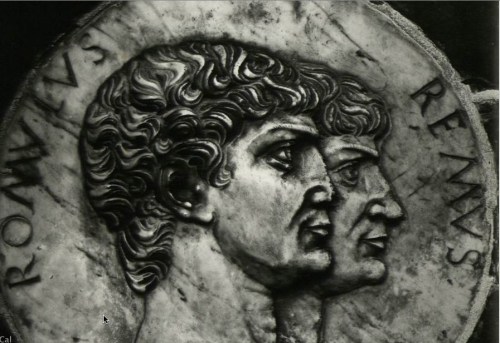
certosadipavia1Romulus and Remus, post-wolf and pre-wall vaulting. From the Certosa di Pavia. Credit: LIFE

Flash forward to 21 April of the year AD 121—1888 years ago to the day.

To honor the birthdate of Rome, the emperor Hadrian inaugurated a new, much more elaborate festival, marked by chariot races in the Circus Maximus. Here is the commemorative type Hadrian issued (in this case, a gold aureus). On the reverse is the Genius (i.e., personification) of the Circus. He holds a stylized chariot wheel and wraps his arm around one of the two turning posts of the Circus, known as the metae. [Hey, did you know this type bears the only true year date ever to appear on a coin struck in the ancient mint of Rome?—Ed.]

consusavcngCredit: Classical Numismatic Group

Then just two days ago a bunch of nutters [on this Blog, that’s a compliment—Ed.] on bikes from the Seven Hills were celebrating Rome’s birthday with, ummm, a revival of those chariot races in the Circus Maximus. For the glorious details, see what is indisputably the world’s greatest website on the Eternal City, eternallycool.net.

look-out-for-the-turnsCredit: eternallycool.net

Meanwhile, back in the States…

This weekend—Saturday 25 April to be specific—there will be a massive Rutgers Classics throwdown on the steps of Brower Commons on New Brunswick’s College Avenue.

It’s the Rutgers Classics Greek & Roman Fashion Show. Rutgers’ Top Ancient Models, tag teaming with the Ludus Magnus Gladiatores, the premiere gladiatorial reenactment troupe on the planet.

img_7831

3alasretiarius

Five shows in all, each lasting 20 minutes or so. And we’ll have a minimum 20 people on stage per show, with the gladiators mixing it up in between, and the inevitable DJ Korenelius on the wheels. So it’s going to be dynamic from start to finish. Current prediction for the weather is 79 degrees and sunny….

SHOW ONE: 11 AM     SHOW TWO: 12 PM

SPECIAL FEATURE: 1 PM keynote performance by LVDVS MAGNVS GLADIATORES

SHOW THREE: 2 PM   SHOW FOUR: 3 PM

Thanks especially to the Sisters of the Rutgers Theta Tau Chapter of Alpha Chi Omega Sorority; NYC designer Jessica Deschamps (see her creation in magenta above); Mr. Brian Beyer and the Latin students of Montgomery (NJ) High School, who made all the props for the day; Creative Director William Whelan (d-stroy advertising); and John J. Ebel Esq., Al Barbato (pictured above as retiarius), and each of the other men and women of LVDVS MAGNVS GLADIATORES. All these have been amazingly helpful in making this event happen.

The full Rutgers Day program book is available online here. Plus program books will be distributed widely on Rutgers Day at information tents, parking lots, student centers, etc. For continual Rutgers Day streaming news see the right-hand side of this blog!

sumeriangladiatorsDon’t miss breaking news about Saturday’s event—sign up for the RU Classics Greek & Roman Fashion Show Facebook group!

Newark newsflash: Kaitlin Moleen’10 wins prestigious AIA prize, will dig in Italy at Gabii

This just in.

The Archaeological Institute of America has awarded Rutgers-Newark junior Kaitlin Moleen a Jane C. Waldbaum Field School Scholarship for summer 2009. Just five of these prestigious fellowships are awarded annually, from a large applicant pool of college juniors and seniors and first year graduate students.

moleen

Kaitlin Moleen is an Ancient and Medieval Civilizations/Art History major at Newark, set to graduate in spring 2010. After Rutgers, she plans to attend graduate school concentrating on Roman Art and Archaeology.

This summer Moleen takes her fellowship just 12 miles east of Rome—to the field program of the Gabii Project, an unusually promising new (since 2007) major archaeological campaign.

The Gabii Project is an international, multi-institution initiative under the direction of Nicola Terrenato of the University of Michigan and with the patrocinio of the American Academy in Rome.

The last two years saw exciting field survey work; this summer marks the first actual season of excavation. The 5-week program will run from 21 June through 25 July 2009. The weblog of the Project can be found here while the Project’s photostream can be found here. The Facebook group is here.

gabiiproject

The AIA Waldbaum Field School scholarship will help Moleen pay for her expenses in Italy. Plus she will be profiled on the AIA website, and have the report of her Italy experience published in its fall newsletter.

Kaitlin Moleen hails from Union NJ, and graduated from Union High School. The Ancient and Medieval Civilizations major at Newark is part of the History Department and focuses on the history and cultural development of ancient Greek and Roman civilization. Two highlights in the upcoming fall semester include a course on Roman Monuments and Spectacle, taught by Rutgers Scholar/Teacher (and Classics grad student) Kathleen Shea, and a course on Alexander the Great, taught by Professor Gary Farney, the program’s director.

Buon lavoro—e complimenti!

gabiibeckerThe ‘area urbana’ of Gabii. Credit: Gabii Project Managing Director Jeffrey Alan Becker

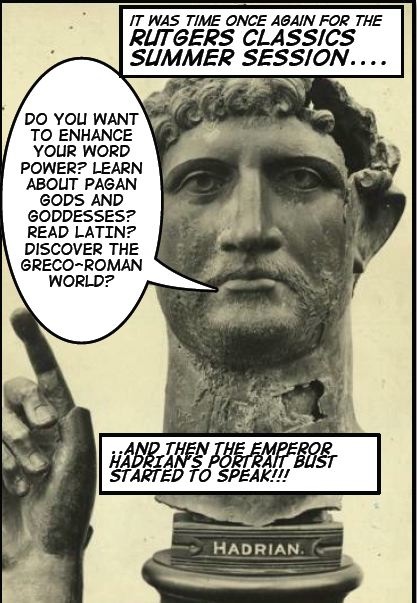
Rutgers Summer Session 2009: still time to register for great Classics courses

hadrianportrait09

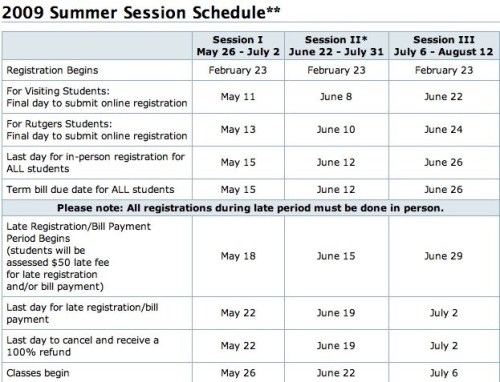
It may seem hard to believe, but Rutgers Summer Session 2009 is almost here. Still, it’s not too late to register for the traditionally great slate of offerings that Rutgers Classics provides for all three summer terms.

But you’d better hurry—depending on your student status and preferences, registration can close as early as 11 May.

summersessionschedule

Now, here’s what Rutgers Classics has on offer—or download the whole Classics program here as a .pdf:

Greek & Roman Mythology
01:190:207:B6
MW (6-9.55 PM)
05/26 to 07/02
PROFESSOR (II) T.J. FIGUEIRA

Greek Civilization
01:190:205:B6
MW (6-9.55 PM)
05/26 to 07/02
PROFESSOR T.C. POWER

Word Power
01:190:101:B6
TTH (6-9.40 PM)
05/26 to 07/02
PROFESSOR (II) T.J. FIGUEIRA & C. DESIMONE

Medical Terminology
01:190:102:B6
W (6-10 PM)
05/26 to 07/02
L. DANVERS

Literature & Culture in Augustan Rome
01:190:310:H6
MW (6-10 PM)
07/06 to 08/12
K. WHITCOMB 

Elementary Latin I
01:580:101:B1
MTWTHF (10 AM-12 PM)
05/26-07/02
A. FOMIN

Elementary Latin II
01:580:102:H1
MTWTHF (10 AM-12 PM)
07/06-08/12
C. DESIMONE

And with all those night classes you still can spend all day at the beach…

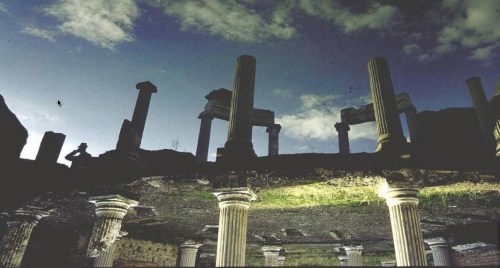
hadriansvillaRemains of Hadrian’s Villa at Tivoli in a reflecting pool. Credit: Gjon Mili/LIFE

Intense schedule of events @RU Classics for late April, early May

tacitus1

A full schedule of events at Rutgers Classics before Commencement 2009…

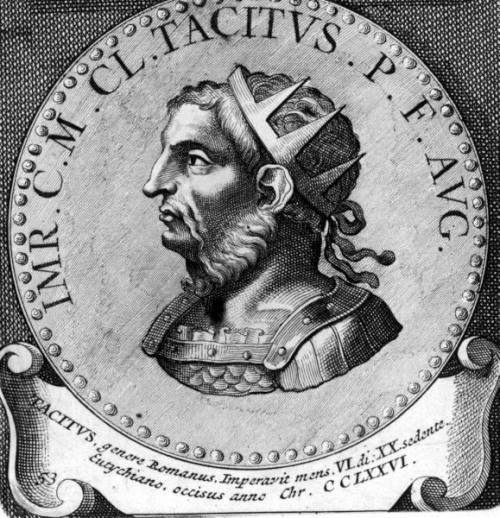
THURSDAY 16 APRIL @ 5 PM Wolfgang Haase (Boston University and Director of Aufstieg und Niedergang der römischen Welt),  “Marc-Antoine Muret: The First Political Commentator on Tacitus.”  Graduate Student Lounge at 126 College Ave., New Brunswick.

FRIDAY 17 APRIL Latin Fest 2009 @ 10.30 AM-5.30 PM: [Seneca], Octavia, with graduate student participants from Columbia, NYU, Penn, Princeton, Rutgers. New York University, 19 University Place, ground floor seminar room

THURSDAY 23 APRIL @5-7 PM. Senior Undergraduate Honors presentations; Eta Sigma Phi initiation. New location: Ruth Adams Building 003 (131 George Street), New Brunswick.

SATURDAY 25 APRIL @10AM-4 PM. Rutgers Day, featuring Rutgers Classics Greek and Roman Fashion Show, also LVDVS MAGNVS GLADIATORES reenactors. Steps of Brower Commons, College Avenue, New Brunswick.

THURSDAY 30 APRIL @5 PM. Eric Kondratieff (Temple University), “Virgil’s Heldenschau (Aen. 6.752-892): Pompa Funebris or City Walk?”.  Geology Hall, Old Queen’s Campus (85 Somerset Street), New Brunswick.

THURSDAY 7 MAY @4.30 PM. Markus Dubischar (Lafayette College), “Political Imagery in Solon”. Ruth Adams Building 003 (131 George Street), New Brunswick.

FRIDAY 8 MAY 1 PM. Cultural critic Lee Siegel (author, Against the Machine), “Brother, Can You Seize a Diem: The Precious Worth of Useless Knowledge in Desperate Times”. Ruth Adams Building 207 [note new room number] (131 George Street), New Brunswick.

saturnTemple of Saturn in Rome. Credit: Gjon Mili/LIFE

Rutgers Classics in the news, for better or worse

stekelvarken“It was 20 years ago today…” Lemonheads pseudo-bootleg from 1989

The story will have to speak for itself….from the 13 April 2009 Daily Targum, “Professor journeys from classics to punk rock“, by Michael Schwab / Contributing Writer.

“A song by alternative rock band the Lemonheads debuted entitled “Li’l Seed.”

But many do not know the song was written about 20 years ago by Chair of the University’s Department of Classics T. Corey Brennan, an associate professor at the University.

Although the song is his self-proclaimed one good song, Brennan of late has plenty to be happy about. He was appointed in December to a three-year term beginning July 1 as the Andrew W. Mellon Professor-in-Charge of the School of Classical Studies at the American Academy in Rome.

“As the name suggests, the job [description] literally goes on for pages,” Brennan said. Continue reading