Yearly Archives: 2013

On Thursday 23 October 2014: RU Classics hosts CIC graduate conference “Ancient Adornment”

AA_LOGO

The Department of Classics at Rutgers University is pleased to announce Ancient Adornment, the first Committee on Institutional Cooperation (CIC) graduate student conference on the ancient world. The one-day conference will be held on Thursday 23 October in Brower Commons (145 College Avenue) on Rutgers’ New Brunswick Campus.

This interdisciplinary conference on personal adornment in the ancient Mediterranean world offers an opportunity for graduate students in a wide spectrum of disciplines from participating CIC universities to exchange ideas and explore topics of broad interest—in this case, the modalities and significance of antique personal adornment. The graduate students of Rutgers Classics are organizing the conference, led by David Wright and Scott Barnard.

ANCIENT ADORNMENT SCHEDULE (THURSDAY 23 OCTOBER) [all sessions in Brower Commons Rooms A + B (second floor)]. Please note revised schedule for Paper Session II, to accommodate campus-wide union-organized protests (scheduled 12.30-1.30) at Rutgers.

8.45am Registration and coffee

9.30-11.00 PAPER SESSION I   Chair: Brian Hill (Rutgers)

T. Corey Brennan (Rutgers University, faculty), “Body Signs in Classical Antiquity: The Case of Baldness”

Laurie Porstner (Rutgers University), “The Agris Helmet from Iron Age Votive Deposit to Cultural Icon”

11.30-12.15, 1.45-2.30 PAPER SESSION II   Chair: Isaiah Clough (Rutgers)

(11.30) Emily Mohr (University of Maryland), “Deceptive Adornment in Euripides’ Helen and Aristophanes’ Thesmophoriazousai

[12.15-1.45 BREAK]

(1.45) Adam Kozak (University of Illinois, Champaign-Urbana), “The Adornment of Identity in Martial’s Epigrams

2.30-4.30 PAPER SESSION III   Chair: Katheryn Whitcomb (Rutgers)

Rob Santucci (University of Maryland), “De Togis Perlucentibus: A Senecan Guide to Men’s Fashion”

Jessica Wells (University of Illinois, Champaign-Urbana), “Adornment in the Epithalamia of Late Antiquity”

5 PM KEYNOTE PRESENTATION   Introduction: David Wright (Rutgers)

Janet Stephens (Baltimore, MD) “Truthy or Falsish: Sculpting the Language of Ancient Roman Hair” (with demonstration)

The conference will be free and open to the public, but pre-registration at cicruclassics2014@gmail.com is encouraged to ensure participation. A reception follows the conference.

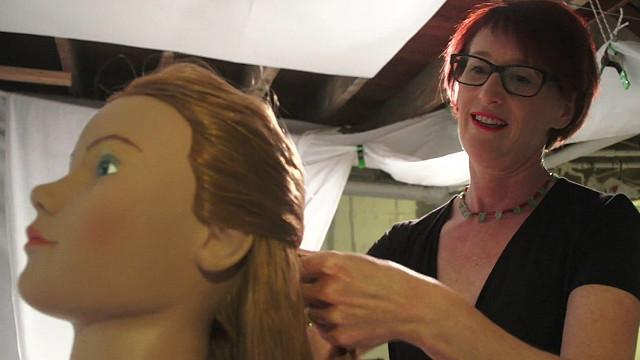
Noted experimental archaeologist Janet Stephens will deliver the keynote presentation to close the conference on the evening (5 PM) of Thursday 23 October 2014. Stephens has published her pioneering work on ancient hairdressing techniques in the Journal of Roman Archaeology and Journal of Experimental Archaeology, and seen her studies featured by the Wall Street Journal, NPR and the BBC.
130527133725_janet_stevens_640x360_bbc_nocredit

Ancient Adornment keynote speaker Janet Stephens. Credit: BBC News Magazine

Why this conference? The study of ancient personal adornment opens lines of inquiry into a vast array of cultural, socio-political, and literary spheres. In antiquity, a person’s dress, hairstyle, cosmetics, jewelry, armor, religious accoutrements, and other accessories centrally contributed to their role in society and cultural symbolic capital.

Iconographic representations of personal adornment are found in every imaginable artistic medium. And many ancient writers specifically treated the topic, ranging from Ovid to Tertullian to Synesius. Of course, numerous objects associated with personal adornment have come down to us from antiquity.

Especially in the last decade, there has been much new interest in both recovering the realities and exploring the social functions of Greek and Roman dress and adornment. This area still, however, lends itself to much further study from historical, literary, archaeological, and art historical perspectives.

For questions about the conference, please contact David Wright (djw167@scarletmail.rutgers.edu).

ciclogo

Headquartered in the Midwest, the Committee on Institutional Cooperation (CIC) is an academic consortium of fifteen top-tier research universities, including the members of the Big Ten and the University of Chicago. Its members, in addition to Chicago, are the University of Illinois, Indiana University, University of Iowa, University of Maryland, University of Michigan, Michigan State University, University of Minnesota, University of Nebraska-Lincoln, Northwestern University, Ohio State University, Pennsylvania State University, Purdue University, Rutgers University, and the University of Wisconsin-Madison.

For more than half a century, these world-class research institutions have advanced their academic missions, generated unique opportunities for students and faculty, and served the common good by sharing expertise, leveraging campus resources, and collaborating on innovative programs. Governed and funded by the Provosts of the member universities, CIC mandates are coordinated by a staff from its Champaign, Illinois headquarters. The CIC welcomed the University of Maryland and Rutgers University to membership on 1 July 2013, a year previous to the schools’ admittance to the Big Ten in 2014.
On 14 November 2013, Dylan Bloy (Brooklyn) illustrates the Rutgers archaeological field school at Vacone (Italy)

251460_10150249992110780_4092588_n
Tempus fugit! For the Rutgers Classics Graduate Student Association, it’s the third and final lecture of the fall semester. But what a lecture. At 5 PM on Thursday 13 November, Dr. Dylan Bloy will present on the topic of the “Rutgers Field School at Vacone: Purpose, Method, and Results.”  Ruth Adams Building (room 003) is the venue, on Rutgers’ post-autumnal Douglass Campus in New Brunswick. Needless to say, this event will be of special interest to any RU student aiming to acquire some experience in archaeological field methods and conservation techniques—or indeed, anyone interested in up-to-the-minute archaeological findings for later Republican and early imperial central Italy. Continue reading

At RU on Thurs 10 Oct 13, Barnard’s Nancy Worman addresses landscape aesthetics in ancient literature

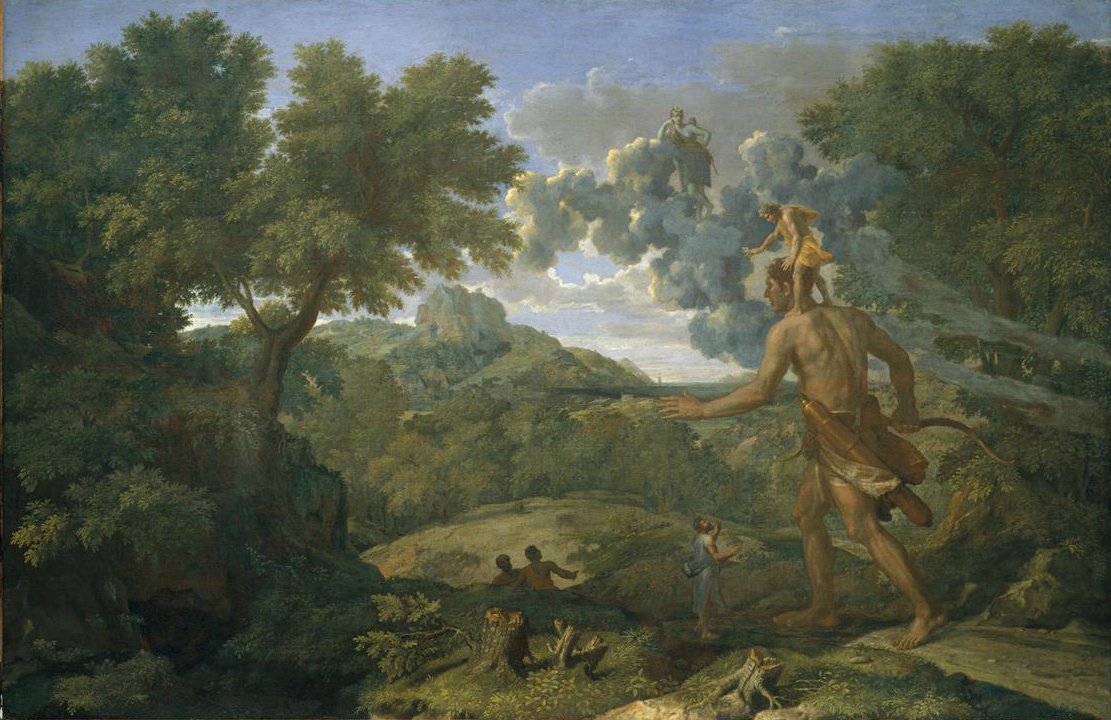
Poussin_Blind_Orion

Nicolas Pouissin’s Blind Orion Searching for the Rising Sun (1658). Credit: The Metropolitan Museum of Art

Here at Rutgers Classics, Thursday 10 October (5 PM) marks the first public lecture of the Fall 2013 term.  Ruth Adams Building (room 003) is the venue, on Rutgers’ leafy Douglass Campus in New Brunswick. And the host is the Department’s ever-active Graduate Student Association. The speaker? Nancy Worman, Professor of Classics and Comparative Literature in Barnard College and Columbia University. Professor Worman will present on “Dreams of Order: Landscape Aesthetics in Ancient Poetry and Literary Theory”. Continue reading

Where R they now? Chatting with Thomas J. Biggs’08 about Yale Classics, and beyond

RU_Biggs3

Now here’s a blast from the (not so distant) past: over the weekend we had a chance to catch up with Thomas J. Biggs ’08, now on the verge of receiving his PhD degree from Yale University’s graduate program in Classics.

It’s been a full five years now that Tom graduated from Rutgers College summa cum laude, Phi Beta Kappa, and with Departmental honors, double majoring in English and Classics. As a Rutgers senior, Tom also received funding from the Aresty Research Center for Undergraduates to complete a memorable thesis, “Eunuchs and Castration Ritual in the Cult of the Great Mother.” Sarolta A. Takács, Professor of History at Rutgers, directed the work. Here’s an excerpt from our chat… Continue reading

In the news at RU: ‘Ancient coins taking leap into the 21st century’

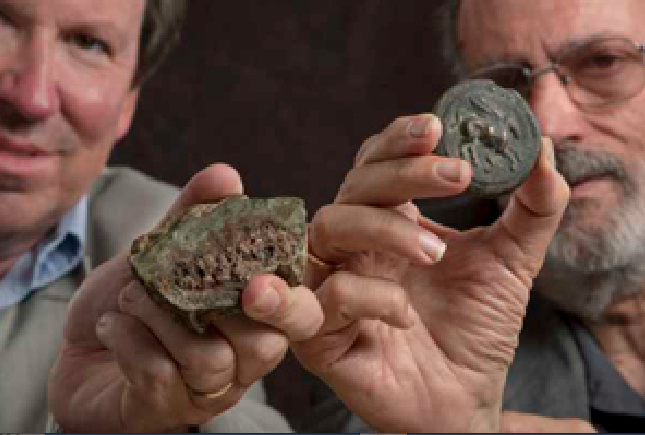
COINS_1

Associate professor of classics Corey Brennan, left, and Thomas Izbicki , humanities librarian and curator of the Ernst Badian Collection, with some of the collection’s treasures. Brennan holds a Roman “Aes Rude” dated from 270 BCE, while Izbicki holds a Roman “Aes Grave” from 275-270 BCE depicting an image of Pegasus.  Credit: Nick Romanenko

‘”The unimpressive hunk of bronze would fit easily into the palm of a child’s hand. It carries a significance that far belies its size.”

“Since 2001, the basement of Rutgers’ Archibald S. Alexander Library has been home to a collection of coins dating from the Roman Republic. This mottled green and brown rock, first used as currency some 270 years before the Common Era began, represents the oldest in the array.” Continue reading

Postcard from Kaohsiung (Taiwan): RU Classics alum and Fulbrighter Kevin Apodaca’11

Continue reading

On 13-14 September 2013, Project Theophrastus hosts a Rutgers conference on Augustan philosopher Arius Didymus

Google ChromeScreenSnapz002

Arius Didymus on the world, discussed in J. Lipsius, Physiologiae Stoicorum II (1610)

It all happens Friday and Saturday 13-14 September 2013, at the Rutgers University Inn & Conference CenterProject Theophrastus, as part of its continuing study of the School of Aristotle, is holding a conference on a Greek epitome/survey of Peripatetic ethics. The survey is attriubuted to Arius Didymus, who is believed to have been the court philosopher of Caesar Augustus. See below for a full schedule of the event.

Arius Didymus was known for having advised Octavian (the future Augustus)  to spare the inhabitants of Alexandria when that city fell to his Roman army. Arius also was admired in antiquity for his Consolatio addressed to Livia, Augustus’ wife, on the death of her son Drusus. Continue reading

Postcard from Trinity University in San Antonio: Lisa Whitlatch (RU Classics PhD 2013)

SafariScreenSnapz002

Here’s some welcome news! Lisa Whitlatch, Rutgers Classics PhD’13 writes from San Antonio TX:

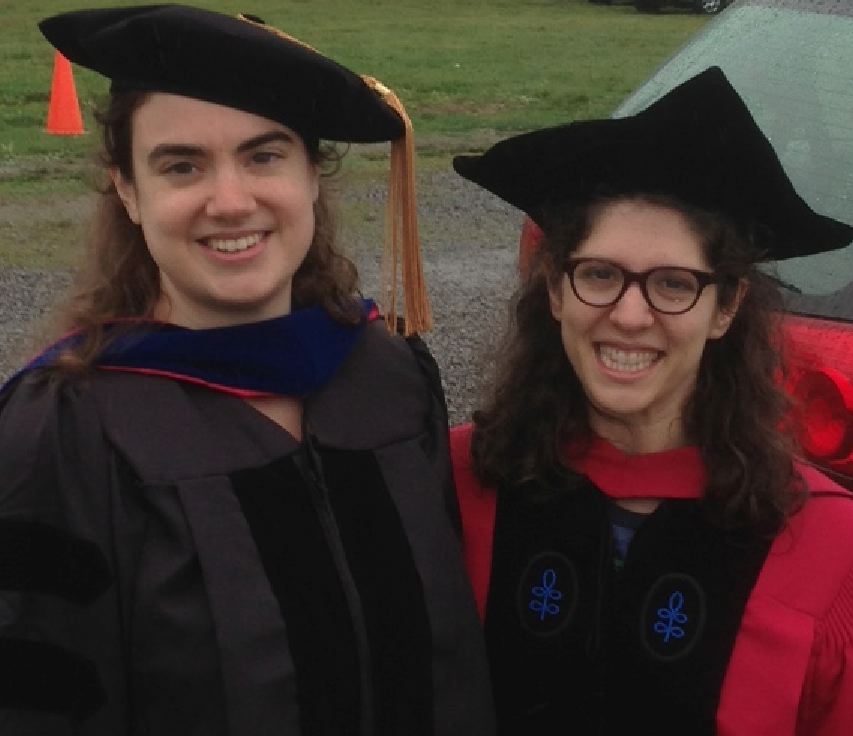
“On 19 May—a rainy Sunday morning—after years of coursework, teaching and writing, I took part in the 2013 Rutgers Graduate School-New Brunswick Convocation.  It was an absolute pleasure and a fitting conclusion to walk across the stage with my adviser, Dr. Leah Kronenberg, with diploma in hand to receive my hood.”

PreviewScreenSnapz002

In the hood: Lisa Whitlatch, PhD’13 (left) and Associate Professor of Classics Leah Kronenberg (right)

“The journey is hardly over: I’ll be teaching at Trinity University here in San Antonio for the 2013-2014 academic year, and from there, the world awaits.”

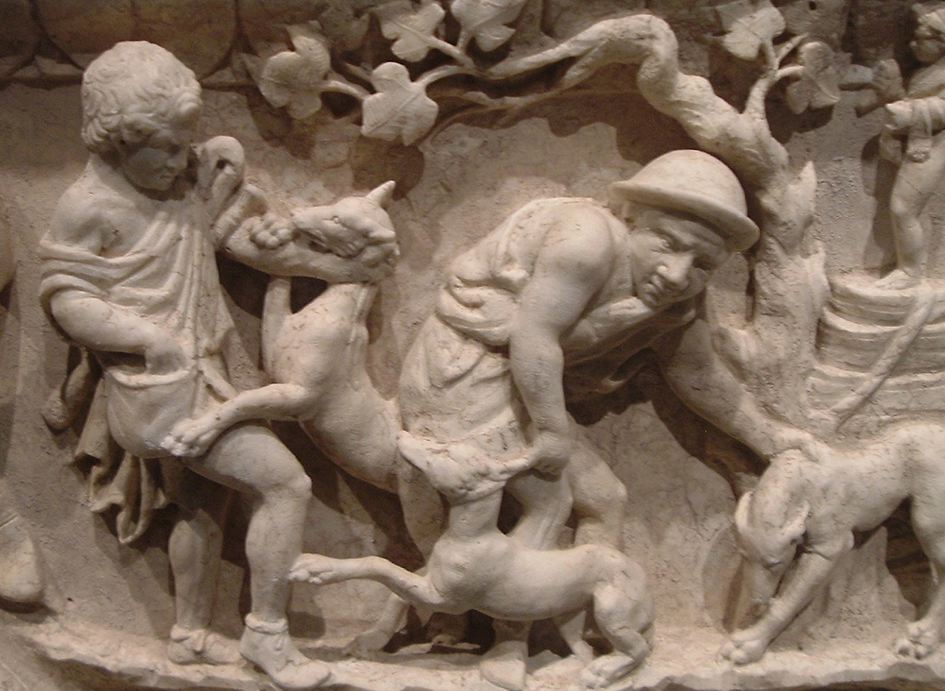
SafariScreenSnapz003

Roman sarcophagus (detail) in the Art of the Ancient Mediterranean section of the San Antonio Museum of Art

” If you’re ever in San Antonio, be sure to check out the San Antonio Museum of Art, which boasts a huge collection of antiquities.  I look forward to using it as a resource in my Classical Mythology classes at Trinity next Fall.  Otherwise, I’ll be mining my Rutgers dissertation, The Hunt For Knowledge: Hunting in Latin Didactic Poets, for publications and presentations.”

“I’ll be hopping back up for Philly for the 2013 CAAS Annual Meeting, where Rutgers University former and current affiliates will be making a huge splash yet again.  I can’t stay out of the northeast that long!”

Congratulations Lisa Whitlatch for your great work and outstanding leadership in the RU Classics program!

SafariScreenSnapz001

No one knows the ancient animal world better than our Lisa Whitlatch, so we thought she would appreciate this life-size representation of a deer formed from rattlesnake rattlers, last seen in San Antonio’s celebrated Buckhorn Museum, with its 520 species of wildlife on display, many of which are record holders—Ed.

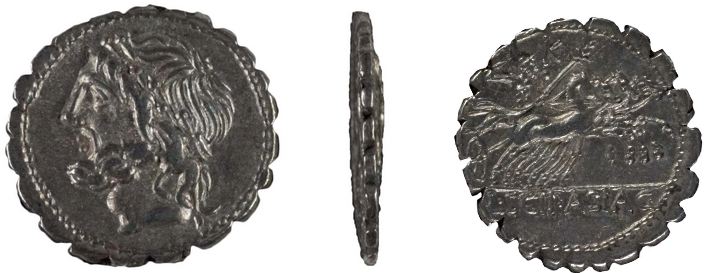
At RU, for the Badian Collection of Roman Republican Coins, a 2013/4 Loeb Classical Library Foundation grant

EB_C311_1c

Rutgers Classics associate professor T. Corey Brennan, in collaboration with Rutgers University Libraries, has received a significant grant from Harvard’s Loeb Classical Library Foundation for 2013/4. The object? To bring fully into the digital realm the Ernst Badian Collection of Roman Republican Coins, which is housed in the Special Collections and University Archives of the Rutgers University Libraries. 

The collection is an extraordinary one. It numbers about 1250 Republican coins, augmented by a few dozen Greek and Roman Imperial issues. The Republican component of the Rutgers collection is remarkable for its comprehensiveness, historical value, and the fine condition of most of its individual pieces. Continue reading

2013 RU Seniors, Eta Sigma Phi initiates honored at end of year Classics fest

PreviewScreenSnapz001

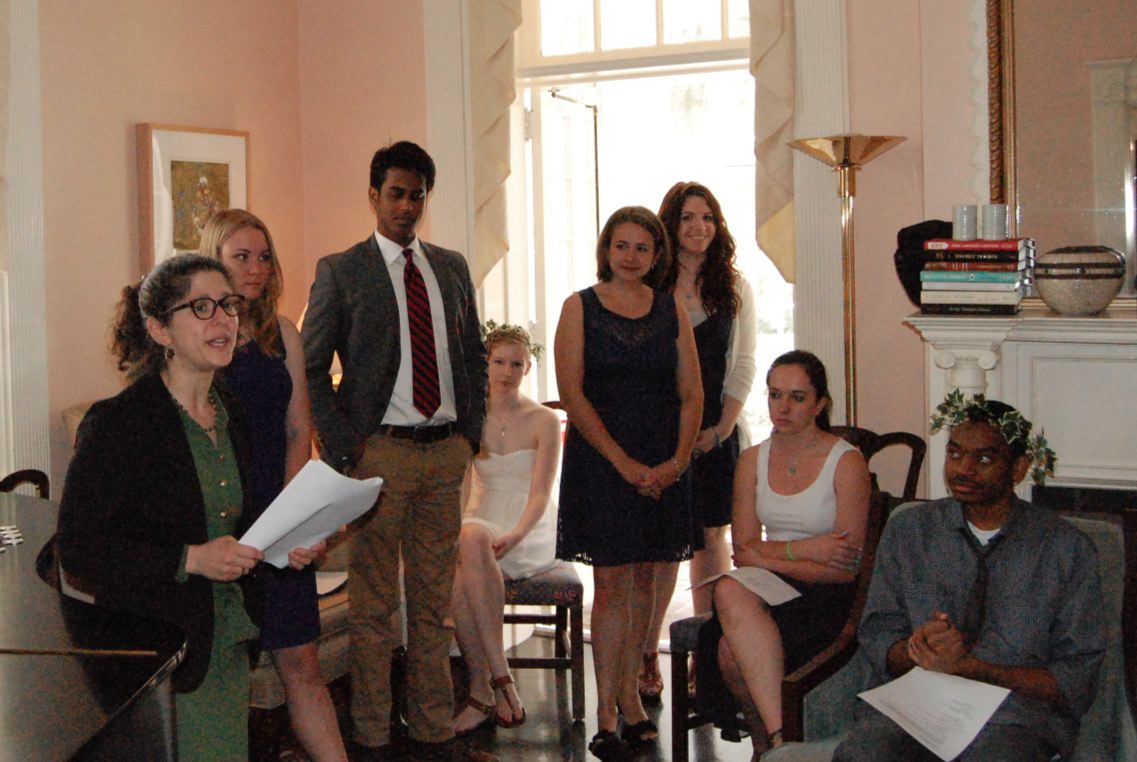
The historic Douglass College Dean’s Residence on Nichol Avenue was the setting on Tuesday 7 May 2013 for one the highlights of the Rutgers Classics calendar—a mega-ritual that combines the annual Eta Sigma Phi initiation into the National Classics Honors Society; honors thesis presentations (two this year); and then finally, a congratulatory ceremony for our graduating seniors.

Associate Professor (and Classics Undergraduate Director) Leah Kronenberg presided over the event, in which she stressed for the standing-room only crowd—though thankfully all parents and grandparents in attendance received a seat!—precisely what it means to study the Classics in the 21st century. Continue reading