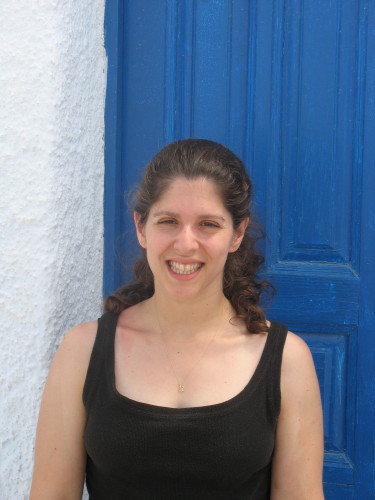
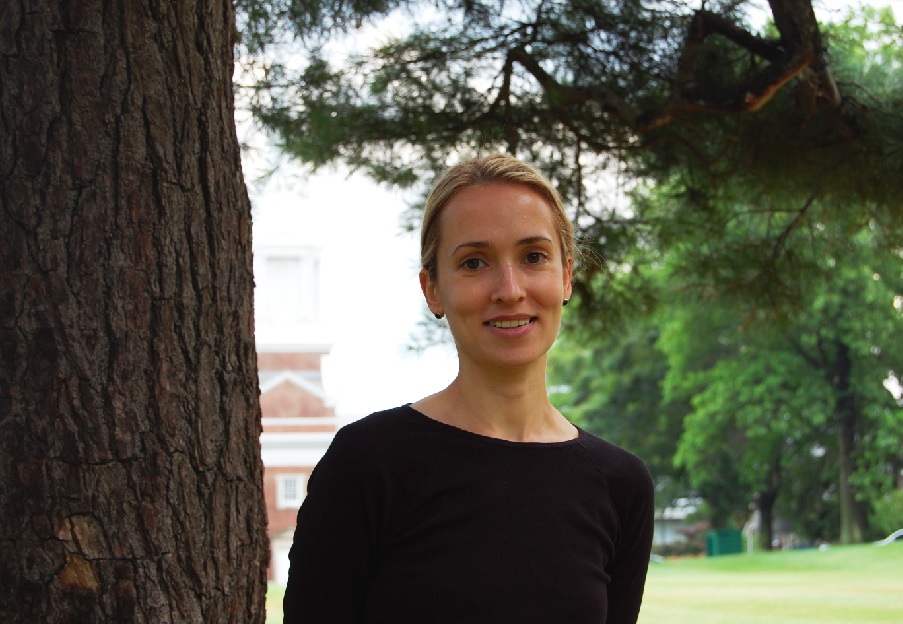
Welcoming new Classics faculty (2): Serena Connolly

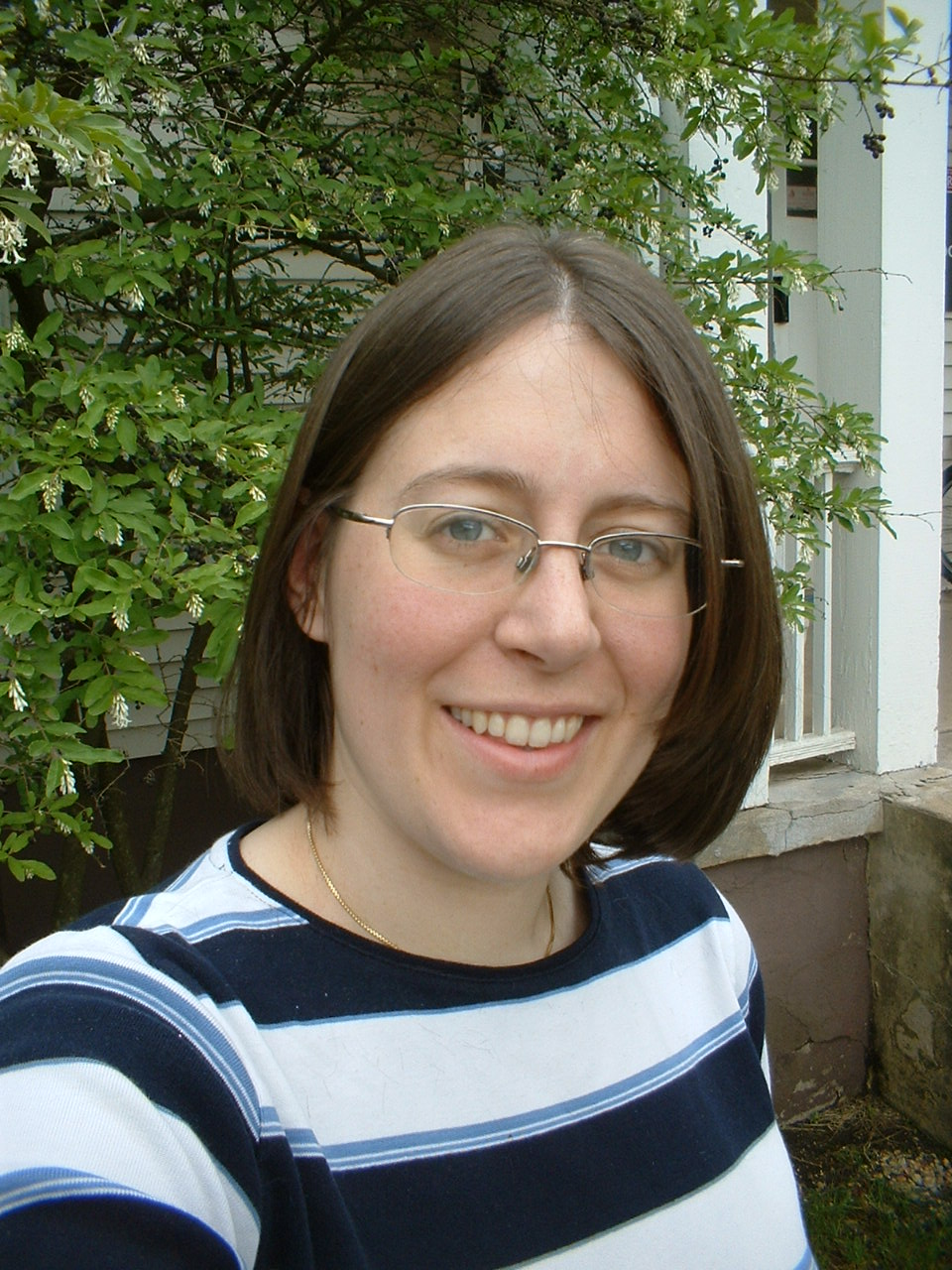
Serena Connolly is delighted to be returning to Rutgers this Fall!

She is a graduate of Cambridge (BA 1998) and Yale (PhD 2004), where she taught for three years before coming to Rutgers Classics in 2007 as a visiting assistant professor. This September Serena starts a continuing appointment in the department.

Connolly has just completed her book manuscript, in which she explores the social, political and legal significance of the system of petition and response, and she’s hoping for publication in 2009.

This summer she is editing part of a previously unpublished translation of the Codex Justinianus as a contributor to a project directed by Bruce Frier (University of Michigan).

She also plans to continue work on a new project, the first book-length examination of the Disticha Catonis—an Imperial collection of Latin aphorisms—in their classical context.

Serena has been enjoying spending June in the heat of the East coast, but will soon be heading to Norway, where she will experience for the first time hiking in the land of the midnight sun.
RU visiting researcher Stefan Schorn wins Leuven post

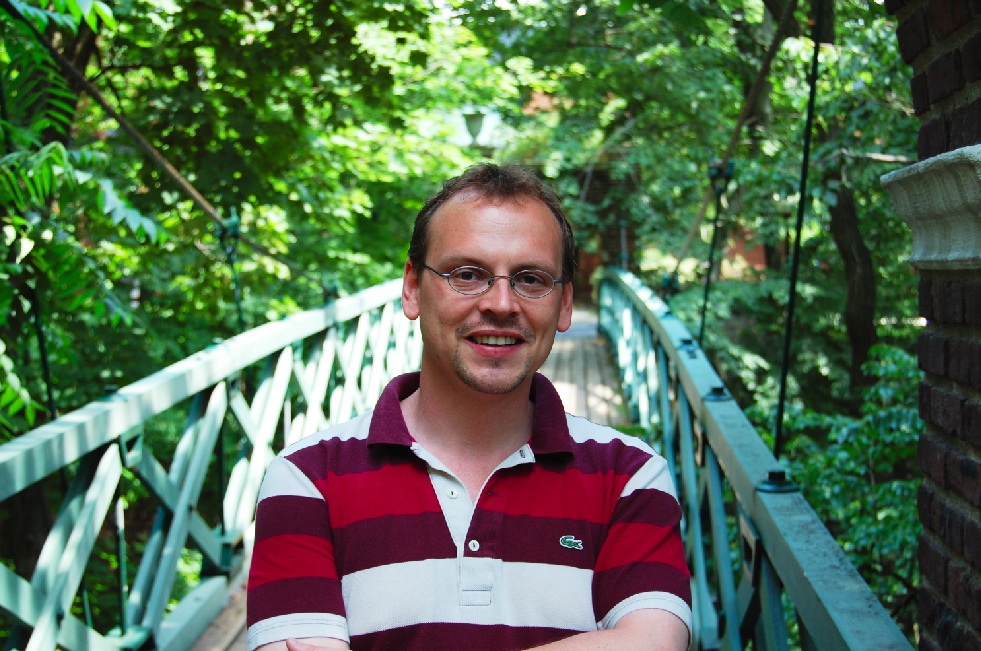
Rutgers Classics has been lucky to host Stefan Schorn, a visiting research scholar in the Department in residence from November 2007 till October 2008. He is funded by the Alexander von Humboldt Foundation, and hosted by former von Humboldt fellow (and Rutgers professor emeritus in Classics) William F. Fortenbaugh.

Schorn studied Classics at the Universities of Bamberg (Germany) and Rome and has been working afterwards as a research assistant and an assistant professor at the Universities of Bamberg and Würzburg.

During his stay at Rutgers, Schorn is working on a commentary on the fragments of Theophrastus’ work On Piety. “This is a great and complex text”, explains Schorn, “because it combines history of religion, literature, philosophy and mentalities. So work never gets boring. I have always loved to work on fragmentary texts since the days of my dissertation when I edited the fragments of the biographer Satyrus. As a research scholar I have all the time I need. And I have Bill Fortenbaugh—the foremost specialist of Theophrastus—to discuss it with (and someone to correct the English of my commentary).”

Continue reading

RU Classics faculty update: T.J. Figueira

And what is Rutgers’ senior ancient historian up to these days? A lot, as it so happens.

Among other recent publications, Thomas Figueira draws the attention of his readers to the long-delayed, but now imminent, appearance of his study on 5th- and 4th-century colonization, “Classical Greek Colonization,” forthcoming in A History of Greek Colonisation and Settlement Overseas, G.R. Tsetskhladze, editor (E.J. Brill, Leiden) 427-524.

He continues his collaboration with his younger sister, D.M. Figuiera, the noted comparatist, in a series of papers and contributions on critical theory, including 2007 appearances at the XVIIIth Congress of the International Comparative Literature Association in Rio de Janeiro and at the conference Sparta in Comparative Perspective, Ancient to Modern: History, historiography and classical tradition in Nottingham.

Figueira will give two papers in Cork, Eire (at the International Sparta Seminar and the Celtic Congress of Classical Studies) in July, and, next year, will speak at the Philadelphia 2009 APA Annual Meeting, and at conferences in Liverpool and at Corinth.

In Rutgers notes, Figueira will be representing the School of Arts and Sciences (New Brunswick) in the Rutgers University Senate, and continues his participation in the RU Honors program under colleague Dean Sarolta Takács.

He calls everyone’s attention to the recent completion of Ancient History themed dissertations by Andrew Scott and Gregory Golden (Corey Brennan supervising), and wishes to convey his warmest appreciations to Corey and Leah Kronenberg for their efforts resulting in the addition of Timothy Power, Serena Connolly, and Emily Allen as tenure-track Classics colleagues. (Many thanks to you too, Tom! Ed]

Hicks presents paper at St. Andrews

Fourth year RU Classics grad student Ben Hicks recently sojourned in Scotland, where he gave a paper at Identity, Representation And The Principate AD 14-68. The conference ran from 18-21 June 2008 and was sponsored by Dr. Alisdair Gibson of St. Andrews University.

Hicks’ paper, entitled “‘Unfortunate Rather than Wicked’: Failure to Communicate in the De Legatione ad Gaium,” explored the failure of Philo’s embassy to the emperor Gaius through the use of speech act theory.

The conference drew scholars of the early Principate from the United States, United Kingdom, Canada, and Germany.

Benjamin Hicks is a native of North Carolina, having received his BA from Washington and Lee University in Lexington, Virginia. He is currently beginning work on a dissertation focusing on imperial consilia and decision-making.

Hicks also will be presenting a paper entitled “Evocatio Imagery in Tacitus’ Histories 4.83-84” in Philadelphia at the 140th Annual Meeting of the American Philological Association (January 2009).

RU Classics faculty updates: Kronenberg, Brennan

Just in case you were wondering…

Assistant professor Leah Kronenberg has spent the past year on sabbatical with a fellowship from the American Council of Learned Societies.

She has completed work on a book manuscript that will appear with Cambridge University Press entitled Fables of Farming from Greece and Rome: Allegory and Satire in the Agricultural Works of Xenophon, Varro and Virgil.

Kronenberg also has begun researching a new book-length project entitled Gods and Monsters: Roman Representations of Epicureanism. She will continue work on this project next year with a fellowship from the Loeb Classical Library Foundation.

Associate professor T. Corey Brennan has just finished his second three-year term as department chair, and in 2008/9 will serve as acting chair of Classics at Rutgers. This summer he continues work on his main book project, a group biography of elite women in the Roman Republic, and starts a new study, examining sexual stereotypes in antiquity.

Recent book chapters (appeared or forthcoming) treat Roman dress in North Africa, the limitations of ancient diplomacy, and (for a new supplement to the Cambridge History of China edited by M. Loewe and M. Nylan) a comparison of ancient Rome and the Han capital Chang’an.

This past January Brennan began a two year term as president of the Society of Fellows of the American Academy in Rome, and with it, ex officio membership on the AAR board of trustees. He maintains a weblog of SOF activities here.

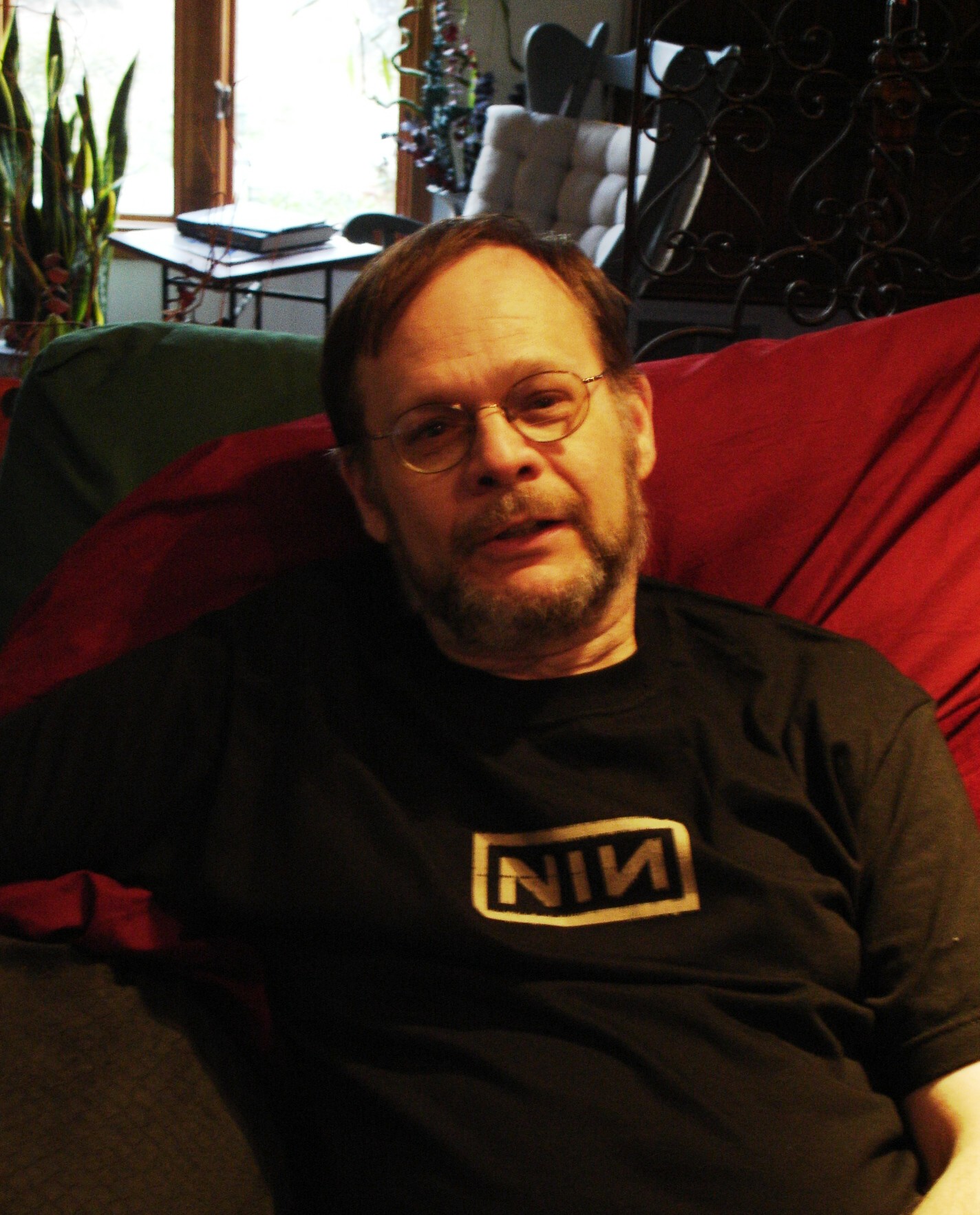
(Re)introducing Matt Fox

This past September Matt Fox (Oregon BA 1996, Princeton PhD 2004) came to RU after three years in one of the most unusual and rewarding academic positions that this country has to offer, the Robert B. Aird Chair in the Humanities at Deep Springs College (California). This coming year is the second in Matt’s two-year appointment at Rutgers Classics as a visiting assistant professor.

Matt’s scholarly interests range widely—he is equally adept in Greek and Roman literature—but, as he puts it, they “tend to center on literary and oral cultures, especially on the role of music and other media in creating and transmitting cultural memory”. All this in turn involves “detailed philology and contextual analysis and synthesis”.

This summer Matt is finishing a translation of Lucan’s Civil War for Penguin Classics, and working up for publication by University of California Press his 2004 Princeton dissertation, a comparative study of ancient musical cultures.

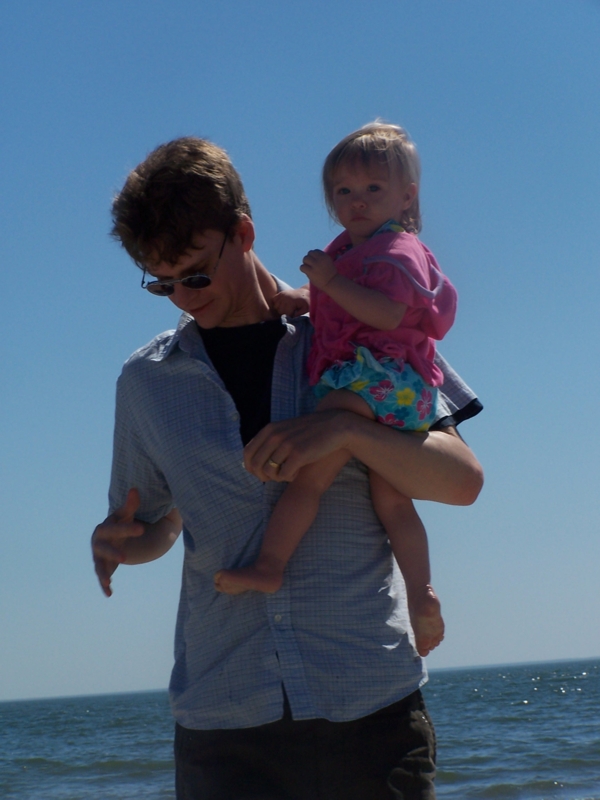
Matt’s wife Kate Shea (Oregon BA 2000)—who from 2004-2007 held the title of Librarian of the Glorious Peoples Library of Deep Springs College—is an advanced Rutgers graduate student in Classics. Their adorable twin daughters (born 21 February 2007) Jordan Nevada and Camella (Ella) Mae are the focus of every Rutgers event they attend.

“In late June we’re heading for Idaho to visit family”, reports Matt, “where I’ll also be working with my brilliant collaborator Ethan Adams of Loyola Marymount, who is helping with notes and adding to the volume a translation of Petronius’ mock civil war poem.”

Continue reading

Welcoming new Classics faculty (1): Timothy Power

This September Timothy Power—who taught Classics from 2001 through 2008 at the University of Washington—joins the Rutgers faculty as a tenure-track assistant professor. A graduate of Yale (BA 1994) and Harvard (Ph.D. 2001), Power spent academic year 2006/7 as a Fellow of the Center for Hellenic Studies in Washington DC.

Power is the author of The Culture of Kitharoidia (Center for Hellenic Studies/Harvard University Press 2007) —”the first study dedicated exclusively to the art, practice, and charismatic persona of the citharode”, i.e., a poet-performer who sang while accompanying himself to the ancient lyre called the kithara—as well as several substantial articles and chapters on ancient Greek music and poetics.

Plans for this summer? “I”ve recently finished revisions of a paper on Pindar’s Eighth Paean, which explains how choral dancers are like automata, among other wondrous things. It will appear soon in a volume devoted to choral song and performance edited by Lucia Athanassaki and Ewen Bowie.

I am beginning work now on my contribution to the new Brill Companion to Sophocles (“Sophocles and Music”). That and continued work on my ongoing book project, Sounds of the City: The Cultural Acoustics of Classical Athens, should keep me occupied during this gorgeous Seattle summer.”

Rutgers—Newark chooses Gloyn for new program

Another Rutgers Classics first. Fourth year graduate student Liz Gloyn has been selected by Rutgers University—Newark as a member of its inaugural class of Rutgers Scholar-Teachers for 2008-2009.

The Scholar-Teachers program was developed to place some of the very best advanced doctoral students in the Humanities at Rutgers’ New Brunswick campus in classrooms in Newark. Gloyn’s appointment is in Classics, which at Newark is administered by the Department of History. There Gloyn will teach a combination of introductory and elective courses in the field.

Just three students received the award this year.

Liz Gloyn, a native of London, received her first two degrees (BA. M.Phil) from Cambridge University (Newnham College) in Classics. She is writing a dissertation on views of the family in Hellenistic philosophy under the direction of Professor Leah Kronenberg. This May, at the Ann Arbor Feminism and Classics V conference, Liz presented a paper on the depiction of freedwomen at Trimalchio’s dinner party in Petronius’ Satyricon.

Jensen wins coveted Athens prize

Rutgers graduate student Sean Jensen has won a place as a Regular Member of the American School of Classical Studies at Athens on the Michael Jameson Fellowship for 2008/9. Jensen, a graduate of Brown University, is currently in his fifth year at Rutgers, and is completing his dissertation on sub-hegemonies in the Delian League under the direction of Professor Thomas J. Figueira.

On 11 January 2009 Jensen presents a paper on the Milesian sub-hegemony at the American Philological Association Annual Meeting, as part of a panel on Thucydides.

Lost Mommsen reappears at Rutgers

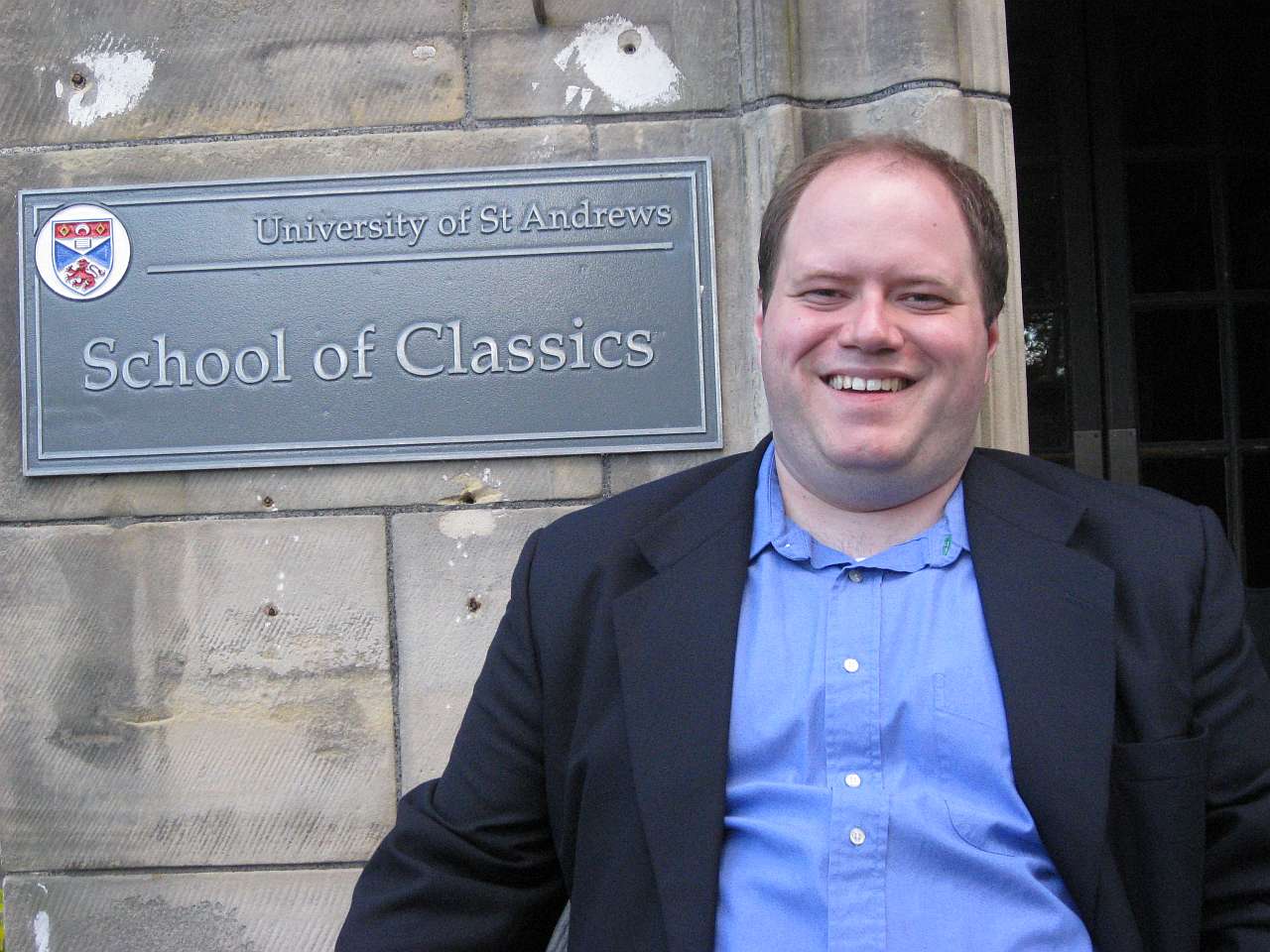
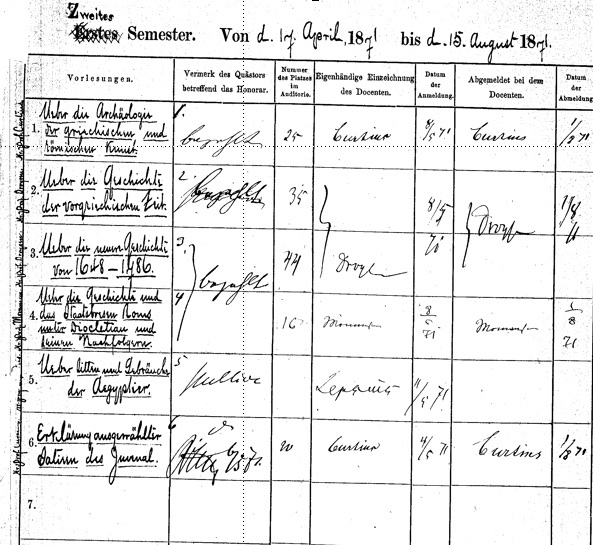
Hold on to your hat. Rutgers Classics PhD ’07 Michael Johnson has unearthed in the Special Collections and University Archives of RU a discovery of potentially great interest to the classical world. It has to do with the papers that Frank Austin Scott, tenth president of Rutgers (1891-1906), donated to the university. These included several folders filled with papers pertaining to his studies at Friedrich-Wilhelm-Universität in Berlin. In 1871-1872 he had taken courses at that institution with some of the most eminent scholars of the ancient world, then working at the peak of their respective careers.

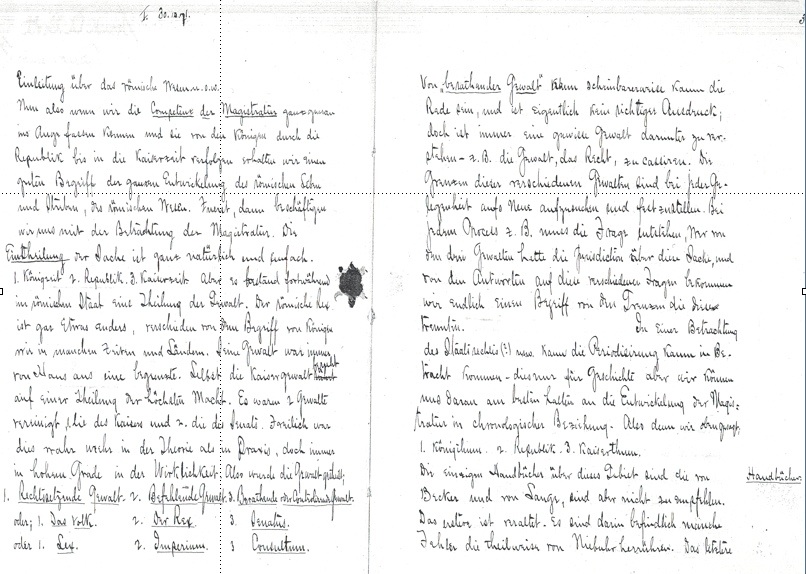
Most importantly, as Johnson seems to have been the first to discover, Scott took care to preserve the notes from three series of lectures given by the greatest modern historian of ancient Rome, Theodor Mommsen. These are entitled “Roman Antiquities”,”The Annals of Livy”, and “The History of Rome under Diocletian and his Successors”.

The Austin Scott papers on Mommsen—500 standard “blue-book” pages, elegantly written in clear and simple German—come from small upper-level seminars of approximately 16-24 students. The notes on the “Roman Antiquities” lectures are of special interest, because of their relationship to Mommsen’s most useful and most enduring work, Römisches Staatsrecht, only one volume of which had been published at that time, and that just recently (the first edition of volume one was issued in 1871).

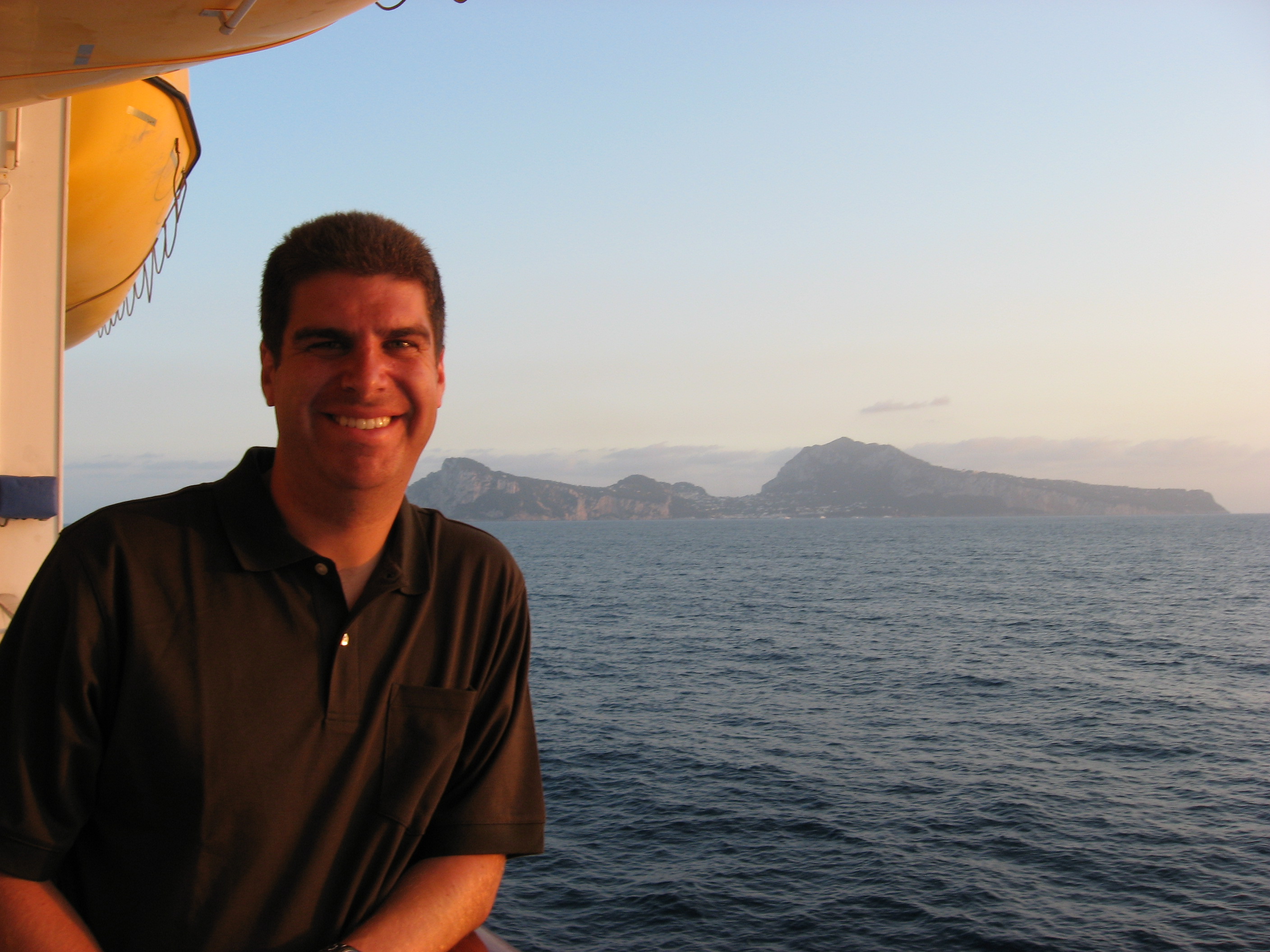
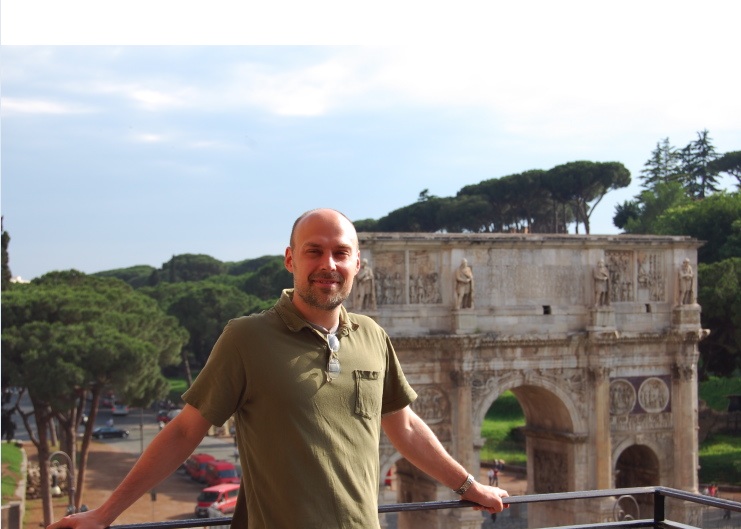
Michael Johnson is a Fellow of the American Academy in Rome, and teaches at Davidson College. He presented some of his preliminary findings on the Scott papers at the 2007 Annual Meeting of the American Philological Association, and is currently engaged in working up the Mommsen lectures for publication. Austin Scott study card, with signaturesMike Johnson at the Arch of Constantine, May 2008