Yearly Archives: 2008

Season’s greetings from Rutgers Classics

wilsonwintersceneEvelyn O. Wilson (American, 1915-2006), Winter Scene (ca. 1943). Image courtesy of Joanne Wilson Jaffe, and the Ben and Evelyn Wilson Foundation.

Looking back, 2008 really seems to have been a banner year for Rutgers Classics. (Just skim the past posts of this blog.)

Deep thanks and warmest seasonal greetings to our students, alumni/ae, and many friends both inside and outside Rutgers University.

More—indeed, much more—to come in 2009!

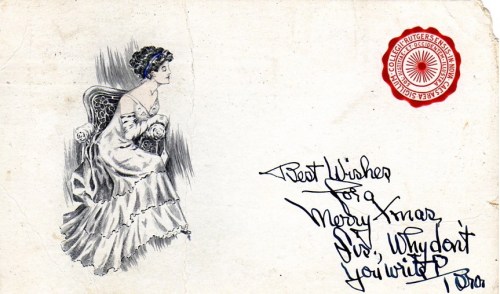
messagetosisterRutgers postcard (no date). “Best Wishes for a Merry Xmas. Sis., Why don’t you write? Bro.” From the Kenlew Collection.

A new Mellon Professor for the American Academy in Rome: RU Classics professor Corey Brennan

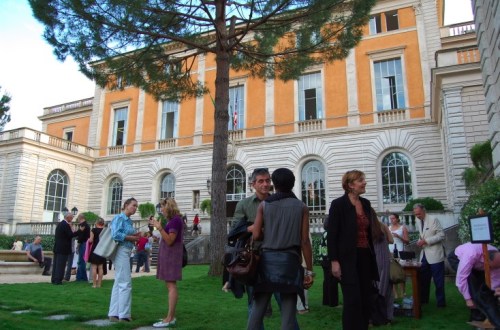
aarstudio2The McKim, Mead & White building of the AAR, during the Academy’s June 2008 Open Studios

Excerpted from a press release (12 December 2008) by Adele Chatfield-Taylor (FAAR’84), President of the American Academy in Rome:

“Roman historian T. Corey Brennan has been appointed to a three-year term as the Andrew W. Mellon Professor-in-Charge of the School of Classical Studies at the American Academy in Rome. Brennan’s appointment begins 1 July 2009.

Brennan comes to the Academy from Rutgers University-New Brunswick, where he is currently associate professor and chair of the Department of Classics and a former director of the university’s interdisciplinary program in Italian Studies. Before arriving at Rutgers in 2000, he taught for a decade in the Departments of Greek and Latin at Bryn Mawr College.

Brennan held a pre-doctoral fellowship at the American Academy in Rome in 1987-1988, and currently (2008-2010) serves as president of its Society of Fellows, an alumni group of more than 1000 that comprises Academy Rome Prize winners, Residents, and Affiliates.

[He] succeeds Professor Thomas A.J. McGinn (FAAR’85) of Vanderbilt University as Mellon Professor at the American Academy in Rome.”

Brennan’s three-year position is a temporary one, after which he returns to Rutgers for teaching. As Professor-in-Charge, Brennan will help advance the humanistic work of the Rome Prize winners and other members of the AAR community, and coordinate and supervise many aspects of the Academy’s varied resources and programs (especially “walks and talks” in the city of Rome, and trips further afield, plus lectures and conferences in the humanities). While in Rome, he also will continue to work closely with more advanced Rutgers Classics graduate students. You can see the Rutgers news release on this here. For an informative list of Rutgers’ links to the American Academy in Rome, see the final section of this article.

But we’re not quite finished yet…. Continue reading

RU Classics gears up for January 2009 APA/AIA joint Annual Meetings in Philadelphia

safariscreensnapz006

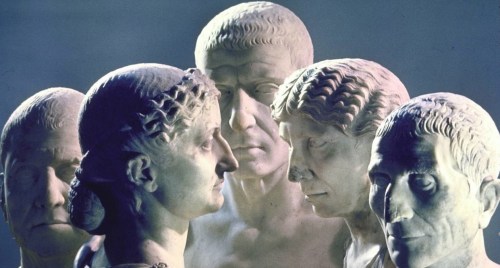
The genius of LIFE photographer Gjon Mili; this and roughly 2,000,000 other LIFE archive images now available for free viewing thanks to a new partnership between Google and LIFE.com

RU ready for this? In just under a month (8-11 January 2009) Philadelphia will host the 140th Annual Meeting of the American Philological Association (APA). For the 110th time, the meeting will be held jointly with that of the Archaeological Institute of America (AIA).

The Philadelphia Marriott Downtown Hotel (1201 Market Street) is the headquarters hotel for the joint conferences. Pretty much everything takes place there: the Convention Registration, the exhibits, all AIA and APA paper sessions, the Placement Service, all placement interviews, and most committee meetings, special events, and receptions.

As always, Rutgers Classics will be fully in the house. All of our teaching faculty (Emily Allen, Corey Brennan, Serena Connolly, Thomas Figueira, Matt Fox, Leah Kronenberg, Tim Power) plus most of our graduate students and also some undergraduates are slated to attend. Here’s a punchlist of presentations by faculty, students and alumni/ae at the APA sessions (AIA listings to follow):

THURSDAY 8 JANUARY

8:00 P.M. – 10:00 P.M SECTION 1 The Veterans’ Story: Interviewers on Interviewing
Paper #4. Lawrence Kowerski (Rutgers Classics PhD 2003, now associate professor, Hunter College). “The Insider: Going from Visiting to Tenure-Track Positions”
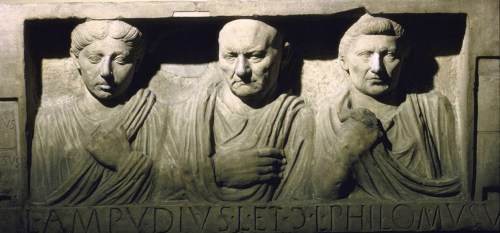
safariscreensnapz008More from Gjon Mili and the LIFE archives; about the best photo of CIL VI 11595=34044 that one is likely to see

FRIDAY 9 JANUARY

8:30 A.M. – 11:00 A.M. SECTION 2 Greek Law
Paper #1. David Mirhady (Rutgers Classics PhD 1992, now associate professor, Simon Fraser University). “Democratic Rituals: Jury Selection in Athens”

1:30 P.M. – 4:00 P.M. SECTION 18 New Approaches to the Political & Military History of the Greek, Roman, and Late Roman Worlds. Sponsored by the APA Committee on Ancient History
Paper #1. Thomas J. Figueira (Rutgers Classics Professor II) “Recent Studies on the Structure and Institutions of the Greek polis”
Respondent to Papers #3 (M.T. Boatwright) and #4 (N. Rosenstein). T. Corey Brennan (Rutgers Classics associate professor)

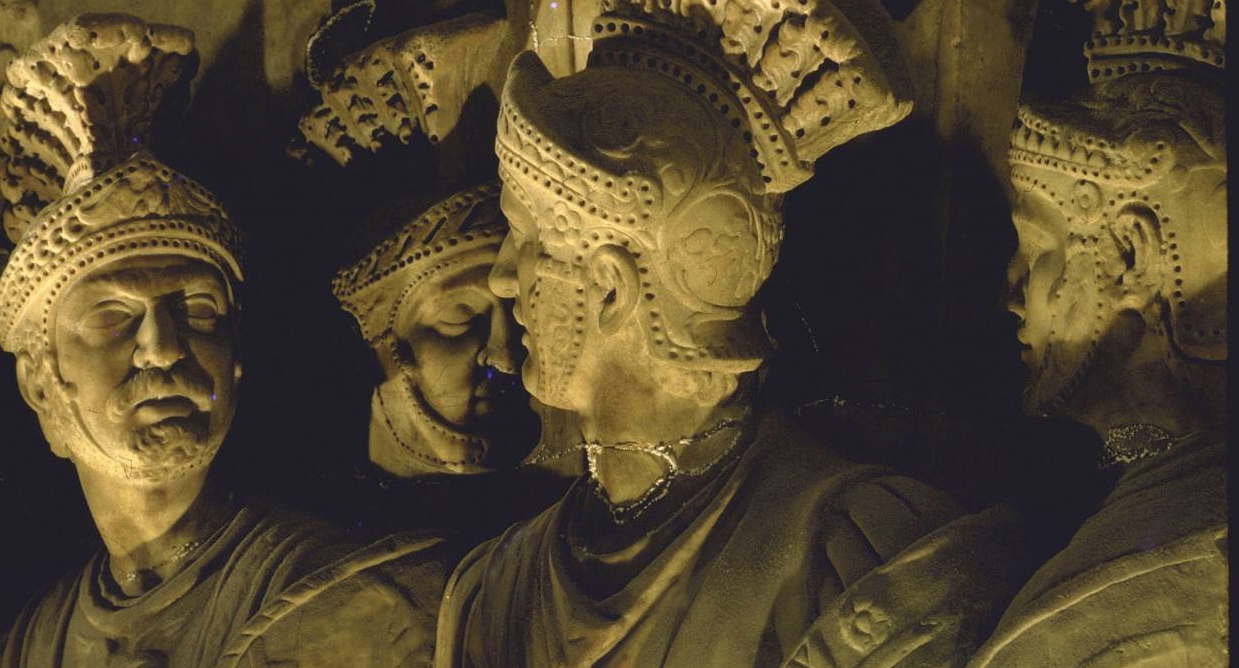
safariscreensnapz011Through the first half of 1966 LIFE published a multi-part photo spread on ancient Roman culture; the Gjon Mili photos seen here were meant for the 4 March and 3 June issues.

SATURDAY 10 JANUARY

1:30 P.M. – 4:00 P.M. SECTION 38 The Etruscan Objects Speak: New Linguistic and Socio-Historical Approaches to Etruscan Epigraphy. Joint APA/AIA Session.
Paper #5. Gary Farney (Rutgers-Newark associate professor of History). “Lucumo to Lucius: Etruscans with Both Etruscan and Latin Names on Bilingual Inscriptions from Etruria”

1:30 P.M. – 4:00 P.M. SECTION 40 The Vergilian Tradition. Sponsored by the Vergilian Society.
Paper #2. Karen Klaiber Hersch (Rutgers Classics PhD 2002, now assistant professor, Temple University). “An Unknown Epithalamic Link? Apollonius, Vergil, and Statius”
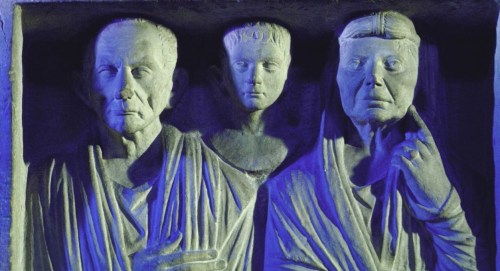
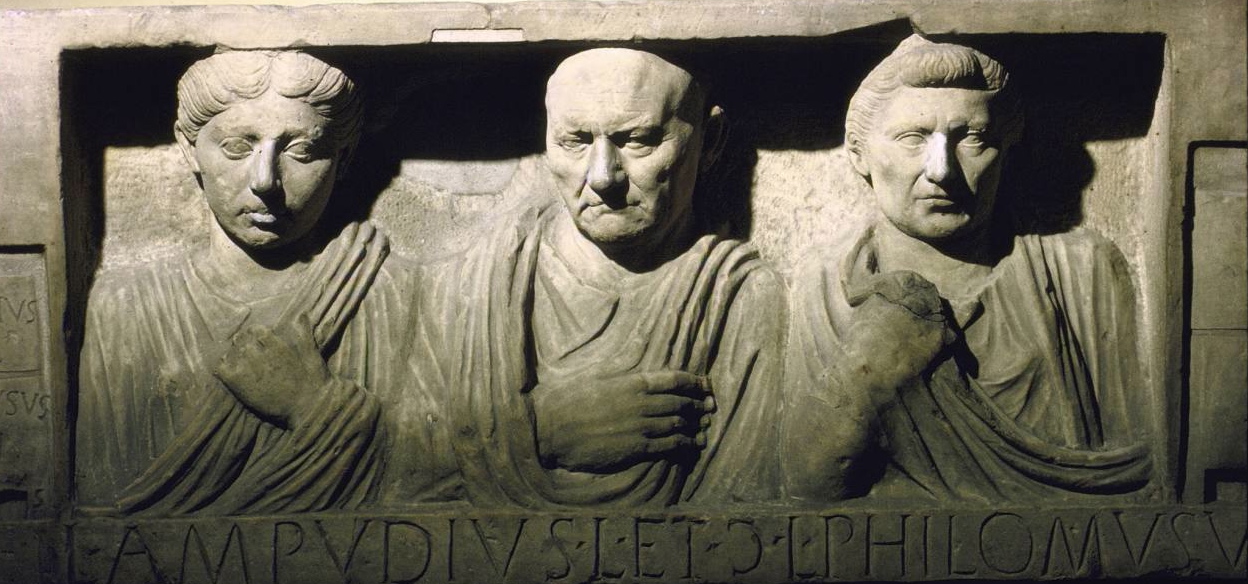
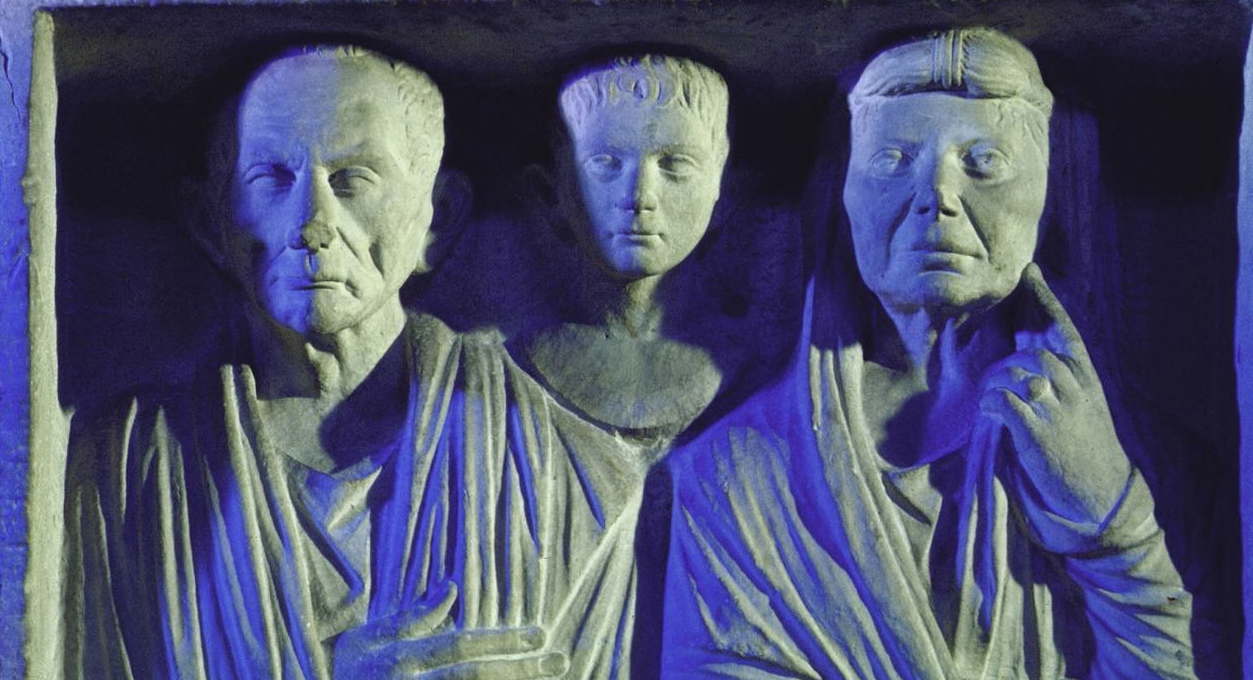
safariscreensnapz009Funerary relief from sarcophagus at Rome, photographed by Mili in 1965; a glimpse of the breadth of the LIFE archive holdings in Roman culture can be seen here

SUNDAY 11 JANUARY

11:30 A.M. – 1:30 P.M. SECTION 49 Thucydides.
Paper #4. Sean Jensen (Rutgers Classics graduate student/Member, American School of Classical Studies at Athens) . “The Milesian Sub-Hegemony”

11:30 A.M. – 1:30 P.M. SECTION 50 Roman Religion
Paper #2. Benjamin Hicks (Rutgers Classics graduate student). “Evocatio Imagery in Tacitus’ Histories 4.83-84 ”

1:45 P.M. – 4:15 P.M. SECTION 58 The Soul and Its Afterlife. Sponsored by the International Society for Neoplatonic Studies.
John Finamore (Rutgers Classics PhD 1983, now Professor and Chair, Iowa). Co-organizer.

[You didn’t mention that there will be an off-premises Rutgers party-Ed.]
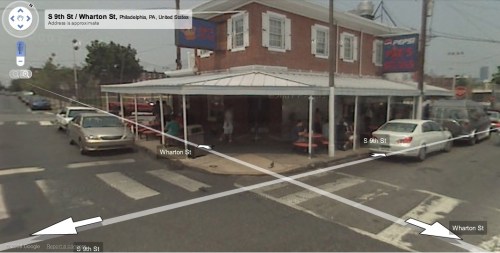
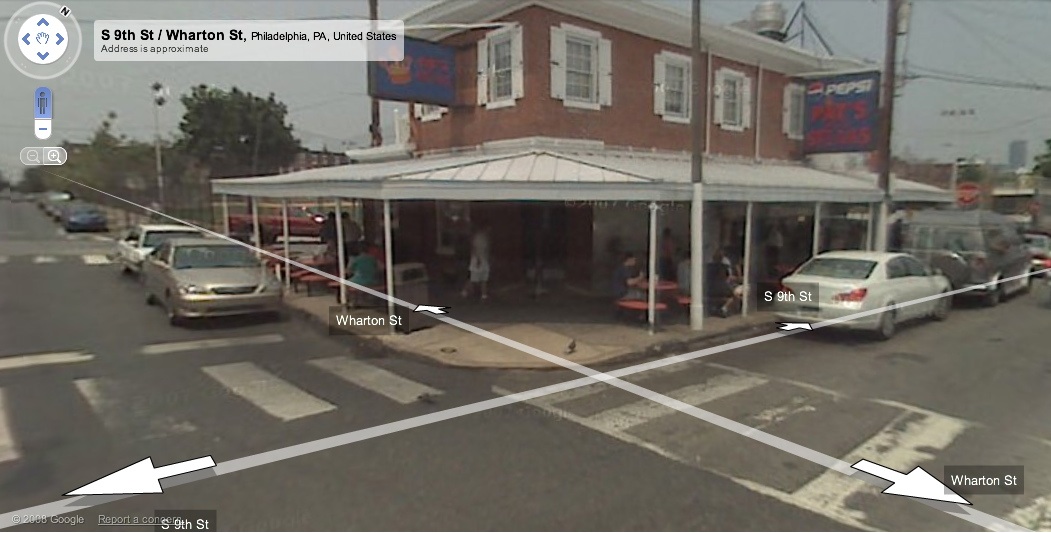
patsgooglemapGenius of a different sort: Pat’s Steaks at 9th and Wharton in South Philly, seen via Google Maps Street View.


With CAAS grant, Rutgers-Newark students explore the Metropolitan Museum

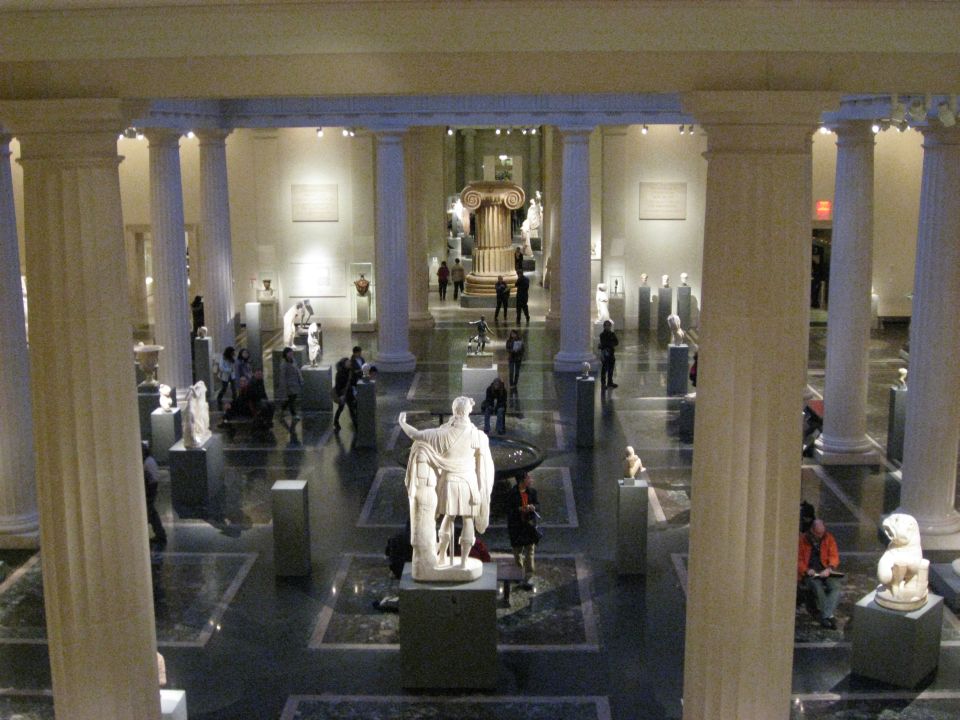
The Metropolitan Museum of Art in New York fully reopened its Greek and Roman galleries in April 2007, to much acclaim. What better resource, then, to put undergraduates enrolled in “Life & Culture in the Early Roman Empire” at Rutgers-Newark thoroughly into the antiquity zone?

1the-gr-galleries
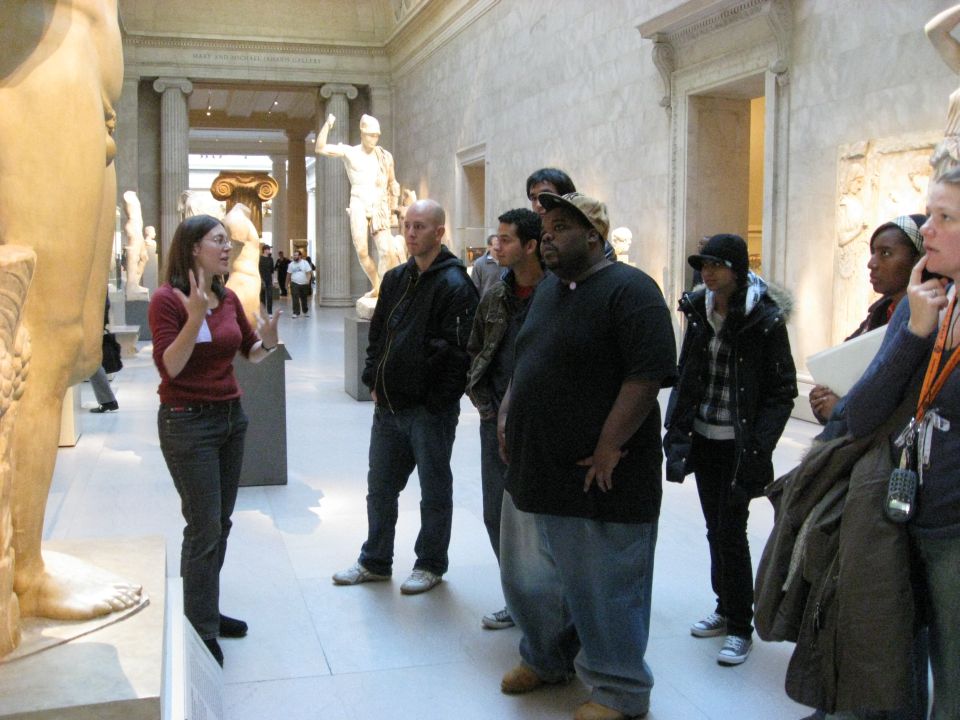
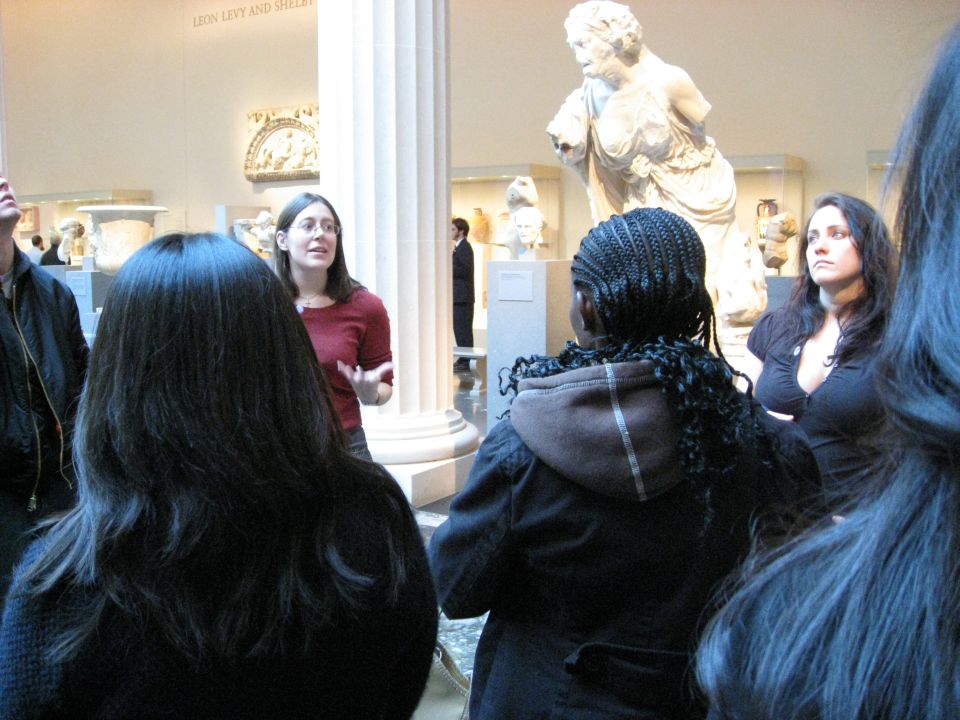
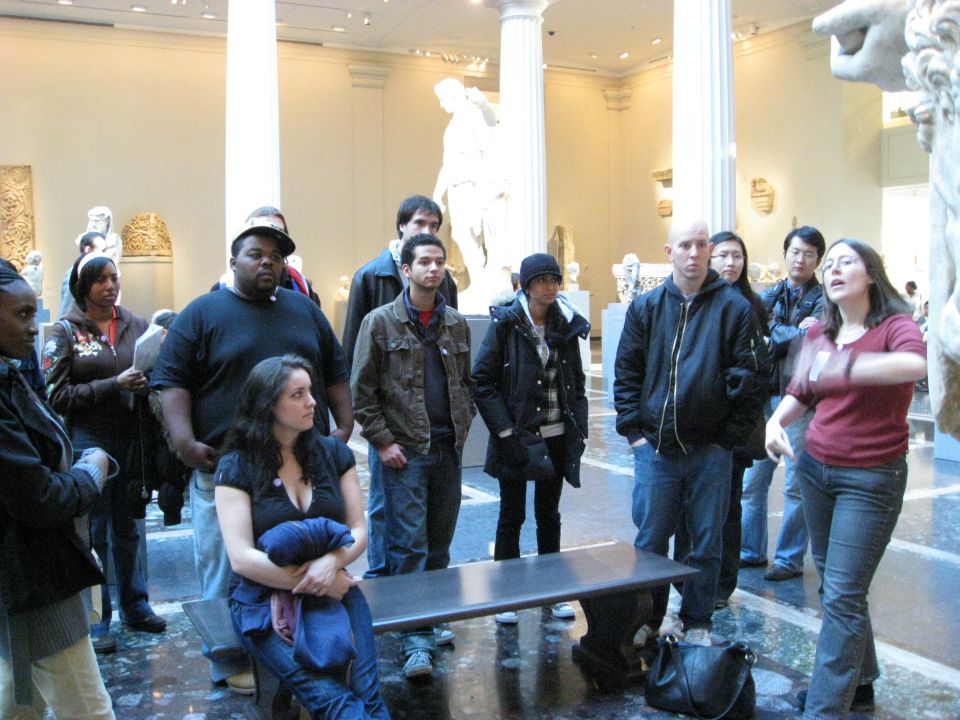
With the help of a generous Resource Grant from the Classical Association of the Atlantic States, Rutgers graduate student Liz Gloyn did precisely that. Aided by the expertise of fellow Rutgers Classics PhD candidate Benjamin Hicks, Gloyn—a participant in the inaugural year of the innovative Rutgers-Newark Scholar/Teacher program—took her students on a whirlwind tour of the Roman galleries, pointing out highlights of the collection such as a Roman copy of the famous Aphrodite of Cnidos and two cubicula with reconstructed wall paintings.

2explaining-marble-vs-bronze

Students were also able to see the kind of statues that would have been kept in a lararium, and the group stopped by the famous Etruscan chariot—leading to some questions about how people were supposed to ride in it.

The Rutgers-Newark students had good things to say about being guided around the museum. “I’ve been to the Met Museum of Art before. However, it is very different when you have someone tell you what the things you are seeing are about,” said Ghazal Behreini ’11.
3explaining-the-gallery

The trip also helped students make a connection between the objects they were seeing and what they had read or heard about. “I was able to link the information discussed in the class to the actual tangible objects from the ancient times,” said Denis Pozdnyakov ‘12. And Betty An ’12 added, “the trip helped developed my understanding of the course materials even better because instead of just reading off from literary books and texts, I got to see the works in person.”

All the students seemed amazed at the level of skill shown in the objects on display. “This all helped to appreciate the workmanship of the Romans, and their attention to detail, even in the most mundane objects, like mirror handles”, pointed out Jen Silva ’10.

4looking-at-wall-paintings
Gloyn feels the trip was a resounding success. “It’s so important to give students an understanding of material culture as well as literature, and to give them something concrete to help them remember what they’ve learnt over the course,” she said.

We’re sure that the Rutgers-Newark students will remember their experience of Roman culture long after the semester ends. [And the dynamic duo of Gloyn and Hicks too—Ed.]

5in-front-of-hercules
Photo credits: Benjamin Hicks

Project Runway, 29 BC: RU Classics unleashes ancient fashion show for 25 April 2009 Rutgers Day celebration

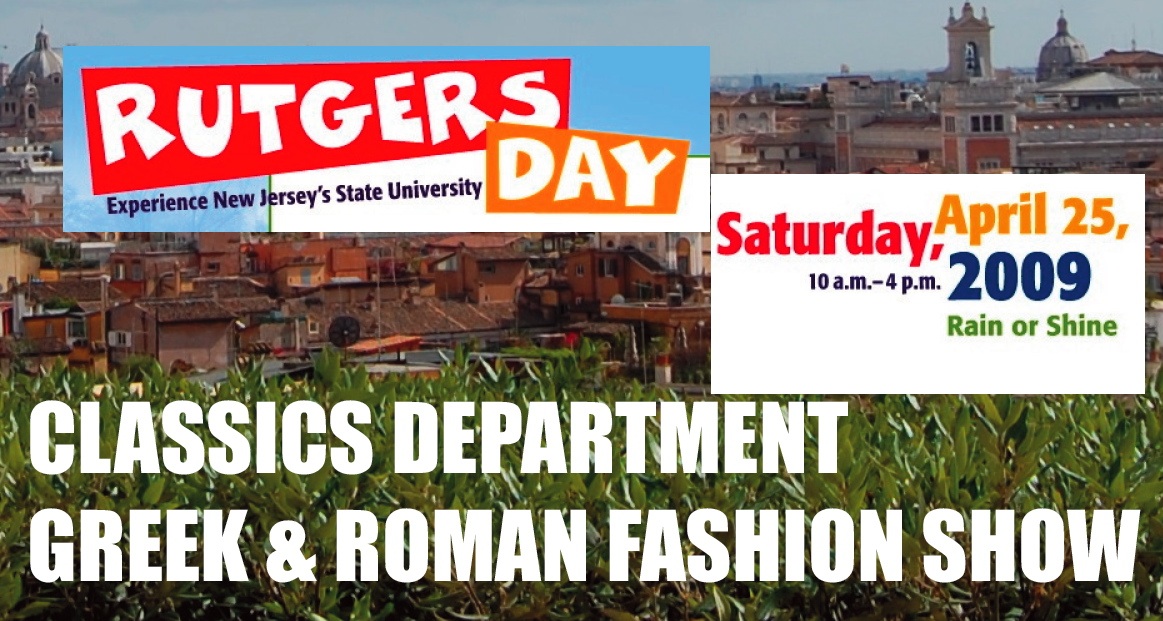
Rutgers Day is Saturday 25 April 2009. It’s billed as “a family, friendly, fun exhibition of all of the things we do at Rutgers–our teaching, our research, and our service to the state of New Jersey. We are inviting the citizens of New Jersey to come to New Brunswick, visit the campus, and see what we do.”

Learn all about Rutgers Day here.

ruclassicsfashionbanner
What Rutgers Classics is doing on this special day is hosting a Greek and Roman fashion show, under a jumbo tent with a runway extending 60 Roman feet. Students and departmental friends will be making and/or modelling some of the most historically accurate classical garb that’s been seen on our planet since the days of Herodes Atticus. DJ Korenelius will spin and emcee at this hyperbolic event.

Do you want to make the clothes? Do you want to model them? Do you want to do both? Call 732.932.9493 or email here.

But first listen here to the radio spot for this off-the-hook feature (2 minute audiofile): rutgersdayclassicspromo.

Expected to become an annual event, the first-ever Rutgers Day action begins that Saturday 25 April at 10 AM and ends at 4 PM. “With free performances, tours, exhibits, hands-on activities, lectures, demonstrations, and more,” notes the official site, “Rutgers Day expands on the long-standing success of Ag Field Day and the New Jersey Folk Festival to encompass university activities and programs across New Brunswick and Piscataway.”

Similar open campus events at universities such as Maryland and UC Berkeley have drawn crowds of over 40,000 visitors.

More details to follow on the RU Classics Greek & Roman Fashion Show as Rutgers Day draws near!

Mirabile browsu: RU students rate Google Earth’s new ‘Ancient Rome 3D’

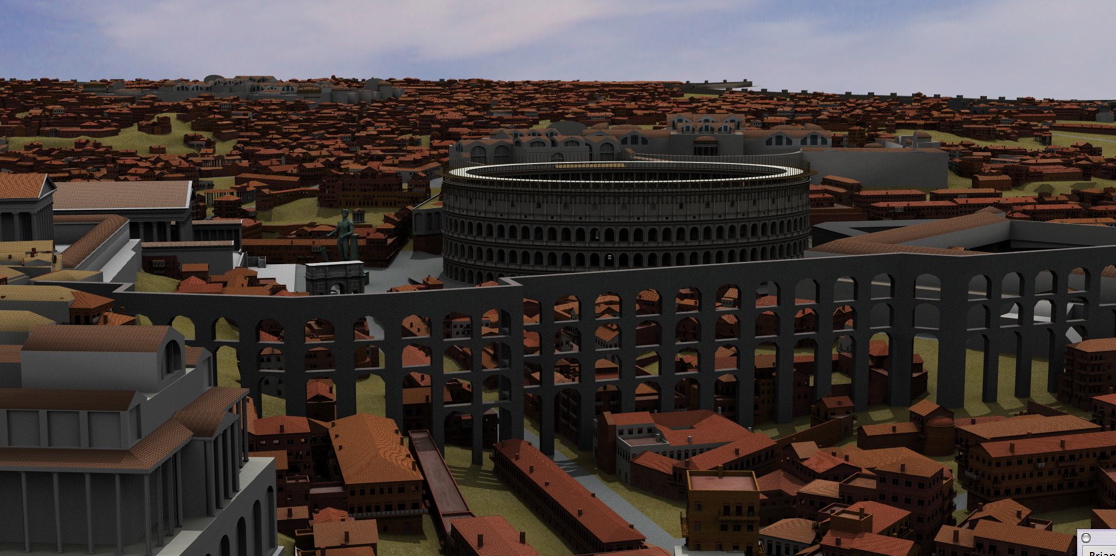
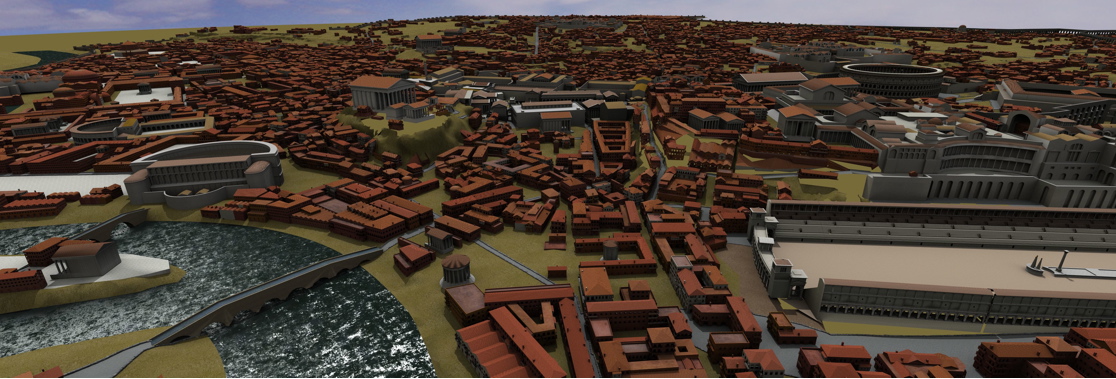
By now, you’ve probably at least heard about a new layer in Google Earth that takes you back to Rome in the day of emperor Constantine the Great. The day 21 June in the year AD 320, to be precise.

Google Earth’s 400 million estimated users are free to navigate the entire ancient city within the circuit of the 13-mile Aurelian Walls, peeking inside many buildings and monuments. More than half a million folks have viewed this YouTube video of what it does within a week of posting:

This collaboration between Google and the University of Virginia’s Institute for Advanced Technology in the Humanities (directed by classicist Professor Bernard Frischer) has instantly been heralded as “the biggest, most complete simulation of an historic city ever created.”

On first seeing it, Rutgers Classics visiting professor Matt Fox put down his well-worn text of Lucan and exclaimed ‘mirabile browsu‘! And RU Classics chair Corey Brennan has written about it in detail here.

But let’s turn to the real experts. A survey of Rutgers undergraduates studying Roman Civ this term suggests that they are overwhelmingly enthusiastic about Google’s latest killer app.

“I thought that Ancient Rome 3D was a fun and simple way to learn about Ancient Rome,” says Ciara Coffman ’09. “The website was so easy to navigate through that I found myself clicking away until I had visited each temple, amphitheater, bathhouse, and garden.”

Adds Mary Stevens ’12, “As someone who traveled to Rome earlier on in the year to see the Roman Forum and Colosseum, I am in awe of how perfectly Google Earth has managed to recreate all of the prominent buildings of early Rome. And with features that allow you to tour the inside of most buildings and acquire more information about them with a simple click of your mouse, there is no doubt that Google Earth for ancient Rome is opening up a whole new world for exploration … I’m amazed!”

aq

Akshar Yagnik ’11 has also been to Rome, and says “I wish I had this tool before I went so I could familiarize myself with what I was about to see. And now several years later I am able to revisit and relearn some of the sights with real non-animated pictures of the actual buildings.”

“Google Earth’s reconstruction of Ancient Rome looks promising to those, like myself” says K. Mistry, a junior Art History and French double major, “who are particularly interested in studying the city’s urban design and architecture…Although the graphics are somewhat cartoon-like, they nevertheless offer the viewer the opportunity to experience Ancient Rome as it looked during the time of the Emperor Constantine.”

cm2

“Being able to virtually climb over the Pincian Hill”, observes Thomas Clickner ’11, “and experience the wonders of the Garden of the Acilii provides a wonderful insight to the world of Ancient Rome through this new program.”

“Visiting this place was nothing different than like a day trip to New York,” says Matt Forbes ’09, “I feel like I’ve ‘been there.’ The sophistication of ancient Rome itself is pretty remarkable. Why don’t we have a Septizodium in NYC!?”

And a junior majoring in Art History at Rutgers: “No longer will people use Google Earth only to view their house and their neighborhood from an aerial perspective. Now they can actually do something of importance!”

palatine1capitoline

Old school lessons in Roman topography: Rutgers glass ‘lantern’ teaching slides from the 1930s

But wait…that’s just half the Google story! Continue reading

Considering RU graduate Classics? Here’s what you need to know

If you are considering graduate study in Classics at Rutgers, now is the time to put your application together. We asked RU Graduate Director Serena Connolly for answers to some Frequently Asked Questions…

rutgers1959

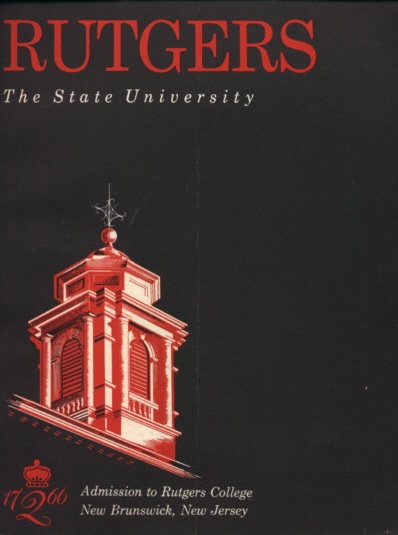
Rutgers Admissions brochure from back in the day—1959, to be precise

Which program?

“Rutgers offers MAT, MA and PhD programs. Here’s some information which will help you choose the right program for you.

MAT: This program is suitable for teachers in middle or high school who are preparing for certification or who have received certification and now want to improve their knowledge of Classics and teaching skills. You’ll take seminars in Latin language and literature, as well other areas of Classics such as history or philosophy. You will also be encouraged to explore offerings in the theory and practice of pedagogy.

MA: This program is both for school teachers who want to expand their knowledge of the ancient world and also for those who are deciding whether to embark on the PhD or need to improve their languages before doing so. You will have the opportunity to take a wide range of courses in Classical philology, history and philosophy. The Graduate Director will work closely with you to choose courses that best suit your needs.

PhD: If you want to teach in a college or university, this is the program for you. Having chosen between our Classical Philology and Ancient History tracks, you’ll take 48 credits across our curriculum and comprehensive translation and oral exams. You will also have plenty of opportunities to teach language and civilization courses. The dissertation follows this, and you’ll receive strong guidance and support from your dissertation committee. The Classics Dept. at Rutgers is strongly committed to placing its PhD students in college or university teaching positions after graduation and will work with you throughout your degree to this end.”

How can I fund my degree?

“Only PhD students are eligible for funding. Applicants for the PhD will be considered for competitive fellowships which provide support through stipends, teaching support, tuition remission and health benefits.”

What do I need to get in?

“Successful candidates typically have:
• Three years of college-level Latin and two years of Greek (the latter is not required of MAT applicants)
• Strong GRE scores (650+ VB and 5.0+ WR)
• GPA of at least 3.3 overall, and significantly higher in the major”

Don’t stop now….there’s more! Continue reading

This day in RU history: team of mostly classicists beat Princeton in first-ever intercollegiate football game

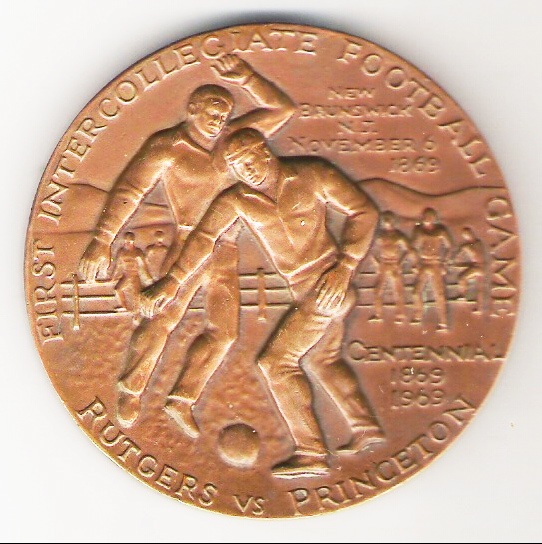
On 6 November 1869—139 years ago to this date—Rutgers hosted Princeton in the first-ever football game between two collegiate institutions, making Rutgers the birthplace of college football.

firsttgamecoin

The game took place on a Saturday afternoon (3 PM kickoff) in a field along College Avenue in New Brunswick, now occupied by the gym affectionately known as “The Barn”. There a fired-up crowd of about 100 saw Rutgers beat Princeton 6-4. The rules were primitive, there were 25 players to a side, and the only equipment was the ball. And oh yeah—the Rutgers students caused a stir by showing up wearing the same color, namely scarlet.

1869football

Rutgers’ new student paper, the Daily Targum, had the good sense to show up to report on the game, which they did in astonishing detail that has often been reprinted. See here for an excellent summary (with lots of great images) from the RU Athletics website.

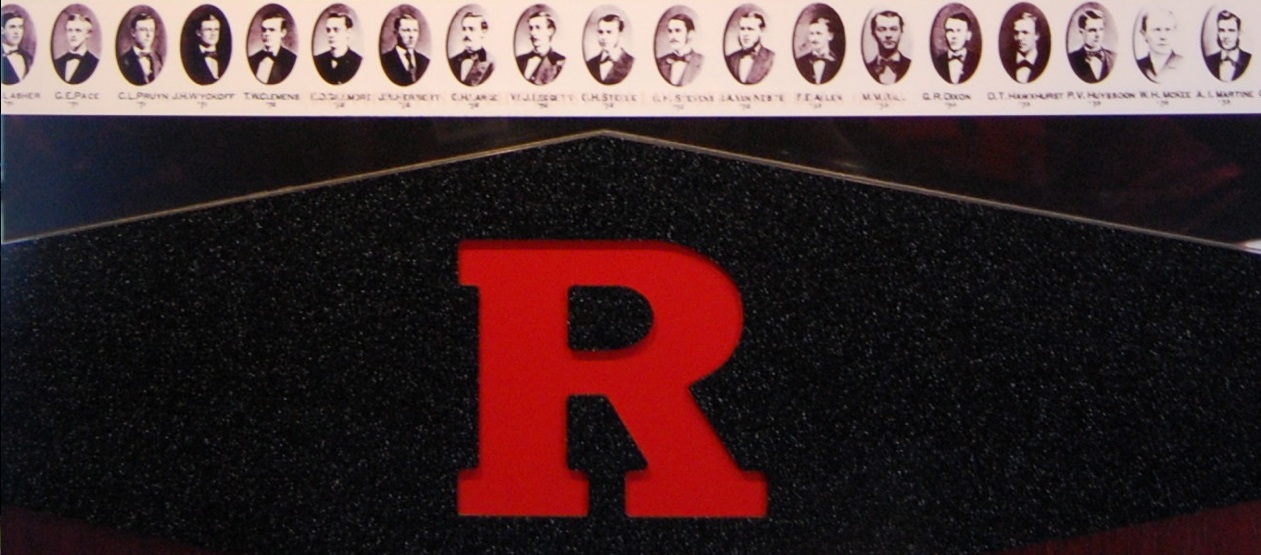
Unlike Princeton, Rutgers also kept a good record of its student-athletes who showed up to play that November day—27 for RU in all.

Now, a glance at the academic rolls shows that all but five of those 27 players were taking the rigorous Rutgers Classics Curriculum. The best student among them was probably the team captain, William James Leggett, Class of 1872. Before graduating, he won prizes in Latin as well as mathematics and declamation. Amazingly, he was also Targum editor, director of the baseball team, and captain and stroke of the RU crew.

But three of the members of the team were flunking freshman algebra, and one of them—Classics student William McKee ’73—had a string of absences in the week leading up the game, which the faculty marked as “excused” after the Rutgers victory.

rufirstgameplayers

Detail of monument to The First Game and its Rutgers players at RU’s Hale Center

For the curious, there’s a list of the Rutgers players and their later careers after the jump…

Continue reading

Here’s a little newsflash: Republican VP pick studied Classics at Rutgers

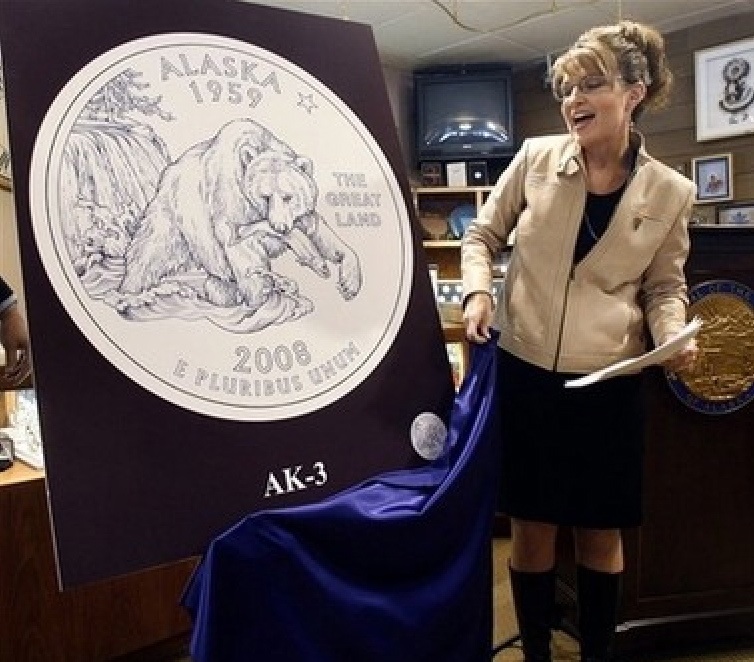
Alas, not Governor Sarah Palin of Alaska…

..but Garret Augustus Hobart (1844-1899), Vice President of the United States under William McKinley.

Hobart, who graduated with the Rutgers College class of 1863 at the precocious age of nineteen, served as Vice President from 4 March 1897 until his untimely death in office on 21 November 1899.


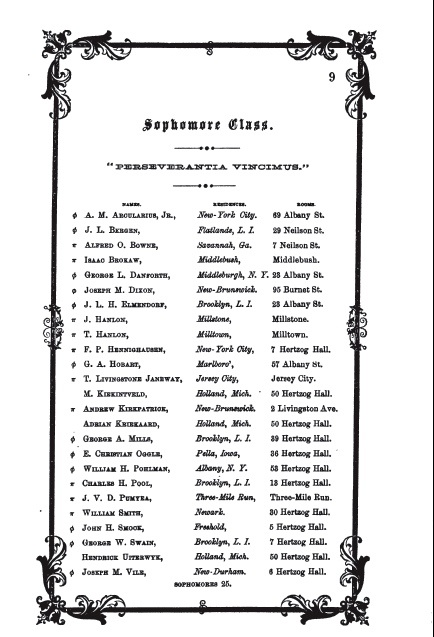
Born in Long Branch NJ , Garret A. Hobart grew up in Marlboro and attended Rutgers from 1860 through 1863, where he sailed through the college’s rigorous Classical Curriculum.

[Full disclosure: from the day the College opened its doors in 1771 until 1864, Classics was the only major course of study available at Rutgers.]

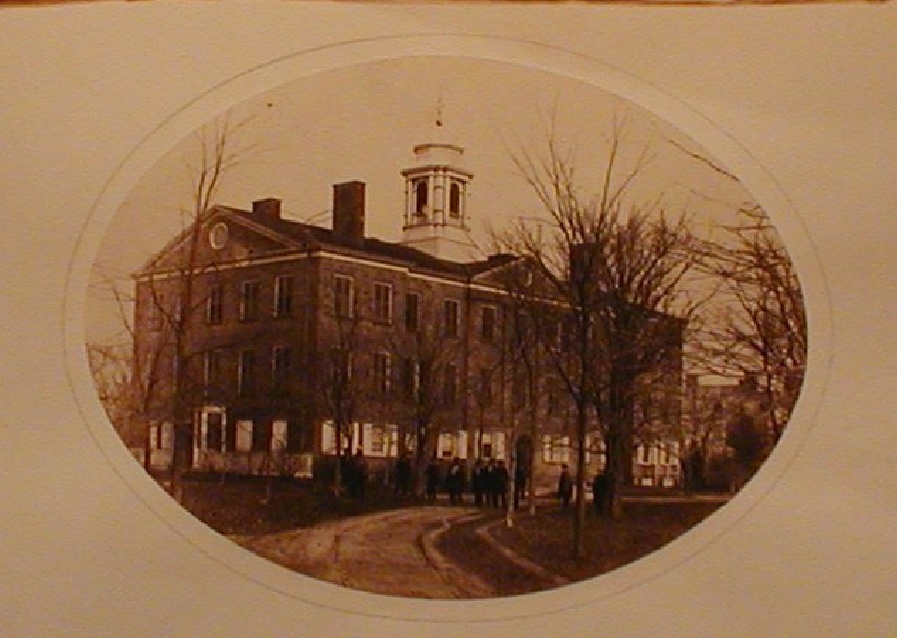
Old Queens (with students) as it stood in 1862

Hobart later based himself in Paterson NJ, where he was admitted to the bar—and through his business interests amassed a large fortune. He soon rose to the NJ State Assembly (1872-76), the State Senate (1876-82), and a position of prominence in the Republican National Committee (1884-96) before McKinley tapped him as his running mate in the epochal 1896 presidential election. Garret Hobart then made himself into one of the most powerful vice presidents in American history before his death at age 55 due to heart failure. This was the closest a native, life-long Jerseyan has ever come to the highest office in the land.
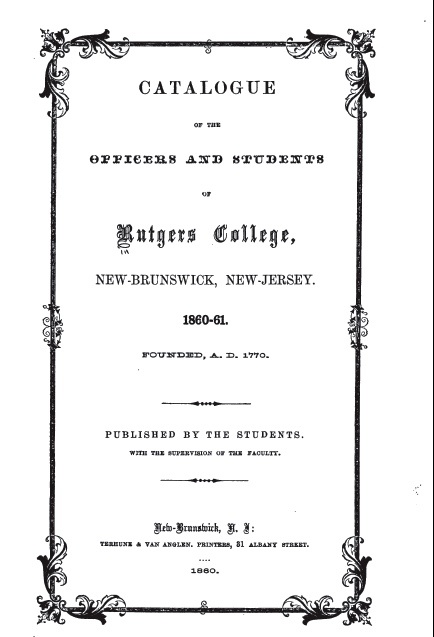
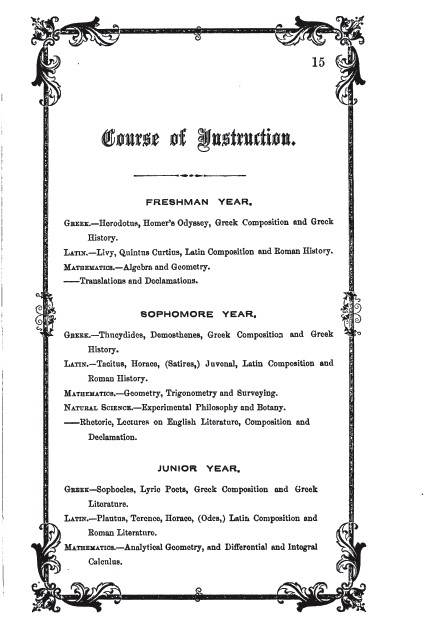
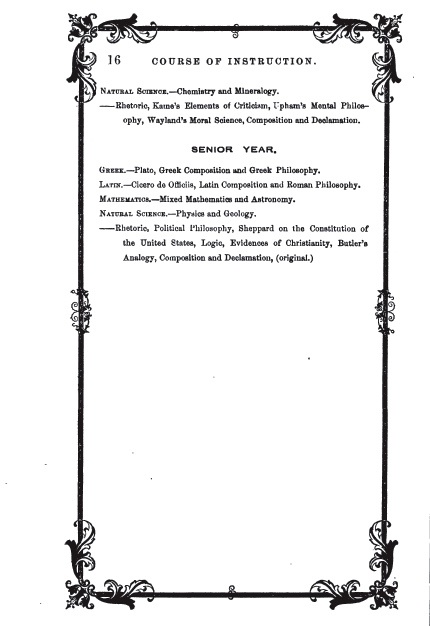
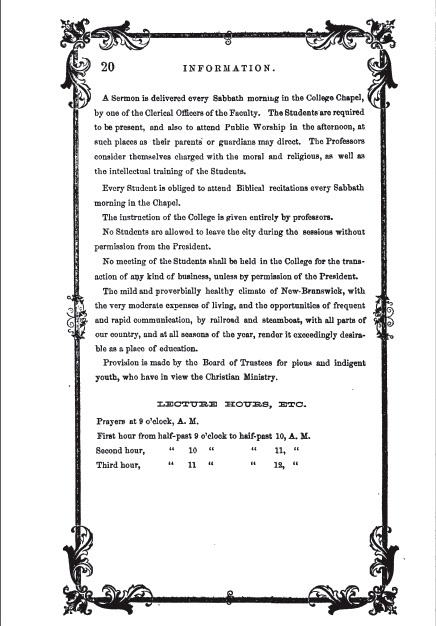
Check out what the Classics Curriculum looked like when Hobart entered Rutgers in 1860…

After the jump we turn to Robert Percival Porter, The Life of William McKinley, Soldier, Lawyer, Statesman (1896) for a mildly interesting summation of Garret A. Hobart’s early years… Continue reading

Fall 08 update: RU Classics hosts talks by Schorn, Fornara, Hardie, Yadin

Events are coming fast and furious at Rutgers Classics over the next three weeks, with four public lectures—none of which should be missed.

The fame of Virgil: Georg. 1.145f on a 5 cent token from St. Thomas (1880s)

Here’s the roster:

Thursday 23 October 5 PM. Stefan Schorn (Universities of Würzburg and Leuven) “On Eating Meat and Human Sacrifice: Greek Anthropology in the Fourth Century B.C.” Ruth Adams Building 003 / Douglass Campus. Sponsored by the Classics Graduate Association.

Thursday 30 October 5 PM. Charles Fornara (Brown University) “Inscription IG I^3 66: The Aftermath of the Mytilenian Debate”, Graduate Student Lounge, 126 College Avenue / College Avenue Campus. Sponsored by the Classics Graduate Association.

Thursday 6 November 5 PM. Philip Hardie (Trinity College, Cambridge University), “Virgil’s Fama and the Lucretian Sublime”, Ruth Adams Building 003 / Douglass Campus.

Monday 17 November 1 PM. Azzan Yadin (Department of Jewish Studies, Rutgers University), “Parmenides, Democritus, and the Political Cosmology of the Timaeus”. Ruth Adams Building 003 / Douglass Campus.

More obviously to come. For superior directions to the Ruth Adams Building, see the Rutgers Classics Webpage > Contact Us.

This seems like a good occasion to give props to RU Classics’ partners in the Inter-University Doctoral Consortium, which collectively field a massive number of events each term.

Check out the Classics events hosted by our neighbors at Princeton, Columbia and its Center for the Ancient Mediterranean, CUNY Graduate Center Classics, Fordham, and NYU, its Center for Ancient Studies, and its Institute for the Study of the Ancient World.

Oh, and lots of stuff in Philadelphia at Penn, Bryn Mawr, Swarthmore, Haverford and elsewhere, readily viewed on the great PLACET events website.

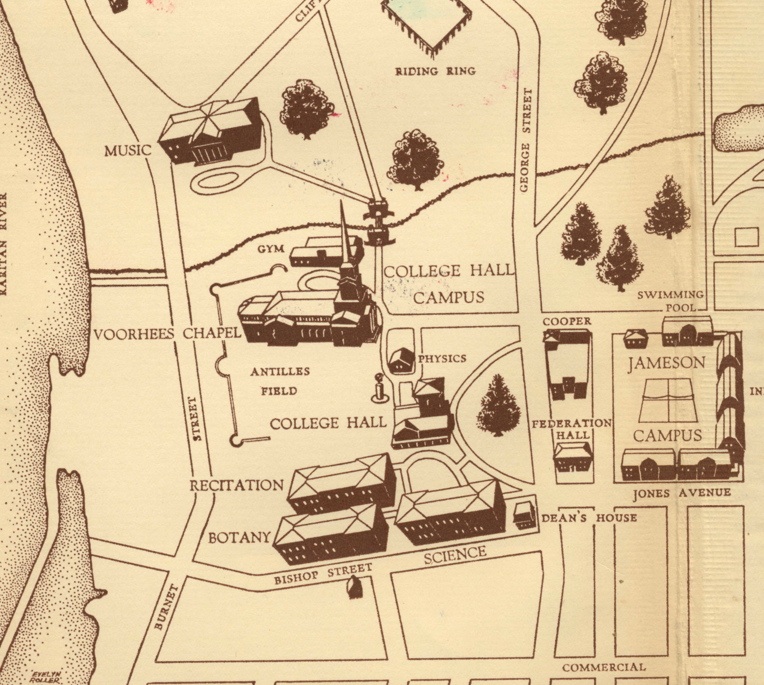
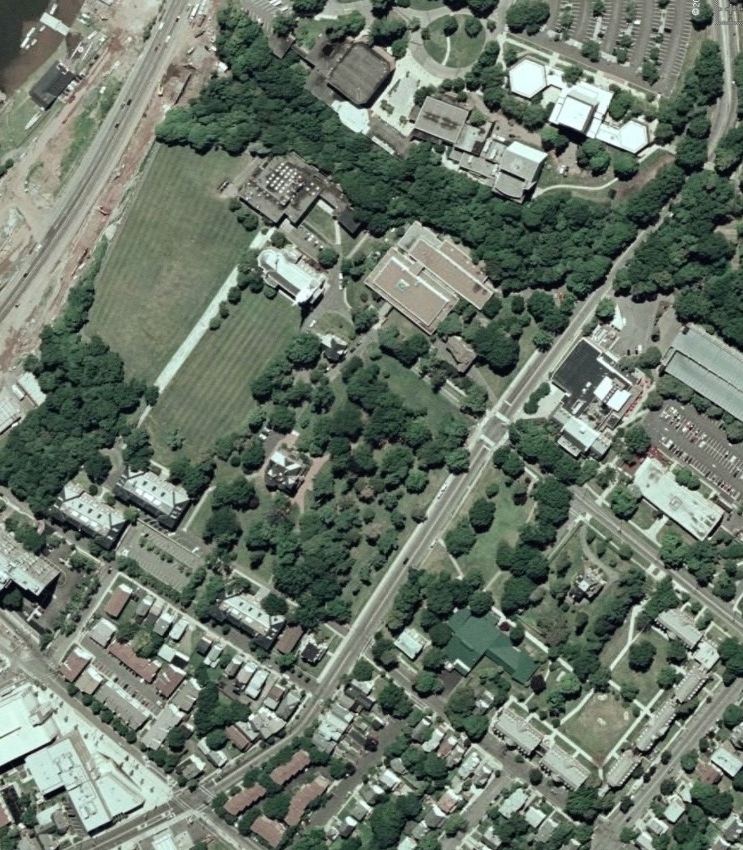
Center of Rutgers’ Douglass Campus, then (ca. 1945, when it was still the New Jersey College for Women) and now. “Recitation Hall” at lower center of old map is our Ruth Adams Building.