Yearly Archives: 2008

NYT: Latin perhaps just behind Spanish and French in schools, relevant to Election ’08

OK, maybe world markets are collapsing. But the New York Times had one piece of good news to report this past week, namely that Latin enrollments in the secondary schools are through the roof nationally. See the article (7 October 2008) here.
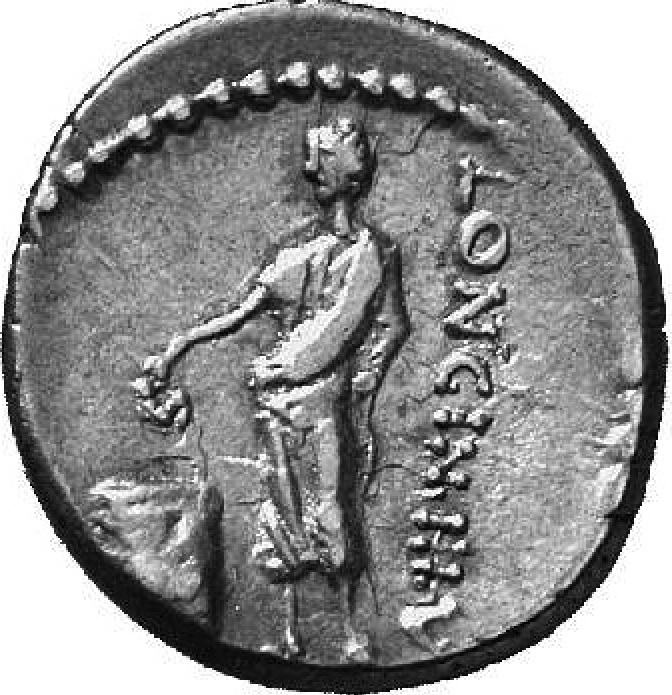
Reverse of denarius (63 BC) of L. Cassius Longinus, celebrating the secret ballot

Lots of great quotes in the NYT article, and here’s just one: “Marty Abbott, education director of the American Council on the Teaching of Foreign Languages, said it was possible that Latin would edge out German as the third most popular language taught in schools, behind Spanish and French, when the preliminary results of an enrollment survey are released next year. In the last survey, covering enrollment in 2000, Latin placed fourth.”

At one point in the week of 6 October, the NYT website noted this article on Latin as the second most emailed of all its content.

For a reaction, who better at Rutgers to ask than Ryan Barton ’09?

Ryan has won the Cornelison Prize—a Latin prize awarded by competitive exam to the best Classics student enrolled in Rutgers’ Douglass College—an astounding three years in a row, starting as a freshman.

“I was very excited to hear see this in print finally,”, Ryan told the Rutgers Classics blog, “since I’ve been hearing about this a lot lately. It makes me feel proud to know that my passion is being rekindled and shared by younger children. Obviously it creates a bigger job market for someone with a Latin degree, but it’s more exciting for me because Latin and classics are so incredibly important and relevant to modern learning and have been underappreciated for the last 30 some years.”

Yes, the NYT article had a lot to say about that. “Now with more interest being generated,” concludes Ryan, “I’m on the cusp of what I hope will be a renaissance of sorts for Latin, which is especially titillating as I intend to teach Latin after I graduate.”

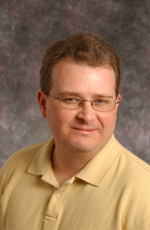
And then, lo and behold, NYT Op-Ed columnist Maureen Dowd on 12 October decides to offer more than half of her latest 800 word essay on the ’08 electoral campaign in Latin, and for help in translation, calls on Gary Farney, associate professor of History at Rutgers-Newark. Gary is the 2006 winner of the University College-Newark Alumni Association Henry J. Browne Teaching Excellence Award, and a member of the New Brunswick Classics graduate faculty.

Gary came to Rutgers-Newark as a superbly trained classicist and ancient historian: Indiana B.A., Bryn Mawr M.A. and Ph.D., study at the American Numismatic Society seminar, and winner of both the Rome Prize in Ancient Studies to the American Academy in Rome and the Broneer Prize to the American School of Classical Studies at Athens.
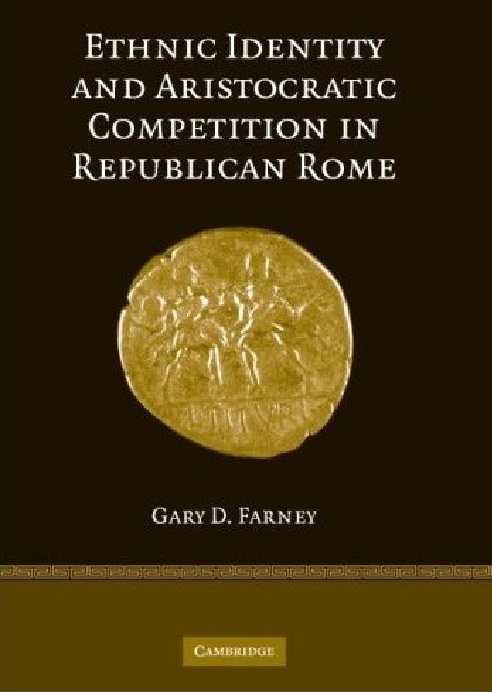
In 2007 Gary Farney published an unusually stimulating new book with Cambridge University Press on aspects of Italian ethnicity in the Roman Republic, Ethnic Identity and Aristocratic Competition in Republican Rome.

For the past five years Gary has been the Director of the enormously successful Rutgers Summer in Greece Program. And this December Gary takes over as the Director of the Ancient and Medieval Civilizations major at Newark.

It’s a delight and a privilege to count Gary as one of the members of the Rutgers Classics community.
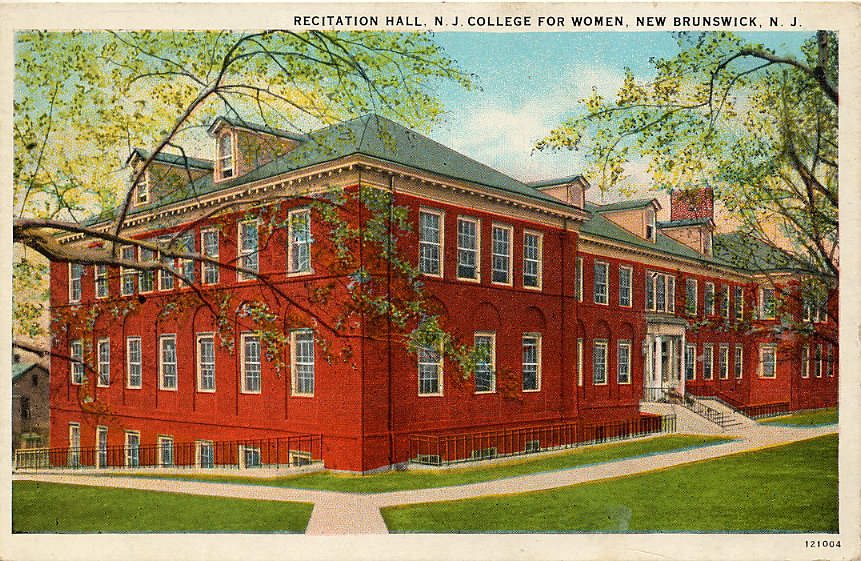
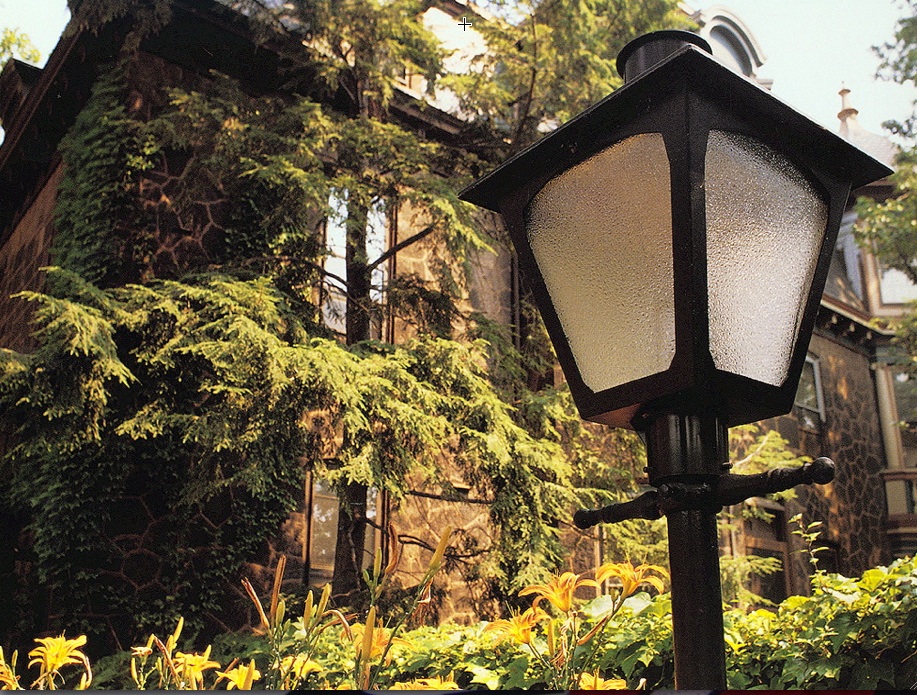
Got Latin? The Ruth Adams Building—once known as Recitation Hall—houses Rutgers Classics on the New Brunswick Douglass Campus. From the amazing collection of Rutgersiana at http://kenlew.com/collections/

Rutgers makes the scene at CAAS 2008 Annual Meeting @ Princeton

When the Classical Association of the Atlantic States meets 9-11 October in Princeton’s Westin Hotel for its 2008 Annual Meeting, Rutgers will be fully in the house.

Postcard ‘Jersey’ features Princeton in the R and Rutgers in the final E

Two highlights for Rutgers Classics on the conference program:

Jason Albaugh, a Rutgers Classics MAT candidate and teacher at Lawton C. Johnson Summit Middle School (NJ), presents on West African mythology and much more besides with his talk “Anansi Tigridem Ligavit: Using Folk Tales in the Latin Classroom”.

And Jeffrey Ulrich, Rutgers ’08 and now a Math teacher at Saint Ann’s School in Brooklyn, speaks on “The Polymorphous Herodotus: An Interpretation of Nomos in the Histories”.

This talk is based on Ulrich’s senior thesis, directed by Emily M. Allen. “I’m presenting on cultural relativism as displayed in Herodotus,” explains Jeff. “My argument focuses on the Darius experiment in Histories 3.38 and the greater function of nomos in the surrounding narratives.” The conclusion? “That Herodotus cannot resist making moral and ethical distinctions that preclude him from being a relativist.”

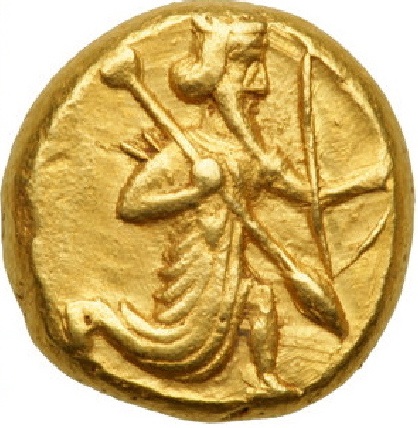
Above: Jason Albaugh, Persian Daric ca. 400-350 BC, Jeffrey Ulrich

There’s more after the jump… Continue reading

Paul Robeson RC’19: athlete, actor, singer, writer, activist…and Rutgers Classics scholar

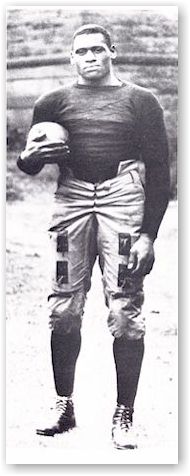
Looking back on the life and career of Walter Seward RC’17 (1896-2008)—as we did in our last weblog—it’s hard not to spare a thought also for his younger contemporary at Rutgers, the larger-than-life figure of Paul LeRoy Robeson RC’19 (1898-1976).

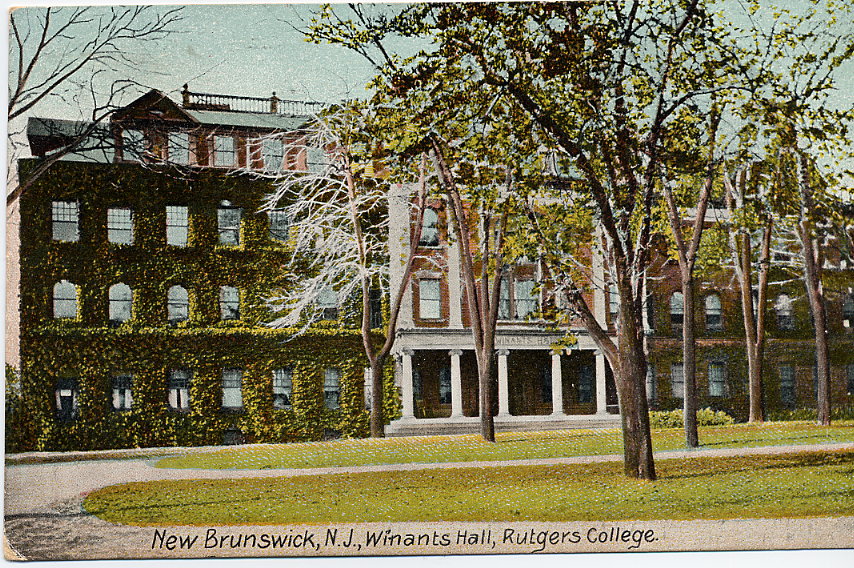
Paul Robeson dormed for all four of his Rutgers years at Winants Hall

Robeson, a native of Princeton NJ, studied Latin for four years at Somerville (NJ) High School before matriculating at Rutgers. He was just the third African American ever to attend the College, and the only black student enrolled during his time on the Banks—which gave rise to some petty snubs and ugly confrontations.

(Princeton would not have been an option for the young Robeson: the first African-American student to receive an undergraduate degree from his home town university would be John Lee Howard, Class of 1947.)

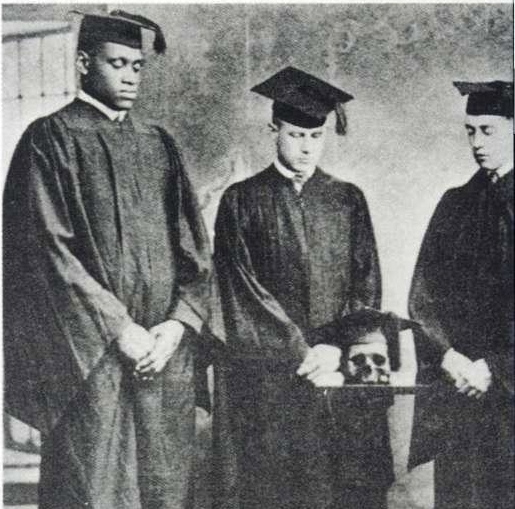
Many of the details of Robeson’s achievements at Rutgers are exquisitely well-documented. Those include his junior year election to Phi Beta Kappa, and senior year induction to the Cap and Skull honor society. Also the breathtaking fact that at Rutgers he earned a total of fifteen varsity letters in baseball, basketball, track and field—and of course football, a sport in which he was twice named a first-team All-American.

[Listen here to the Peerless Quartet‘s 1915 version of “On the Banks of the Old Raritan“, recorded for Columbia the year Robeson matriculated at Rutgers.]

Yet Robeson’s biographers don’t quite properly represent the facts of his enrollment in the demanding Classical Curriculum at Rutgers. Even otherwise authoritative sources on African Americans in Classics routinely seem to have missed it.

Let”s start with Robeson himself, in his 1958 autobiography, Here I Stand. He explains that his father, William Drew Robeson (who had studied classical languages as part of his Divinity degree at Lincoln University) had insisted on the importance for African Americans of studying “Latin, Greek, philosophy, history, literature”. Robeson explains, “So for me in high school there would be four years of Latin and then in college four more years of Latin and Greek”.

A glance at Paul Robeson’s undergraduate transcript yields a slightly different picture than his autobiography, written forty years after the fact. For Robeson, freshman year (1915-1916) it was introductory Greek in the fall plus Latin; in the spring intermediate Greek and Latin. Robeson in his sophomore (1916-1917) and junior (1917-1918) years continued with Greek, but not his Latin coursework. As a senior Robeson took no classical languages, but a year-long course in Roman law. A natural linguist, Robeson also studied German as a sophomore and Spanish as a senior. Continue reading

Walter Hamilton Seward (1896-2008), RC’17, was oldest graduate of university and its Classical Course

He knew Rutgers at a time when ancient Greek was compulsory for the AB degree. When undergrads climbed the steps to the top floor of Old Queens to study Latin with William Hamilton “Poppy” Kirk (trained at Hopkins by Gildersleeve), and learned constitutional law from Austin “Scotty” Scott (a student at Berlin of Mommsen, Droysen and Curtius who went on to hold the Rutgers presidency). When juniors and seniors took Roman Law as a two year sequence. When Classics students had pride of place during services at Kirkpatrick Chapel, sitting in reserved front pews. (Ag students had to worship from the very back.) When the reigning version of “On the Banks of the Old Raritan” was the one the Peerless Quartet cut for Columbia in 1915. (Listen here.)

Walter H. Seward was the oldest alumnus of Rutgers College—and its rigorous Classical Course that essentially defined the undergraduate liberal arts experience in New Brunswick from 1771 through 1924. He died on 14 September 2008 at the age of 111. Seward at the time of his death had the distinction of being the third oldest male in the United States, and the sixth oldest in the world. He practiced law in New Jersey into his 90s.

Walter Seward was featured on the Fall 2008 back cover of Rutgers Magazine

Rick Malwitz of Gannett NJ reports : “Seward was born Oct. 13, 1896, and raised in Toledo, Ohio. He and his family moved to Vineland [NJ] when he was a child. Seward was a member of the Rutgers Class of 1917, living in the same dorm as Paul Robeson, an All-America football player and civil rights activist. Seward served as a water boy for the football team. [He did however manage to play in one game, as right guard, for a single down—Ed]. In addition to being the oldest alumnus of Rutgers, he was the oldest living graduate of Harvard Law School [class of 1924] at the time of his death.”

Mark Mueller in the Newark-based Star-Ledger offers a superb longer obituary. Seward himself spoke of his Rutgers Classics classroom experiences in great detail in a 1996 oral history interview conducted by the RU-New Brunswick History Department Oral History Archives of WW II. Articles of recent years in Rutgers’ Daily Targum and the Harvard Gazette shed further light on Seward’s student experiences and beyond. “I didn’t think they were ‘Roaring'”, said Seward of the 1920s. “I thought they were preposterous.” Continue reading

New year, new look: who’s who at Rutgers Classics (2 of 3)

Who’s who at Rutgers Classics? This is Part II of a three-installment series; here we focus on our current graduate students. Full details on the RU Classics Graduate Program and its People can be found at our new departmental website. The RU Classics Graduate Director is Professor Serena Connolly.

College Hall on the Douglass campus of Rutgers, steps from RU Classics

Our 2008/9 graduate students.. Continue reading

New year, new look: who’s who at RU Classics (1 of 3)

There’s so much new afoot at Rutgers Classics that a September 1st summary seems in order.

Let’s start with the faculty and staff…

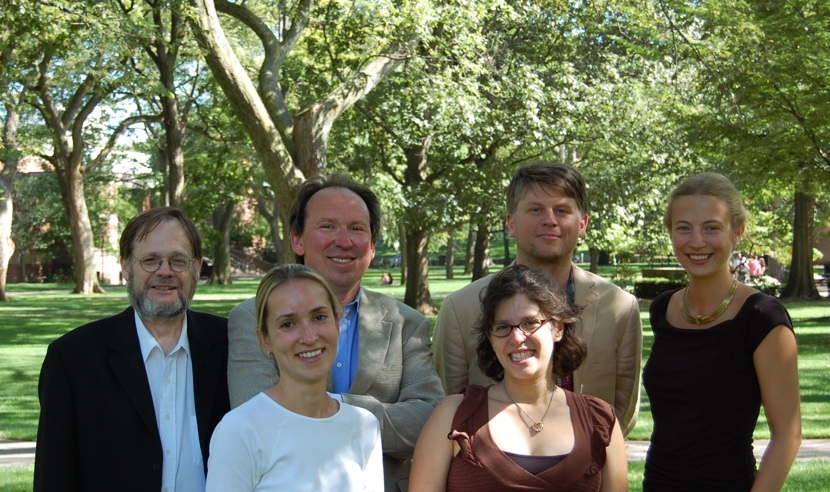
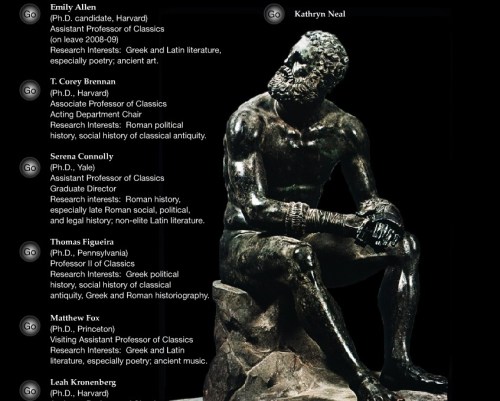
Left to right: continuing Classics faculty Thomas J. Figueira, Serena Connolly, T. Corey Brennan, Leah Kronenberg, Timothy Power, Emily M. Allen.

Associate professor Corey Brennan is new (sort of) at Acting Chair. He served two terms as Chair of the department (2002-2008), and returns also for 2008/9 in the position. This fall Brennan teaches an undergraduate lecture course in Roman Civilization.

Serena Connolly came to Rutgers in 2007/8 as a visiting assistant professor, after three years of full-time teaching at Yale. She now holds a tenure-track appointment, and is the department’s new Graduate Director. Connolly’s courses this fall are Sallust for advanced Latin undergraduates, and a graduate seminar on Rome in the Age of Augustus.

New assistant professor Timothy Power joins the Rutgers faculty from the University of Washington, where he had taught since 2001. This semester at RU he teaches intermediate Greek prose and an undergraduate lecture course in Greek Civilization. Power also assumes the duties of Acting Undergraduate Director. That is because…

Assistant professor Leah Kronenberg, who is the department’s Undergraduate Director, starts the second year of a two-year competitive research leave, funded by the American Council of Learned Societies (07/08) and the Harvard Loeb Classical Library Foundation (08/09). Kronenberg is in the midst of a new book-length project entitled Gods and Monsters: Roman Representations of Epicureanism. Her first book, Fables of Farming from Greece and Rome, is forthcoming from Cambridge University Press/UK.

Professor (II) Thomas J. Figueira in 2009 will see his 30th year teaching in Classics and History at Rutgers. This fall he offers intermediate Latin prose and (for the History Department) an undergraduate lecture course on Ancient Greece. Figueira also starts a term on the Rutgers University Senate as a faculty representative of the School of Arts and Sciences—New Brunswick.

Emily Allen has taught various courses at Rutgers in Greek prose and verse, as well as a lecture course on the epic hero. Allen is on leave this year—among other things, she will travel to Paris to finish her Harvard/Sorbonne doctoral co-tutelage requirements—but starts at Rutgers Classics in September 2009 as a tenure-track assistant professor.

Visiting assistant professor Matt Fox (not pictured above) is the former Robert B. Aird Chair in the Humanities at Deep Springs College (California). This coming year is the second in Fox’s two-year appointment at Rutgers Classics as a visiting assistant professor. For the fall he teaches Elementary Greek, and undergraduate lecture courses in Greek & Roman Mythology as well as Roman Drama in Translation. Fox also will coordinate the department’s introductory Latin program. That features as Teaching Assistants RU Classics graduate students Andriy Fomin, Charles George, Benjamin Hicks (Head TA), Rachel Loer, and Lisa Whitlatch, each offering his or her own class section in the language.

And that’s just half the story… Continue reading

Creative director William Whelan takes RU Classics website one step beyond

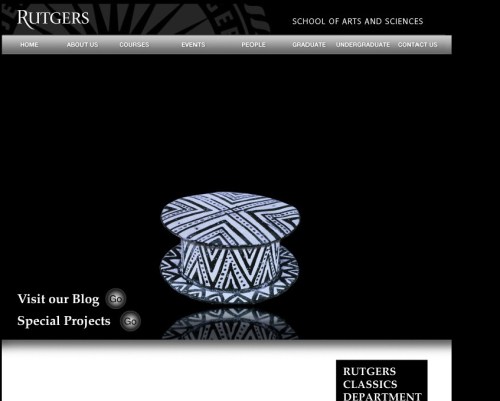
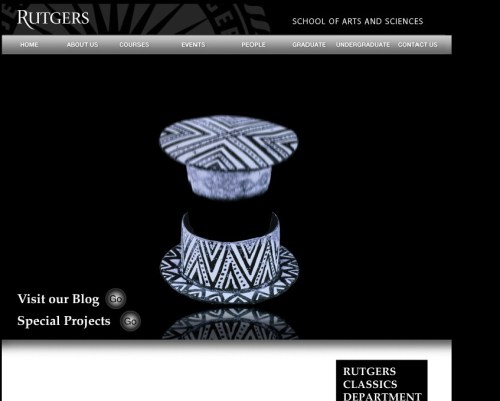
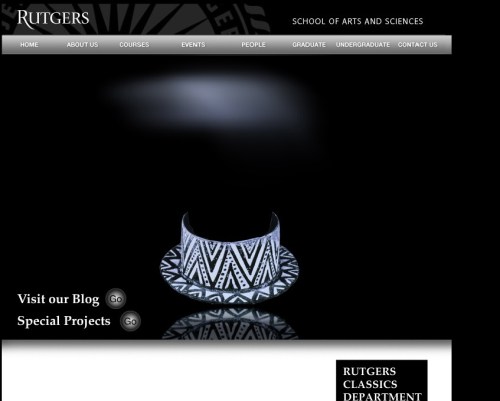
It may be the world’s first exploding pyxis.

And that’s just the start of the surprises on the new Rutgers Classics website, unveiled 22 August 2008.

The creator? William Whelan, head of d-stroy advertising, a one-stop creative consulting firm based in Miami. Whelan’s clients have included Volkswagen, Citibank, Home Depot, Sprite, Heineken, Cingular, Qwest—even Yahoo.

Whelan’s work has earned him many of the most coveted juried prizes in advertising and new media, including numerous Francis W. Hatch Awards from Boston’s Ad Club, multiple awards from the One Club in its One Show Interactive competition, Grand Prize in the London International Advertising Awards, and a Grand Clio and a Gold Clio in the prestigious Clio Award festival.

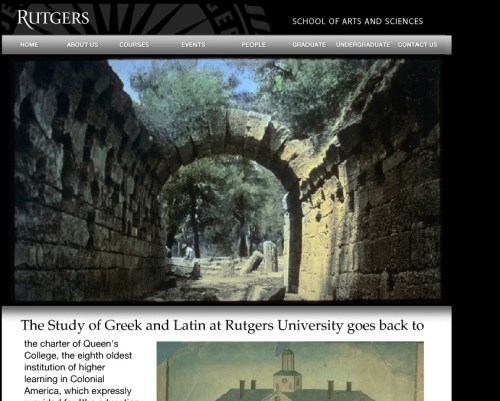
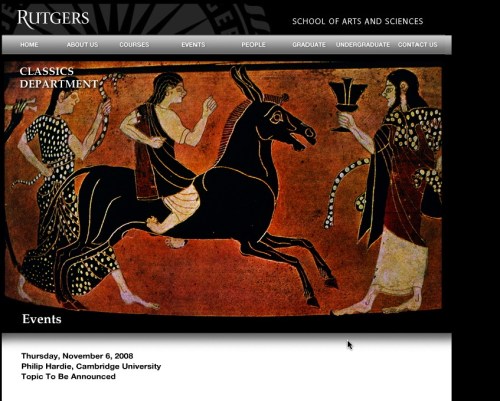
On the new RU Classics web site, Whelan deploys Flash animation to make strikingly innovative use of images from the Department’s large visual studies collection. He even composed original music that plays under the home page as it loads.

(If you’re not getting the pages above and below via the http://classics.rutgers.edu link, but rather the old “terracotta” site, try clearing your web browser’s cache.)

Continue reading

From Belgica to Baghdad, RU Classics digital project nears end

And for yet another unique Rutgers Classics resource…a five year teaching initiative on the visual culture of the ancient world. This project started in 2003 and is now nearing completion.

Here RU Classics has transformed its collection of 16000 35mm slides and almost 1000 lantern slides into archival quality digital images ready for use by faculty and students in Powerpoint or web-based presentations.

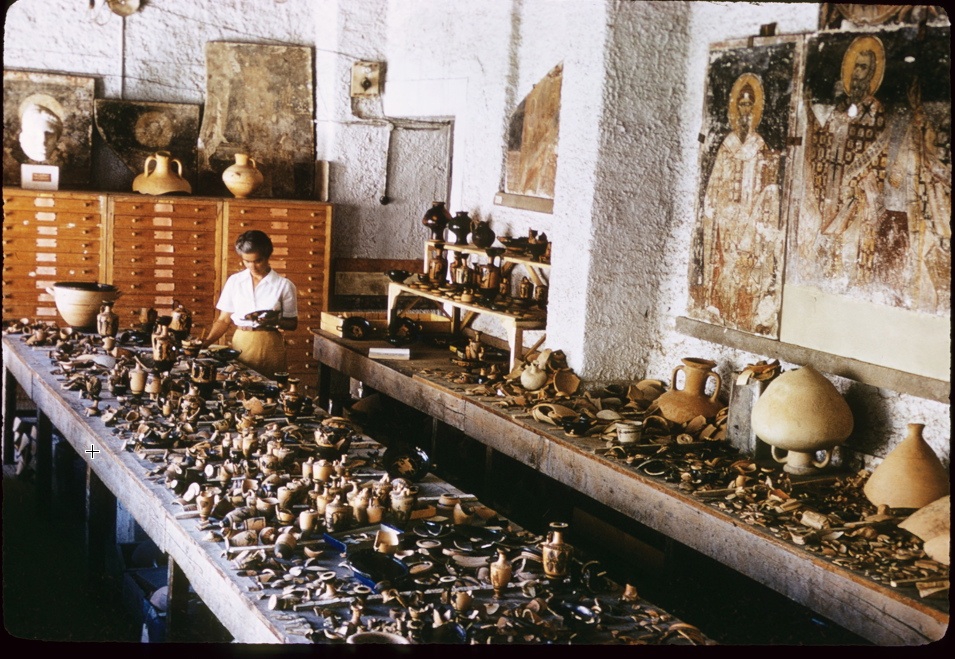
Above: sorting pottery from the Stoa Gutter Well of the Athenian Agora excavations

These images include all aspects of material culture in antiquity. The Rutgers Classics digital collection is awash in vase paintings, landscapes, murals, statues, and monuments from prehistoric to early medieval periods. The regions represented stretch from ancient Britain to Egypt and Spain to Afghanistan, with a focus on the Mediterranean basin. Since the images reflect the work of many decades, they often provide distinctive views and diagrams of archaeological sites before and after reconstruction processes

The bulk of these slides represent on-site, original photographs by scholars such as Rutgers professores emeriti Jack Cargill (History) and Christoph Clairmont (Classics), or longtime University of Michigan professor and (later) ACLS president John D’Arms.

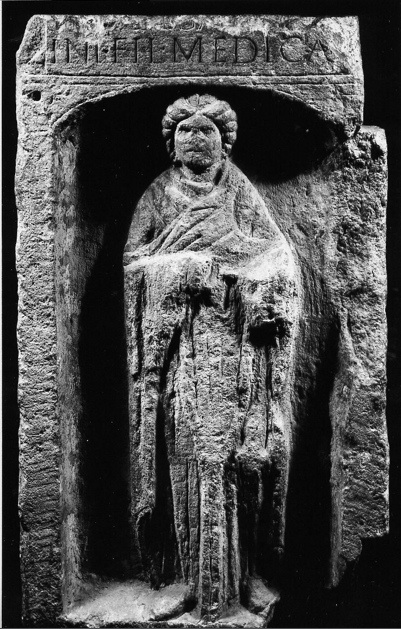
There are several sub-collections, ranging from a large group of glass lantern slides dating to the 1920s and 1930s, to an unusually valuable set of photos of inscriptions honoring Roman medical women, compiled by Zoë Perkins (Bryn Mawr ’97). The basic metadata markup for all the Rutgers Classics digital holdings will be complete by October 2008.

Above, tombstone of a medica from Metz, probably 1st century AD (CIL 13.4334) INI FIL MEDICA

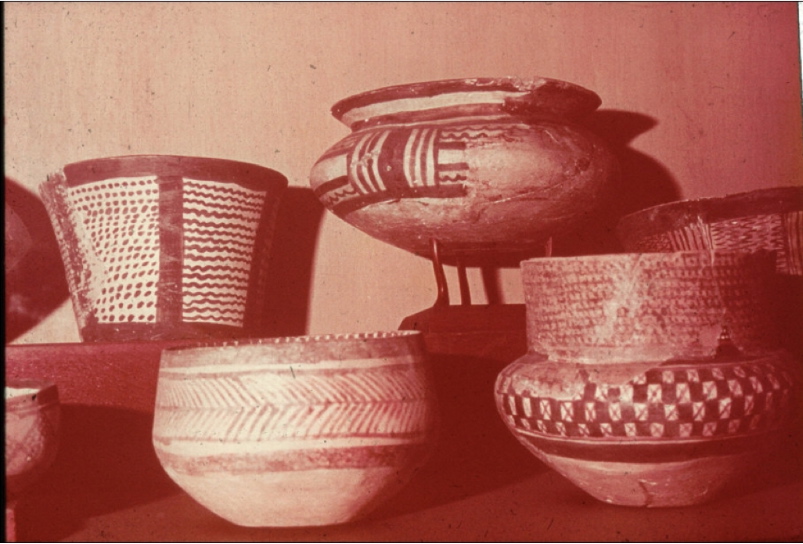
Some of the most striking items in the collection are images of Israel, Iraq and Iran taken by Christoph Clairmont in the 1950s and 1960s.

Above: pottery in the Baghdad Museum, photographed probably in the mid-1950s.

And here is the really exciting bit.

Continue reading

Rediscovered at RU: lantern slides shed new light on women in archaeology

And so long as we’re talking about unique Rutgers Classics resources…

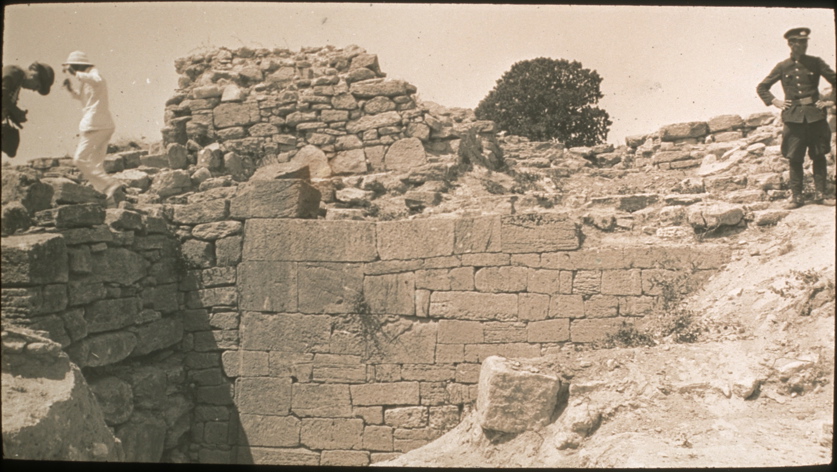
Above: “The House of Paris”, Troy 1935

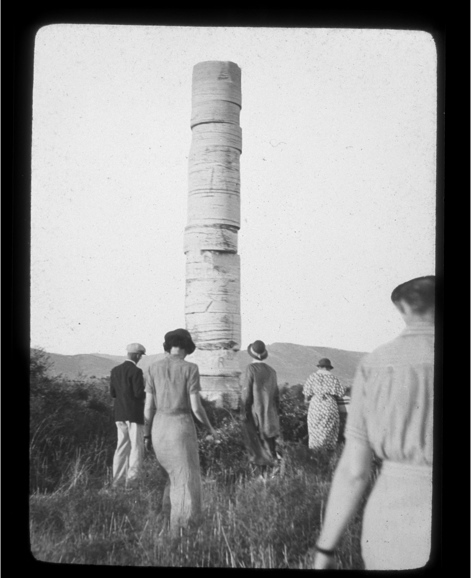
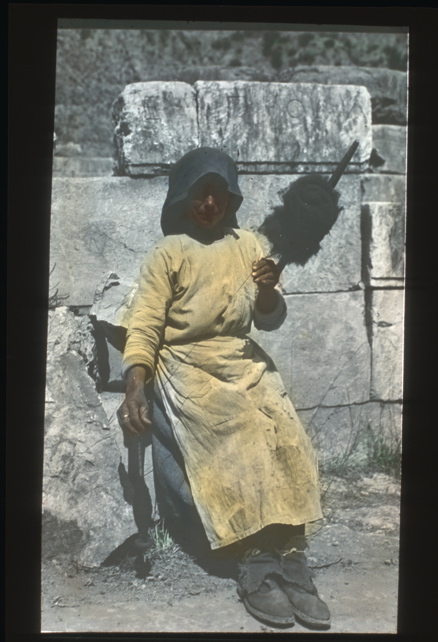
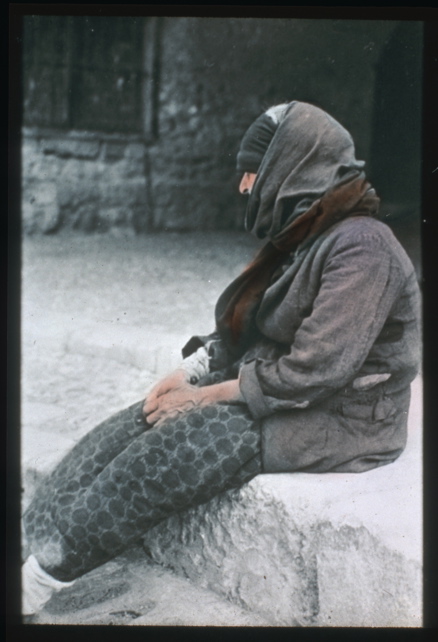
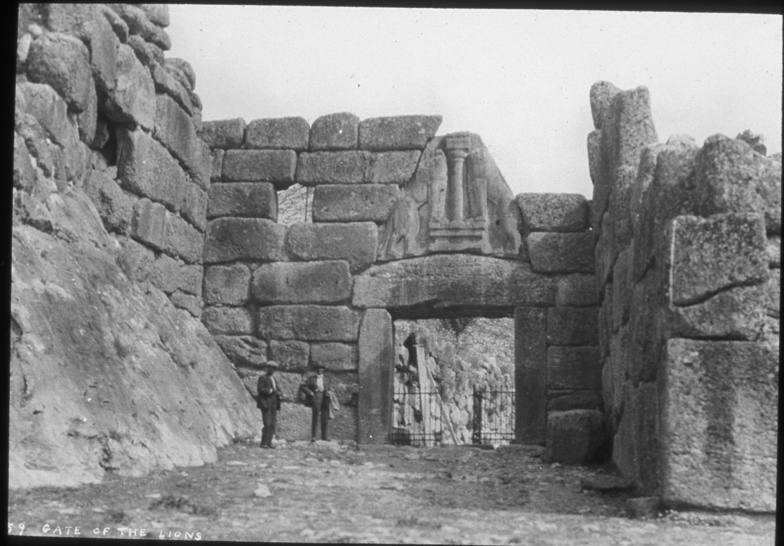
The Rutgers Classics lantern slide collection consists of almost 1000 original exposures taken in the 1930s as part of archaeological research done in Italy, Greece, and Turkey, by faculty members of the New Jersey College for Women—now known as Douglass College.

Above (all from 1935): NJC group examines the one remaining column of the Temple of Hera at Samos; an archaeological worker spins at Delphi; noontime musicians at Delphi; veiled woman at Rhodes.

The collection—now completely digitized—provides a glimpse into the NJC academic and teaching culture of the 1930s, as well as American women in archaeology in the pre-World War II era.

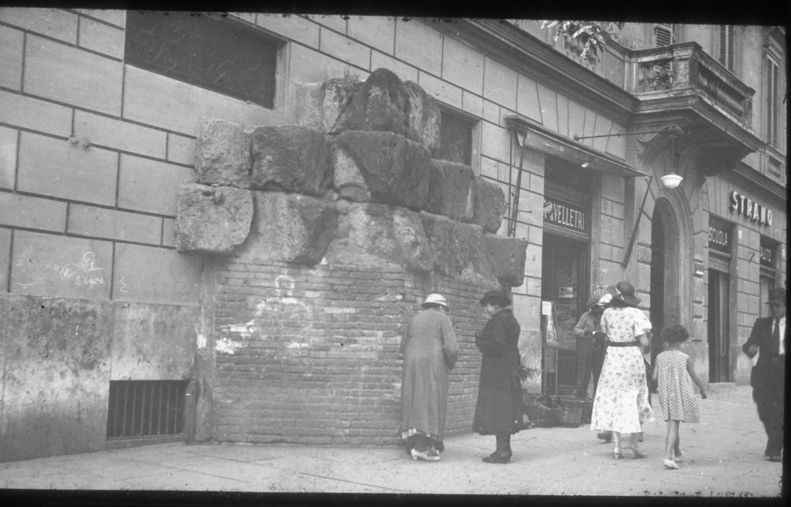
Above, from 1935: Lion Gate at Mycenae; remains of the Servian Wall in Rome.

For instance, one of the main figures in the making of these images is Evalyn A. Clark, then an assistant professor at NJC.

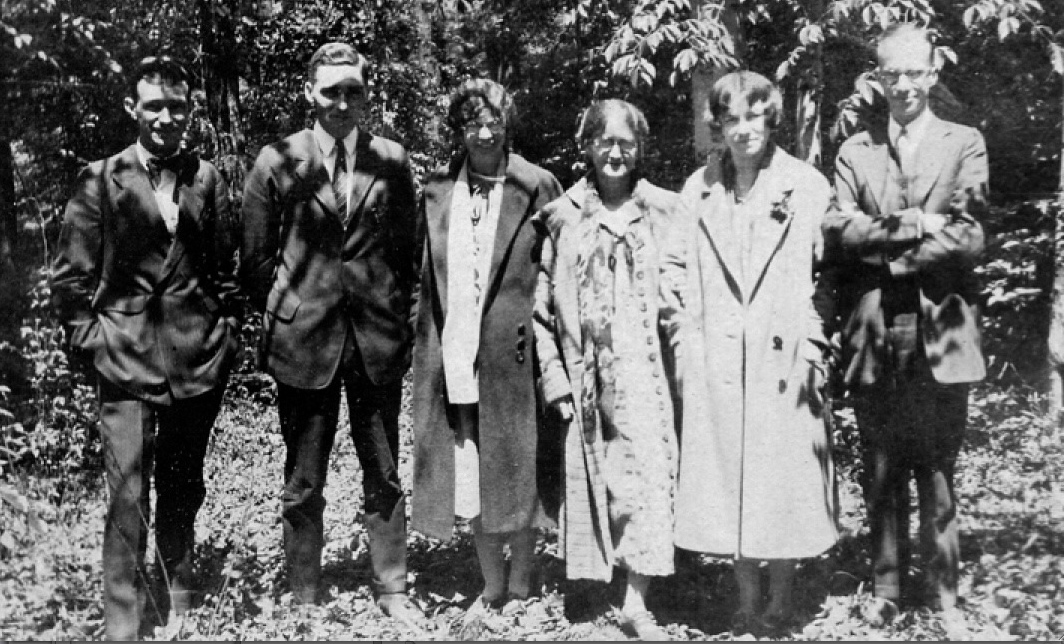
Above (from 1926, second from right), Evalyn Clark as a Johns Hopkins graduate student in Classics. TRS Broughton is second from left.

As a direct result of these travels, it seems, Clark retooled herself at Harvard and Columbia as a historian of modern nationalism. Soon afterward, in 1939, Clark—having left New Jersey to join the Vassar faculty—went on to co-found the Berkshire Conference of Women Historians.

For the dramatic story of how these images came into being, and then reemerged after a half-century or more of neglect, see this article in the 20 February 2006 issue of Rutgers Focus.

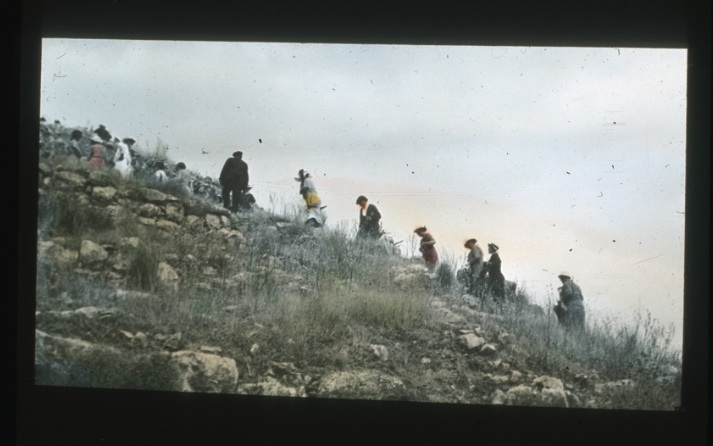
Above: New Jersey College for Women faculty on the ascent, 1935.

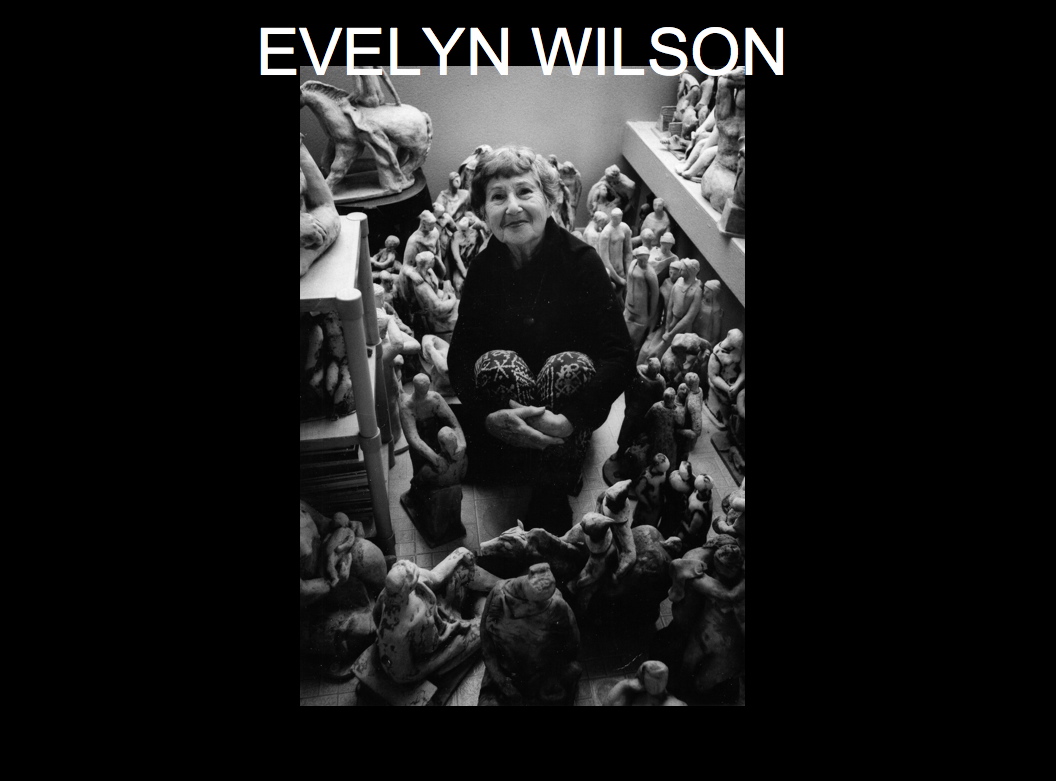
At RU Classics, sculptor Evelyn Wilson’s ‘Homerica’ in terracotta

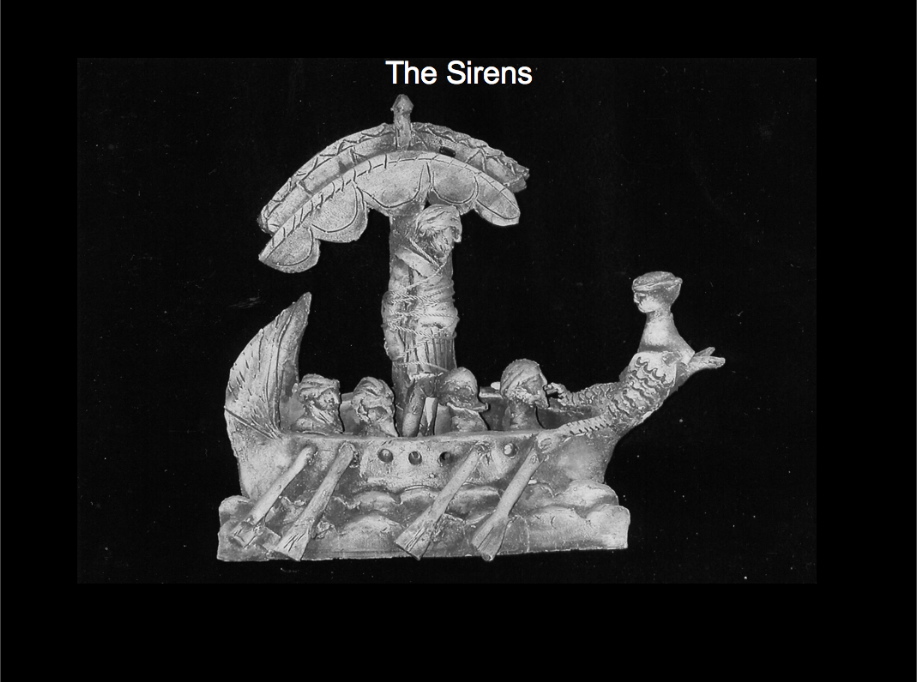
Perhaps you were wondering about that Odysseus tied to the mast on our blog header.

Well, it comes from “The Iliad and the Odyssey” by Evelyn O. Wilson (1915-2006). That’s a narrative group of more than two dozen grey terracotta sculptures, each about sixteen inches in height, executed in the early 1990s.

These works, along with paintings by the sculptor’s husband, noted American artist Ben Wilson (1913-2001), have been on permanent display in the RU Classics department since 2006.

The artists’ daughter, Joanne Wilson Jaffe, and the Ben and Evelyn Wilson Foundation, gave Rutgers Classics this unusually generous gift.

In fact, Rutgers-New Brunswick is building a rich collection of Wilsoniana, with other pieces by the two artists in its Jane Voorhees Zimmerli Art Museum, its Art Library, and (most recently) in the lobby of its Department of Women’s and Gender Studies.

There’s a short film entitled “The Turbulent Ground” that Florida fine arts and antiques dealer Don Elder has made about Ben Wilson. “It’s terrific”, said Joanne Jaffe, “and offers rare insight into Ben’s thinking and paintings.” Wilson was a painter of the Abstract Expressionist school and a veteran of the WPA.

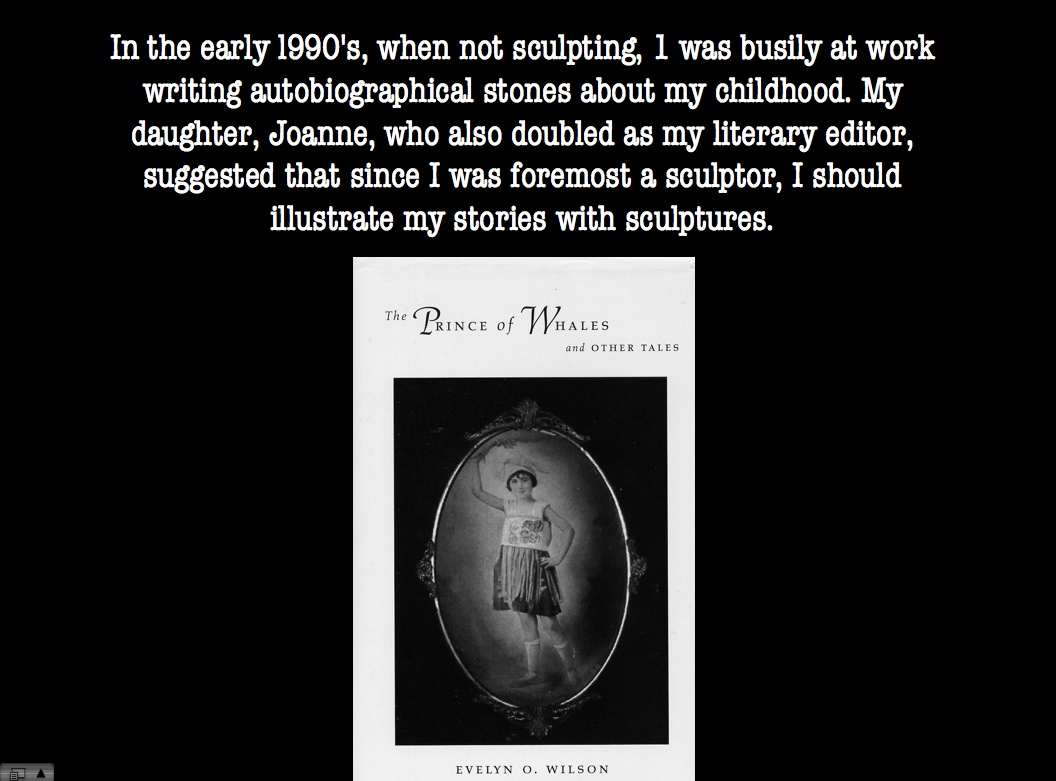
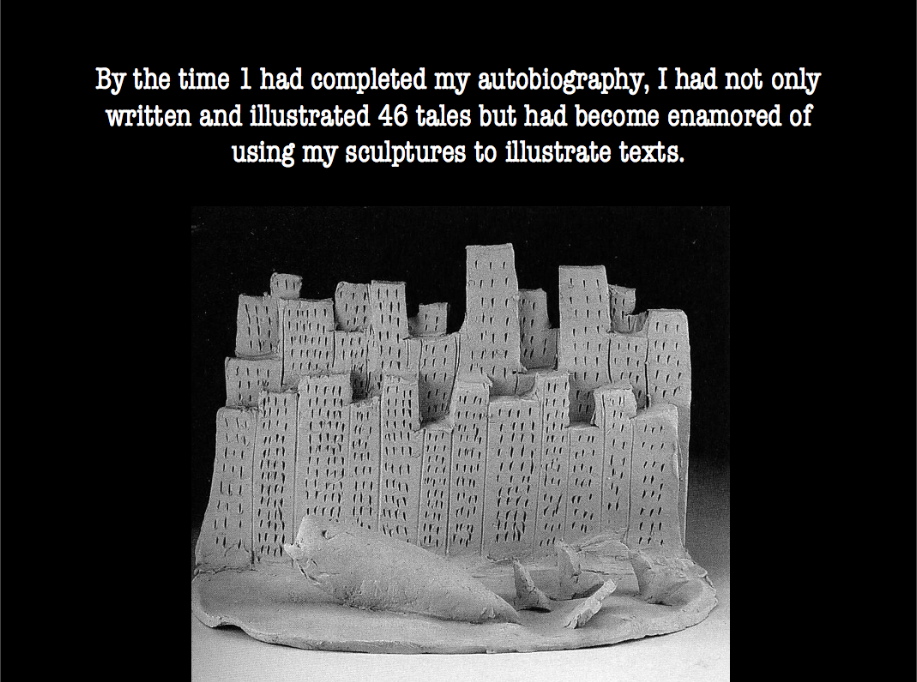
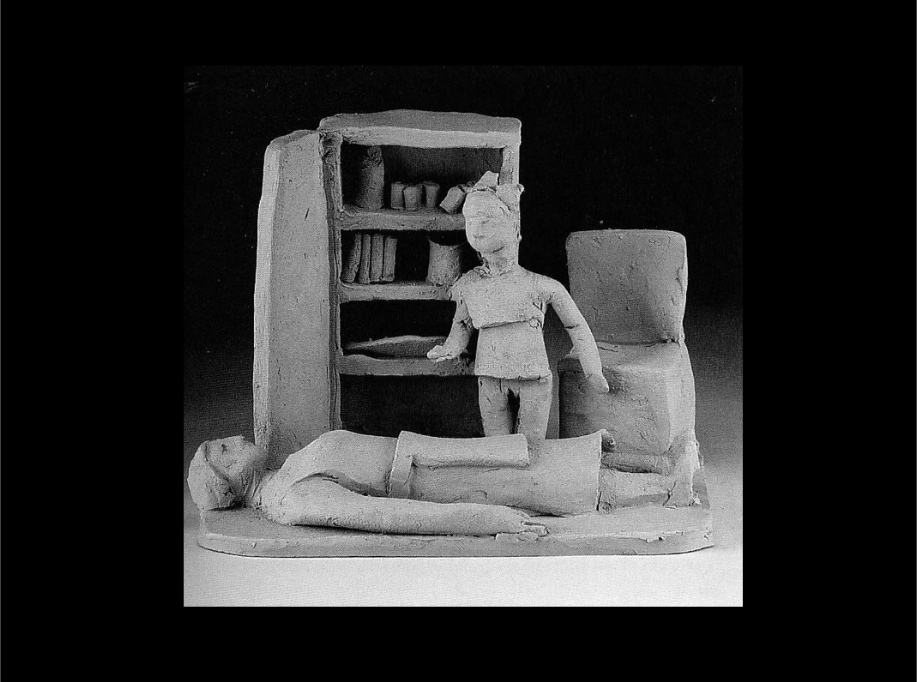
But of the Homeric sculptures at Rutgers Classics, why not let Evelyn Wilson tell the story in her own words?

As it happens, Rutgers was to receive also the Canterbury Tales and Mother Goose cycles. But keep reading–we’ve only just started!

Continue reading