A new resource for teaching about Roman women—with contributions by RU’s Liz Gloyn

flavianFrom the epic archives of LIFE magazine, now hosted by Google. Credit: Carlo Bavagnoli

What’s new in Latin pedagogy? Ask Liz Gloyn, RU Classics PhD candidate—and one of three University graduate students honored as a Rutgers-Newark Scholar/Teacher for 2008-9.

Gloyn, who came to Rutgers Classics after taking two degrees at Cambridge University, is the latest collaborator to join a vital new project, the Online Companion to The Worlds of Roman Women.

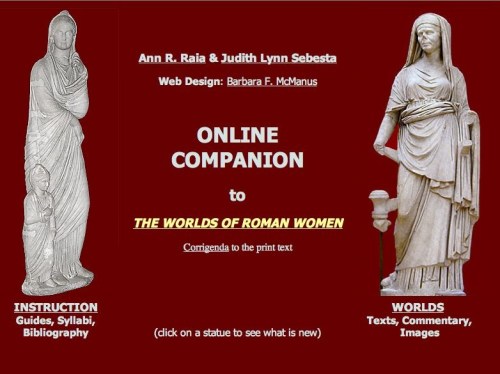
worwonline

The Companion is a compendium of unadapted Latin texts by or about Roman women. All ranks and status groups are featured, and each passage is glossed and hyperlinked.

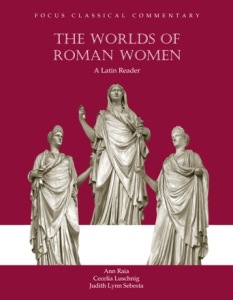
This Online Companion complements the Worlds of Roman Women print reader that Focus published in 2005. Ann Raia, Cecelia Luschnig and Judith Lynn Sebesta edited that volume; Raia and Sebesta with Barbara McManus put together this online aid.

01303worldsofromanwomen

Explains Gloyn, “The Companion supports students by providing free text-commentaries, making new and unusual texts available.” Plus for each passage there’s an essay that provides the relevant context for women’s activities, concerns, and social roles in ancient Rome. Here Gloyn contributed the essay and commentary on Paulina, the wife of Seneca, and is currently working on a passage about Seneca’s heroic aunt.

The Companion is divided up into ten different “worlds”—for instance Childhood, or Marriage, or the Body, or Flirtation. The site also includes numerous images of material evidence from the ancient world—statues, wall paintings and women’s artefacts.

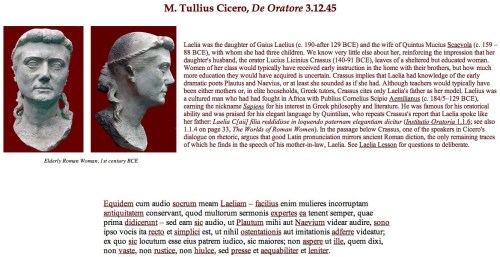
laelialessonSample learning unit: here, the disquisition on Laelia’s speech in Cic. De Oratore

There’s a pedagogical section as well, where teachers can share the innovative ways they have used the Companion. Instructors can use and contribute syllabi, lesson plans and classroom activities, which “gives faculty the opportunity for collegial interaction on Latin pedagogy”, says Gloyn.

“I’ve very much enjoyed the collaborative process,” Liz continues, “and am delighted to be part of the project”.

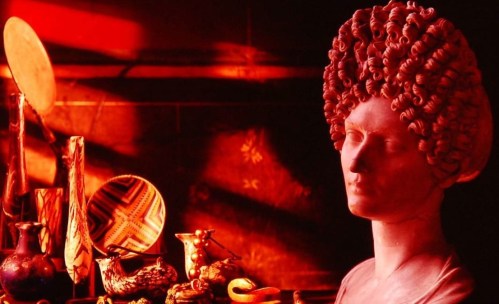
bavagnoli11Pompeian scene from LIFE 25 March 1966. Credit: Carlo Bavagnoli.

Rutgers Focus highlights Classics Department’s undergraduate teaching

Just spotted in the latest issue of Rutgers Focus, the university’s faculty and staff publication…
focusphoto1

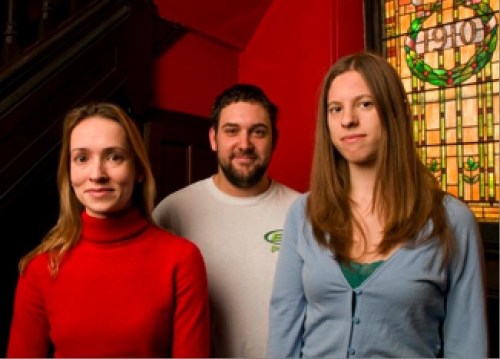
From left, Assistant Professor of Classics Serena Connolly, and majors Adam Petrosh and Etel Sverdlov. Credit: Nick Romanenko

Sona si latine loqueris (Honk if you speak Latin)
By Coleen Dee Berry

Latin? Ancient Greek? Virgil and Sophocles? That’s like sooo … 2,000 years ago, right? Not any longer. The study of classics is in the middle of a 21st-century renaissance. Latin, in particular, has staged a comeback, and now is virtually tied with German as the third most frequently taught language, after Spanish and French, according to the American Council on the Teaching of Foreign Languages. Last year more than 150,000 high school students applied to take the National Latin Exam. Only 6,000 students signed up for the test when it was first given in 1977.

Rutgers Classics Department in the School of Arts and Sciences mirrors this national trend. Since 2000, the department has doubled both its faculty – from three full-time professors to six – and its students. Last year 1,271 students enrolled to take classes, representing 45 declared classics majors.

Guiding Rutgers classics through this revival is Department Chair T. Corey Brennan, who may epitomize the new ancient scholar. Brennan’s interests include ancient sports, and he is at work on a biography of elite women of the Roman Republican era. But he is also a musician who was a guitarist and songwriter for the alternative rock band, The Lemonheads. Brennan recently received a prestigious appointment to a three-year term as the Andrew W. Mellon Professor-in-Charge at the American Academy in Rome, which will begin July 1.

“We’re really lucky here at Rutgers, in that we’re benefiting from the high school Latin programs of New Jersey, which both individually and collectively are among the very best in the country,” Brennan said. “But the classical languages are just about 20 percent of our offerings; in our culture and literature courses in translation, we’re trying to encourage undergraduate research into all aspects of the ancient Mediterranean experience.”

Nationally, enrollment in classics courses at the college level has shown a slow but steady growth in the past decade, according to a 2006 study by the Modern Language Association. High school students find Latin helpful in their preparation for SATs; college students in the fields of law and medicine and other sciences find a study of Latin useful.

“I took it [Latin] in high school to help me with my SAT scores and got hooked,” said Etel Sverdlov, a Rutgers junior from Lexington, Kentucky, and a classics major. “I’m more interested in the history than the actual language part of it, but it helps if you read the history in the [original] language.”

Popular culture also has aided the classics revival, with films such as Russell Crowe in Gladiator, Brad Pitt in Troy, and 300, about the famous Spartans in the Battle of Thermopylae, showcasing ancient Rome and Greece.

Then the enormously popular Harry Potter series made liberal use of Latin terms. The first book, Harry Potter and the Philosopher’s Stone, published in 1997, was translated entirely into Latin in 2003 as Harrius Potter et Philosophi Lapis by Peter Needham, a retired Latin professor from Eton College in England. An ancient Greek translation was also produced around the same time. The translations, according to the British publisher Bloomsbury, were done as an academic exercise, to stimulate interest in the languages and provide students of those languages with modern reading texts.

This past October, when New York Times columnist Maureen Dowd decided to write part of her “Are We Rome? Tu Betchus!” op-ed piece partially in Latin, she chose Rutgers–Newark associate history professor Gary Farney to help her translate for the article, which found echoes of the fall of Rome in American society.

For many years, the study of classics was Rutgers University, Brennan noted. When Rutgers began in 1766 as Queen’s College, classics was the sole course of study for the college’s first century and the only bachelor of arts major available until some years after the First World War.

Today at Rutgers, study of the classics includes not only the languages of Latin and ancient Greek but also courses on Greek and Roman sports, ancient law, medical terminology, Greek drama, and ancient warfare and diplomacy.

“It’s definitely not your parents’, or grandparents’, Latin classroom,” said Sherwin Little, president of the American Classical League, which was founded in 1919 to promote the study of classical languages.“Teachers are making their curriculum more relevant to students today by emphasizing its role in archeology, mythology, and linguistics.”

In addition, Latin is no longer just for the best and brightest at elite schools. At the Indian Hill High School in Cincinnati, Ohio, where Little teaches, students with learning disabilities are offered a two-year Latin sequence “When I started working with special needs kids, I was shocked that they didn’t know that Venus stood for love. I discovered they did not get that ‘enrichment,’ ” Little said. Latin’s regular structure and relatively low idiomatic content helps in teaching special needs students language, he said.

In Assistant Classics Professor Serena Connolly’s New Brunswick course, “Literature in the Republic,” students take turns reading aloud and translating the text. “Latin is a language that you learn to read, more than you learn to speak it. Few programs emphasize speaking – one of the few I know of is in Finland,” Connolly said “When you think that you’re reading something written more than 2,000 years ago, it’s kind of exciting,” said Stephanie Johnson, a history major with a Latin minor, before she plowed into a passage of Roman historian Sallust’s Bellum Catilinae.The readings in Latin tell a very modern story – of politicians grilling witnesses in the Roman Senate to root out a conspiracy in 63 B.C.

Adam Petrosh, a junior from Mays Landing and a classics major, said his high school Latin teacher got him hooked on classics and, in turn, he hopes to become a Latin teacher when he graduates, “to keep the interest going.”

Auditing Connolly’s class last semester was Tom Fodice, a retired municipal attorney for Jersey City. He said his interest in Latin was sparked by his law practice and its legal terms. “So much of our legal system originated in early Roman law,” Fodice said.

Classics, by definition, remains timeless, supporters of the discipline agree. “English has evolved so much that, if you went back to Chaucer’s time, you would not be intelligible,” Connolly said. “But you could go back to ancient Rome and speak Latin and still be understood.”
rutgerslbus

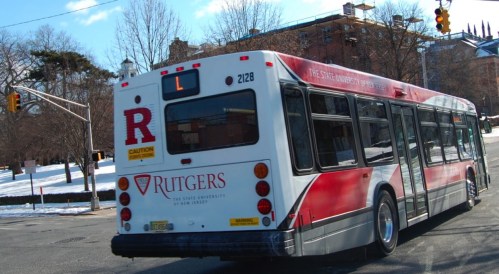
Maybe some day: a Rutgers L (for ‘Latin’) bus. But for now it’s going to Livingston Campus. Credit: T. Corey Brennan [And you can blame him for the caption too—Ed.]

R time in Philadelphia: Rutgers Classics faculty, students, alums enliven 2009 APA/AIA Annual Meetings

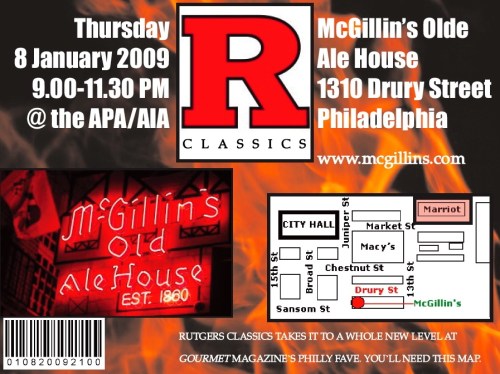
It was the only party at the 2009 Meetings of the American Philological Association/American Institute of Archaeology with a barcoded invite.

foxguild

And for good reason.

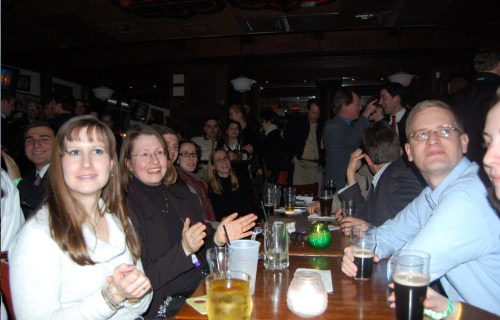
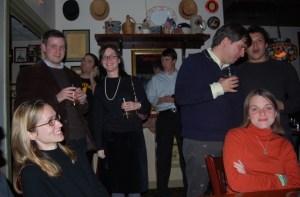
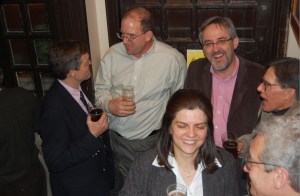
It all went down on Philly’s tiny Drury Street, where almost 100 faculty, past faculty, students, alums, and friends of the Rutgers Classics Department managed to cram into both levels of  the legendary McGillin’s, Philadelphia’s oldest continuously operating public house (est. 1860). [How did that place manage to stay open from 1920-1933? Ed.]

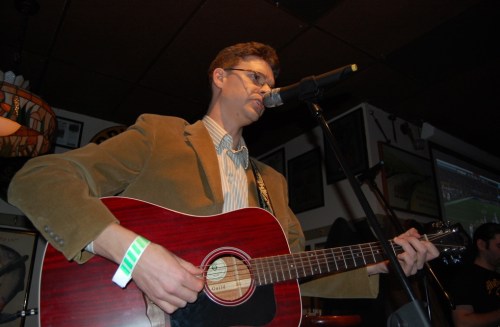
The indisputable highlight? That came close to midnight on Thursday 8 January 2009, when Classics visiting assistant professor Matt Fox (performing under the pseudonym “Matt Foxx”) rocked the house with the Dylan songbook.

ruapauiucIllinois @Urbana-Champaign massively in the house for Matt Fox at the RU Classics party

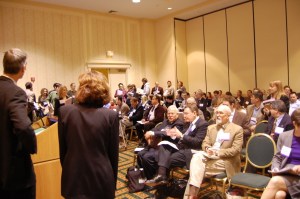
But the next morning it was down to even more serious business for Rutgers Classics, for the start of three days of conference talks and responses. You can see a full list here.

Next year? The 2010 APA/AIA locale is Anaheim California…perhaps a Matt Fox show at the NHL Ducks’ Honda Center.

gg_gfruapabroughtonsruapagroup1ruapastairs

From top: Greg Golden (PhD 2008) and (RU-N History) Gary Farney; Nathaniel Broughton, Margaret Broughton Tenney, Alan and Laurie Broughton; 7.5% of the Yale Classics Department, recent past and present; and Claude Eilers (McMaster, facing camera), with RU friends on McGillin’s stairs

ruapaas_ksruapamjruaparl_ldruapatfroom

From top: Andrew Scott (PhD 2008, now Hendrix College) and grad student Kate Shea at the Friday 9 Jan presentation of the published TRS Broughton autobiography, which they co-edited with Ryan Fowler (PhD 2008, now Grinnell College), Alan Broughton, and TC Brennan; Michael Johnson (PhD 2008, now Davidson College); grad students R. Loer and L. Danvers; SRO crowd at start of Thomas Figueira talk for Friends of Ancient History panel

ruapaphila091

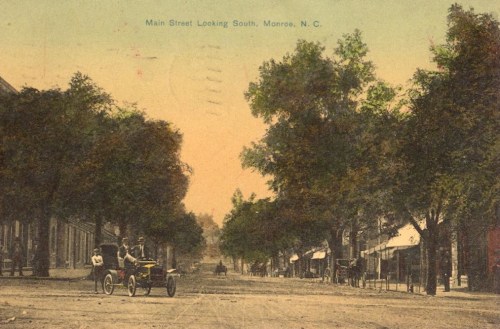
Postcard from Monroe NC: Rutgers Classics alums embrace rustic life, found online school

monroencpostcard

Just received—a very welcome electronic postcard from Bill Michael (RU Classics BA’01). He brings us up to date on his and his classicist wife’s amazing post-graduation Bucolics:

“My wife Dania Strevell (RU Classics ‘98) and I met in high school, but studied together in the Rutgers Classics department from 1995-2001.  I began as a sophomore pre-med student, and ‘converted’ to classical studies after she did.”

“By the time we were 28 we were already married with three children…I was teaching Classics courses in a private school in northern NJ and my wife was at home with the babies (yes, our first child did know the Greek alphabet before he was 2), but Cato, Virgil and a bunch of old monks were stirring in us a desire for ‘the rustic life’.”

“During my time at Rutgers, I studied the history of classical education and was convinced that there were (and are) many families who would be interested in classical studies if they were presented accessibly.  We wanted to bring them to the elementary school—and not as a silly side-dish. We gathered resources while at Rutgers and decided to begin restoring an older form of the classical liberal arts curriculum with our goal being to bring the classical humanities to the youngest students.  As much as we loved studying classical languages, history and philosophy, we felt we learned about them too late.  Further, with the increasing numbers of homeschooling families asking us for private instruction and information, we thought we might be on to something.”

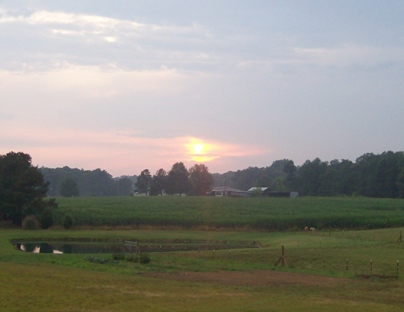
“In 2005 we moved to rural NC, about 30 minutes SE of Charlotte, where we were able to build a house on 15 acres of farm land.”

image012A look across the pond on the Michael property

“While I enjoyed the privilege of reading Cato’s agricultural treatise and Virgil’s rustic poems in the country, I had to earn my bread.”

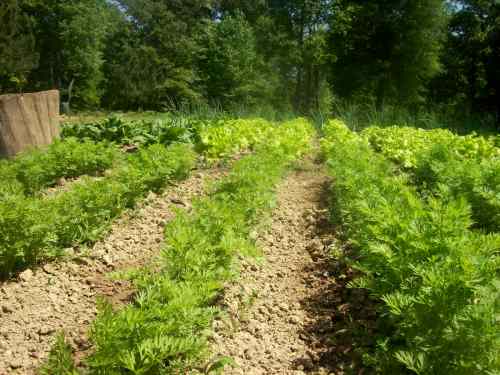
image014

Carrots, spinach and onions in the Michael kitchen garden

“So, I spent the time teaching the Classics again at a private school in Charlotte, while we spent three years having more children and developing the curriculum and layout for the program on the side.”

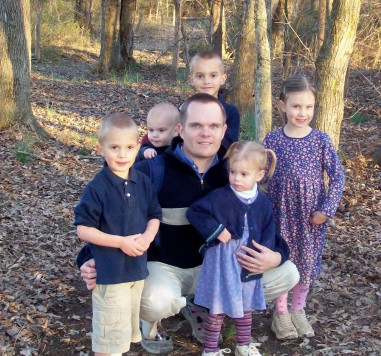
image0101

Bill Michael with children (“only 5 then”) on a walk on his Monroe NC farm in 2006

“This past September, we launched the Classical Liberal Arts Academy online. Now, this is simultaneously a religious endeavor of ours, being old-school Catholics, but we achieved our goal and are making a living with Classics degrees—which many said was impossible.  Phooey.”

Continue reading

Season’s greetings from Rutgers Classics

wilsonwintersceneEvelyn O. Wilson (American, 1915-2006), Winter Scene (ca. 1943). Image courtesy of Joanne Wilson Jaffe, and the Ben and Evelyn Wilson Foundation.

Looking back, 2008 really seems to have been a banner year for Rutgers Classics. (Just skim the past posts of this blog.)

Deep thanks and warmest seasonal greetings to our students, alumni/ae, and many friends both inside and outside Rutgers University.

More—indeed, much more—to come in 2009!

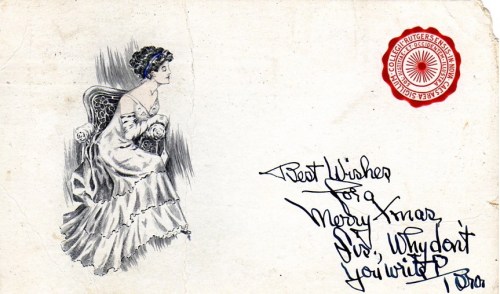
messagetosisterRutgers postcard (no date). “Best Wishes for a Merry Xmas. Sis., Why don’t you write? Bro.” From the Kenlew Collection.

A new Mellon Professor for the American Academy in Rome: RU Classics professor Corey Brennan

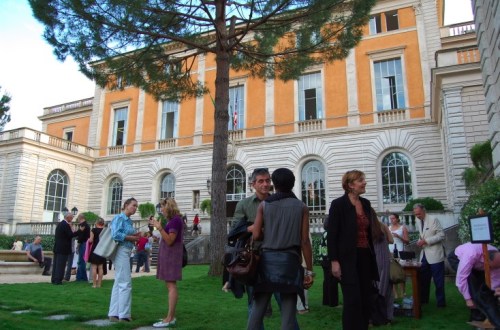
aarstudio2The McKim, Mead & White building of the AAR, during the Academy’s June 2008 Open Studios

Excerpted from a press release (12 December 2008) by Adele Chatfield-Taylor (FAAR’84), President of the American Academy in Rome:

“Roman historian T. Corey Brennan has been appointed to a three-year term as the Andrew W. Mellon Professor-in-Charge of the School of Classical Studies at the American Academy in Rome. Brennan’s appointment begins 1 July 2009.

Brennan comes to the Academy from Rutgers University-New Brunswick, where he is currently associate professor and chair of the Department of Classics and a former director of the university’s interdisciplinary program in Italian Studies. Before arriving at Rutgers in 2000, he taught for a decade in the Departments of Greek and Latin at Bryn Mawr College.

Brennan held a pre-doctoral fellowship at the American Academy in Rome in 1987-1988, and currently (2008-2010) serves as president of its Society of Fellows, an alumni group of more than 1000 that comprises Academy Rome Prize winners, Residents, and Affiliates.

[He] succeeds Professor Thomas A.J. McGinn (FAAR’85) of Vanderbilt University as Mellon Professor at the American Academy in Rome.”

Brennan’s three-year position is a temporary one, after which he returns to Rutgers for teaching. As Professor-in-Charge, Brennan will help advance the humanistic work of the Rome Prize winners and other members of the AAR community, and coordinate and supervise many aspects of the Academy’s varied resources and programs (especially “walks and talks” in the city of Rome, and trips further afield, plus lectures and conferences in the humanities). While in Rome, he also will continue to work closely with more advanced Rutgers Classics graduate students. You can see the Rutgers news release on this here. For an informative list of Rutgers’ links to the American Academy in Rome, see the final section of this article.

But we’re not quite finished yet…. Continue reading

RU Classics gears up for January 2009 APA/AIA joint Annual Meetings in Philadelphia

safariscreensnapz006

The genius of LIFE photographer Gjon Mili; this and roughly 2,000,000 other LIFE archive images now available for free viewing thanks to a new partnership between Google and LIFE.com

RU ready for this? In just under a month (8-11 January 2009) Philadelphia will host the 140th Annual Meeting of the American Philological Association (APA). For the 110th time, the meeting will be held jointly with that of the Archaeological Institute of America (AIA).

The Philadelphia Marriott Downtown Hotel (1201 Market Street) is the headquarters hotel for the joint conferences. Pretty much everything takes place there: the Convention Registration, the exhibits, all AIA and APA paper sessions, the Placement Service, all placement interviews, and most committee meetings, special events, and receptions.

As always, Rutgers Classics will be fully in the house. All of our teaching faculty (Emily Allen, Corey Brennan, Serena Connolly, Thomas Figueira, Matt Fox, Leah Kronenberg, Tim Power) plus most of our graduate students and also some undergraduates are slated to attend. Here’s a punchlist of presentations by faculty, students and alumni/ae at the APA sessions (AIA listings to follow):

THURSDAY 8 JANUARY

8:00 P.M. – 10:00 P.M SECTION 1 The Veterans’ Story: Interviewers on Interviewing
Paper #4. Lawrence Kowerski (Rutgers Classics PhD 2003, now associate professor, Hunter College). “The Insider: Going from Visiting to Tenure-Track Positions”

safariscreensnapz008More from Gjon Mili and the LIFE archives; about the best photo of CIL VI 11595=34044 that one is likely to see

FRIDAY 9 JANUARY

8:30 A.M. – 11:00 A.M. SECTION 2 Greek Law
Paper #1. David Mirhady (Rutgers Classics PhD 1992, now associate professor, Simon Fraser University). “Democratic Rituals: Jury Selection in Athens”

1:30 P.M. – 4:00 P.M. SECTION 18 New Approaches to the Political & Military History of the Greek, Roman, and Late Roman Worlds. Sponsored by the APA Committee on Ancient History
Paper #1. Thomas J. Figueira (Rutgers Classics Professor II) “Recent Studies on the Structure and Institutions of the Greek polis”
Respondent to Papers #3 (M.T. Boatwright) and #4 (N. Rosenstein). T. Corey Brennan (Rutgers Classics associate professor)

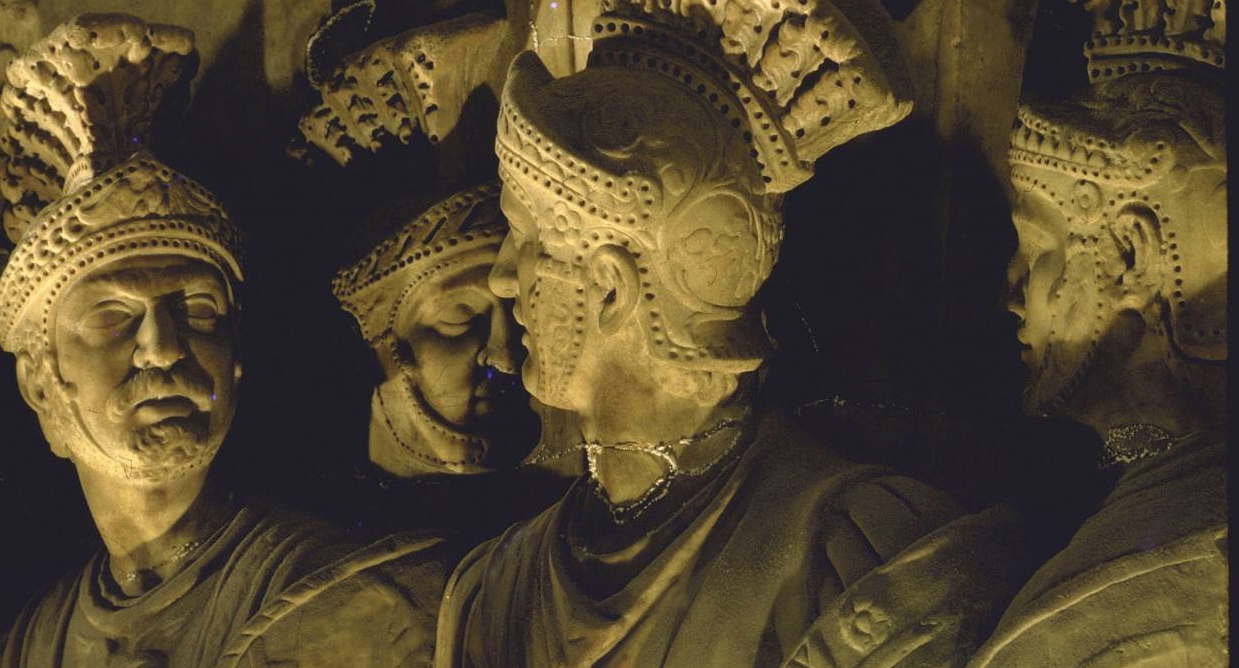
safariscreensnapz011Through the first half of 1966 LIFE published a multi-part photo spread on ancient Roman culture; the Gjon Mili photos seen here were meant for the 4 March and 3 June issues.

SATURDAY 10 JANUARY

1:30 P.M. – 4:00 P.M. SECTION 38 The Etruscan Objects Speak: New Linguistic and Socio-Historical Approaches to Etruscan Epigraphy. Joint APA/AIA Session.
Paper #5. Gary Farney (Rutgers-Newark associate professor of History). “Lucumo to Lucius: Etruscans with Both Etruscan and Latin Names on Bilingual Inscriptions from Etruria”

1:30 P.M. – 4:00 P.M. SECTION 40 The Vergilian Tradition. Sponsored by the Vergilian Society.
Paper #2. Karen Klaiber Hersch (Rutgers Classics PhD 2002, now assistant professor, Temple University). “An Unknown Epithalamic Link? Apollonius, Vergil, and Statius”

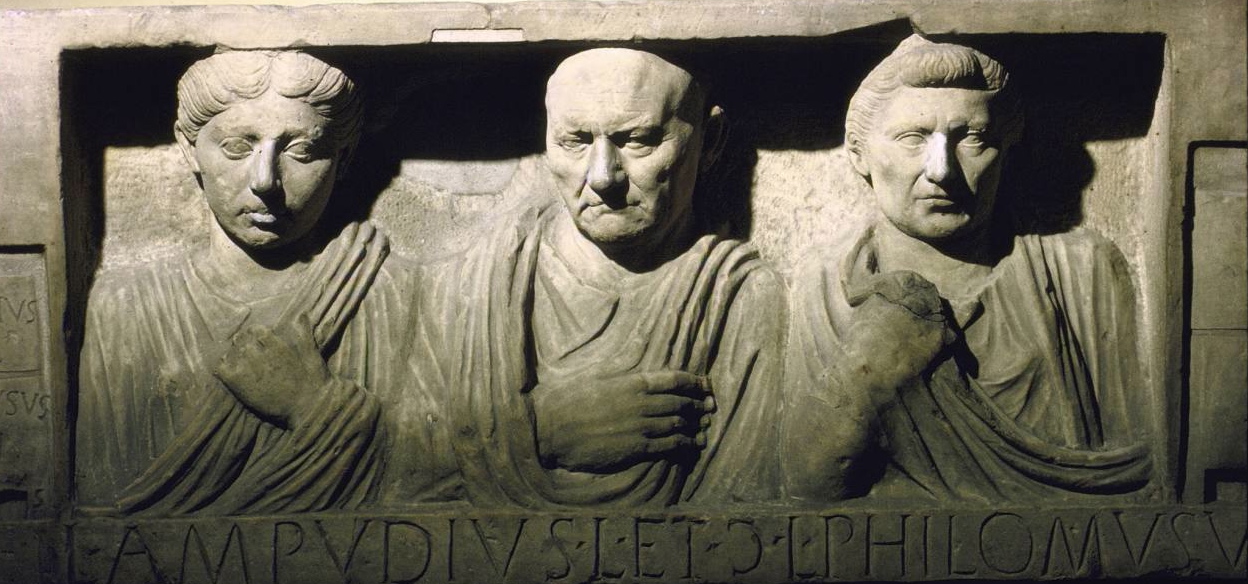
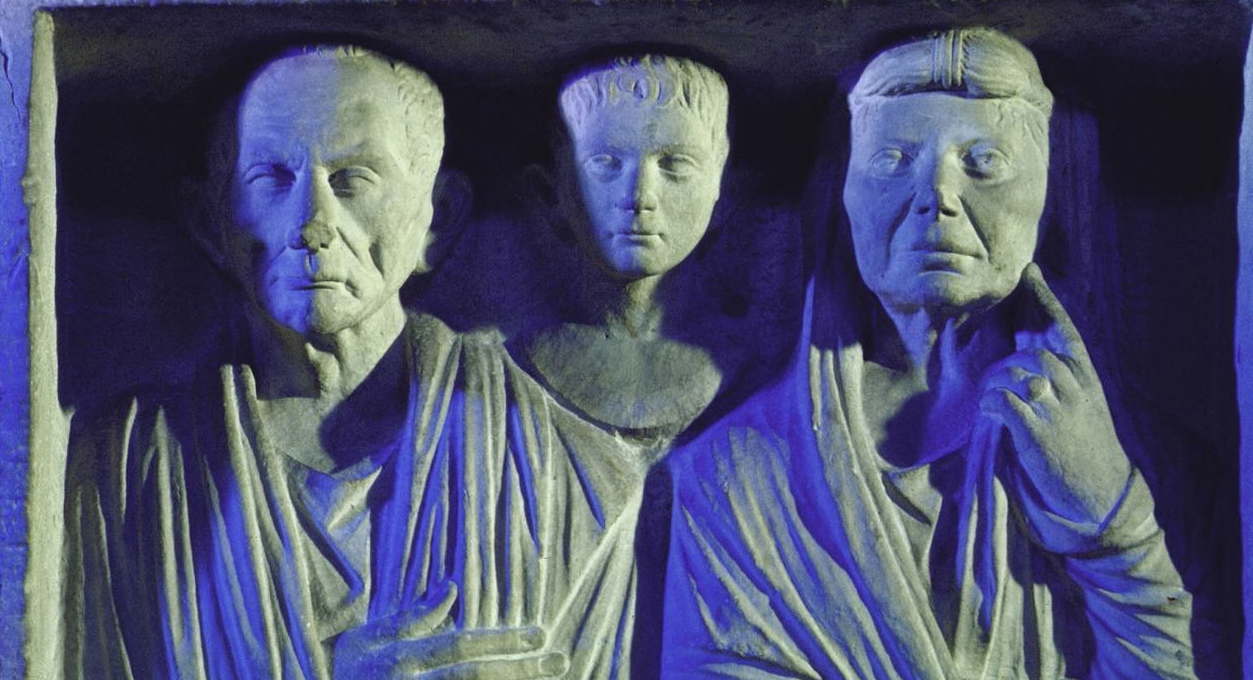
safariscreensnapz009Funerary relief from sarcophagus at Rome, photographed by Mili in 1965; a glimpse of the breadth of the LIFE archive holdings in Roman culture can be seen here

SUNDAY 11 JANUARY

11:30 A.M. – 1:30 P.M. SECTION 49 Thucydides.
Paper #4. Sean Jensen (Rutgers Classics graduate student/Member, American School of Classical Studies at Athens) . “The Milesian Sub-Hegemony”

11:30 A.M. – 1:30 P.M. SECTION 50 Roman Religion
Paper #2. Benjamin Hicks (Rutgers Classics graduate student). “Evocatio Imagery in Tacitus’ Histories 4.83-84 ”

1:45 P.M. – 4:15 P.M. SECTION 58 The Soul and Its Afterlife. Sponsored by the International Society for Neoplatonic Studies.
John Finamore (Rutgers Classics PhD 1983, now Professor and Chair, Iowa). Co-organizer.

[You didn’t mention that there will be an off-premises Rutgers party-Ed.]

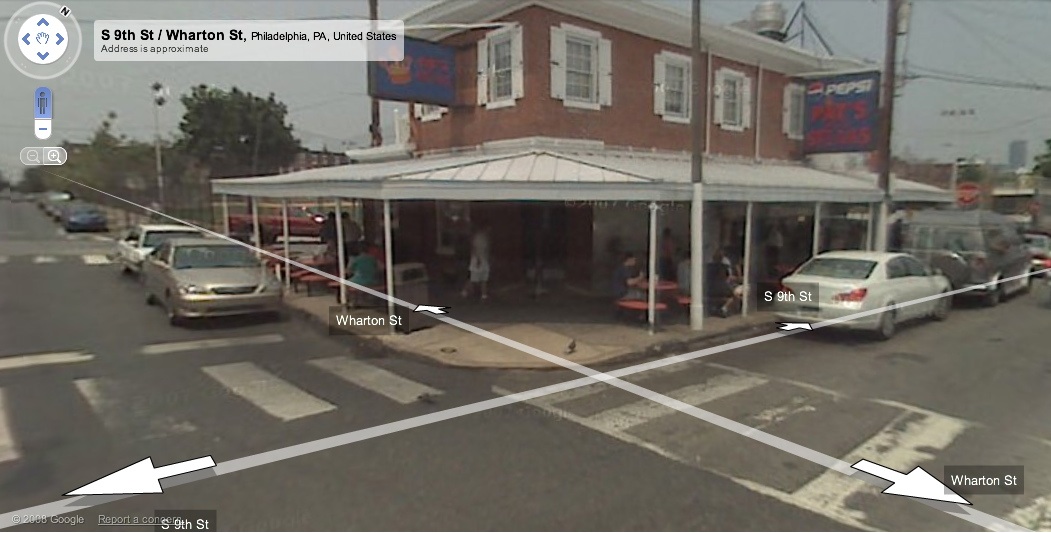
patsgooglemapGenius of a different sort: Pat’s Steaks at 9th and Wharton in South Philly, seen via Google Maps Street View.

With CAAS grant, Rutgers-Newark students explore the Metropolitan Museum

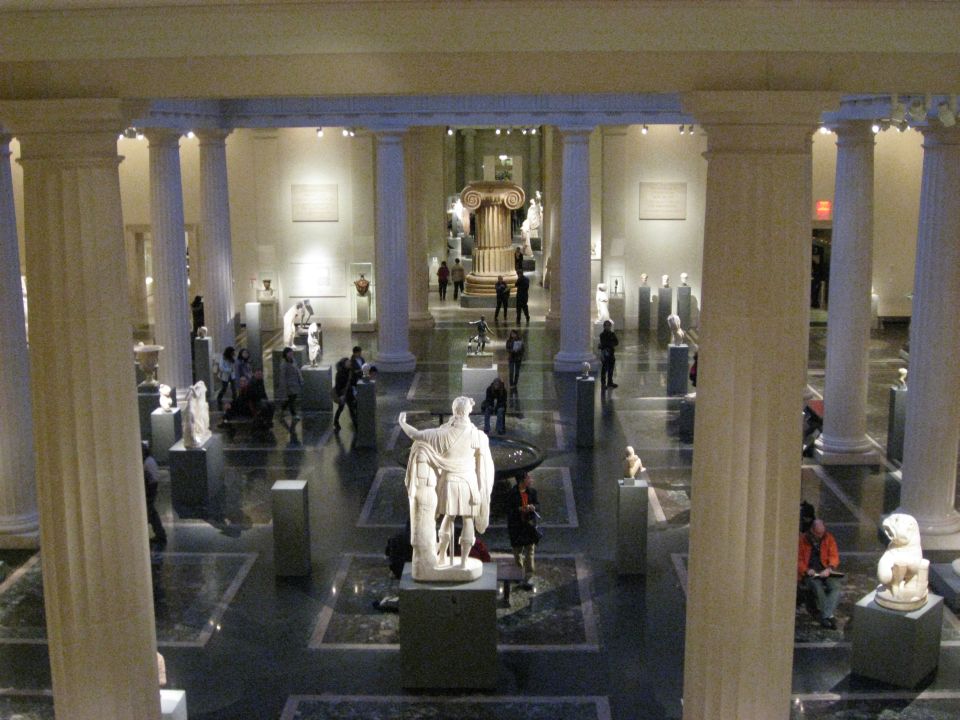
The Metropolitan Museum of Art in New York fully reopened its Greek and Roman galleries in April 2007, to much acclaim. What better resource, then, to put undergraduates enrolled in “Life & Culture in the Early Roman Empire” at Rutgers-Newark thoroughly into the antiquity zone?

1the-gr-galleries
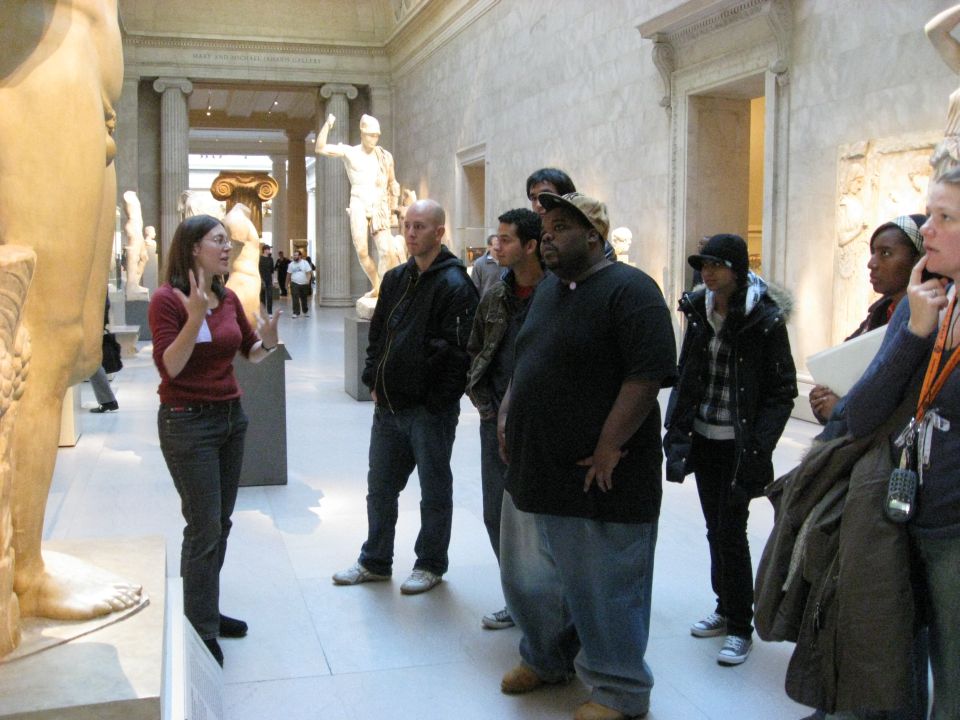
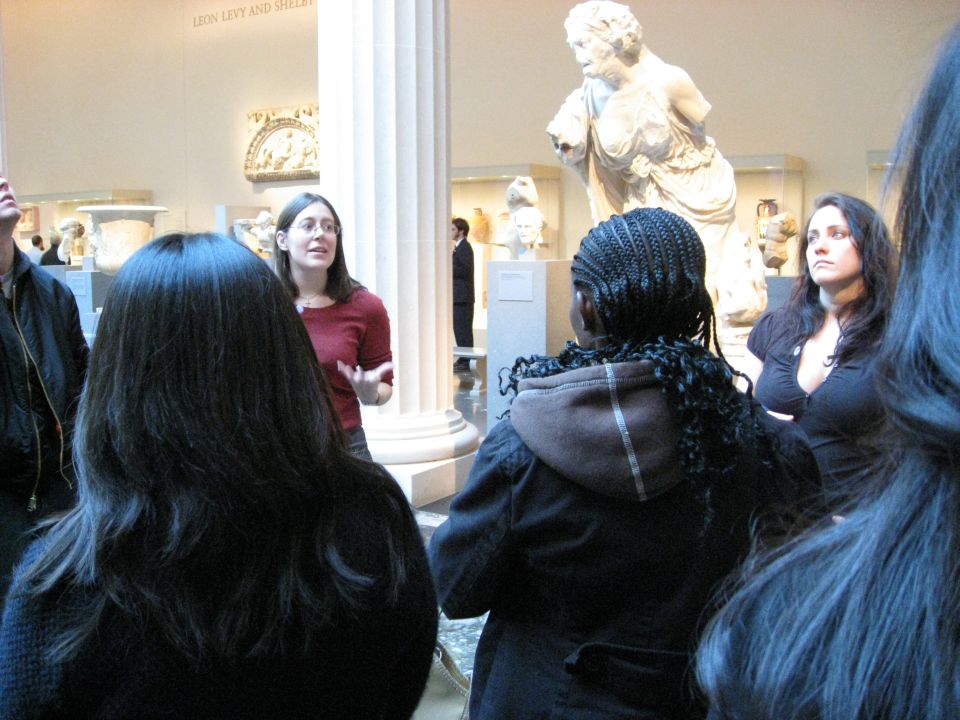
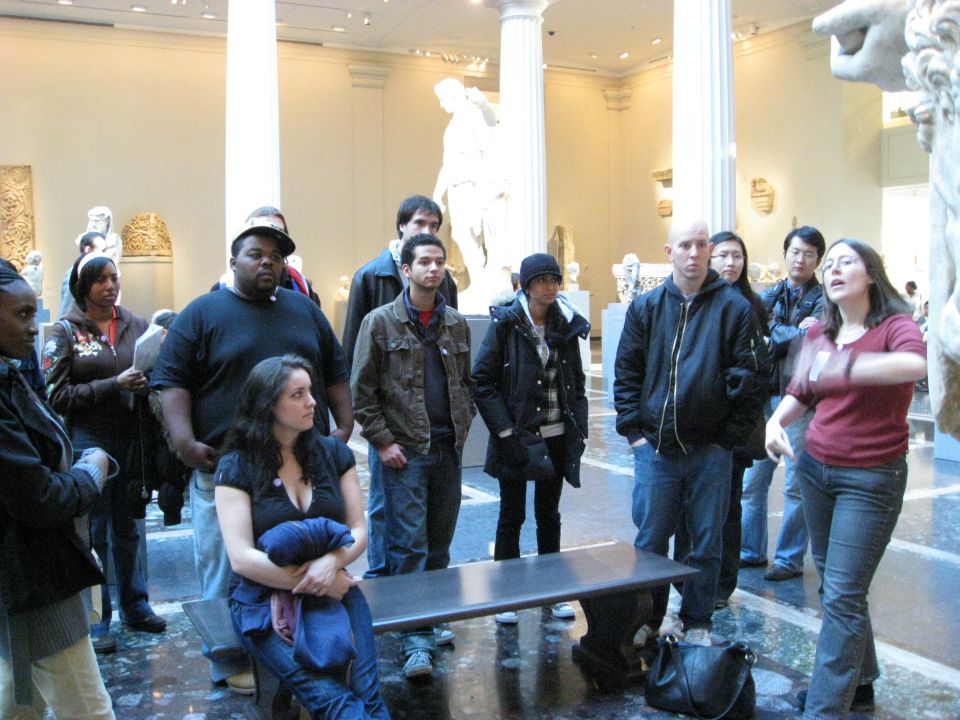
With the help of a generous Resource Grant from the Classical Association of the Atlantic States, Rutgers graduate student Liz Gloyn did precisely that. Aided by the expertise of fellow Rutgers Classics PhD candidate Benjamin Hicks, Gloyn—a participant in the inaugural year of the innovative Rutgers-Newark Scholar/Teacher program—took her students on a whirlwind tour of the Roman galleries, pointing out highlights of the collection such as a Roman copy of the famous Aphrodite of Cnidos and two cubicula with reconstructed wall paintings.

2explaining-marble-vs-bronze

Students were also able to see the kind of statues that would have been kept in a lararium, and the group stopped by the famous Etruscan chariot—leading to some questions about how people were supposed to ride in it.

The Rutgers-Newark students had good things to say about being guided around the museum. “I’ve been to the Met Museum of Art before. However, it is very different when you have someone tell you what the things you are seeing are about,” said Ghazal Behreini ’11.
3explaining-the-gallery

The trip also helped students make a connection between the objects they were seeing and what they had read or heard about. “I was able to link the information discussed in the class to the actual tangible objects from the ancient times,” said Denis Pozdnyakov ‘12. And Betty An ’12 added, “the trip helped developed my understanding of the course materials even better because instead of just reading off from literary books and texts, I got to see the works in person.”

All the students seemed amazed at the level of skill shown in the objects on display. “This all helped to appreciate the workmanship of the Romans, and their attention to detail, even in the most mundane objects, like mirror handles”, pointed out Jen Silva ’10.

4looking-at-wall-paintings
Gloyn feels the trip was a resounding success. “It’s so important to give students an understanding of material culture as well as literature, and to give them something concrete to help them remember what they’ve learnt over the course,” she said.

We’re sure that the Rutgers-Newark students will remember their experience of Roman culture long after the semester ends. [And the dynamic duo of Gloyn and Hicks too—Ed.]

5in-front-of-hercules
Photo credits: Benjamin Hicks

Project Runway, 29 BC: RU Classics unleashes ancient fashion show for 25 April 2009 Rutgers Day celebration

Rutgers Day is Saturday 25 April 2009. It’s billed as “a family, friendly, fun exhibition of all of the things we do at Rutgers–our teaching, our research, and our service to the state of New Jersey. We are inviting the citizens of New Jersey to come to New Brunswick, visit the campus, and see what we do.”

Learn all about Rutgers Day here.

ruclassicsfashionbanner
What Rutgers Classics is doing on this special day is hosting a Greek and Roman fashion show, under a jumbo tent with a runway extending 60 Roman feet. Students and departmental friends will be making and/or modelling some of the most historically accurate classical garb that’s been seen on our planet since the days of Herodes Atticus. DJ Korenelius will spin and emcee at this hyperbolic event.

Do you want to make the clothes? Do you want to model them? Do you want to do both? Call 732.932.9493 or email here.

But first listen here to the radio spot for this off-the-hook feature (2 minute audiofile): rutgersdayclassicspromo.

Expected to become an annual event, the first-ever Rutgers Day action begins that Saturday 25 April at 10 AM and ends at 4 PM. “With free performances, tours, exhibits, hands-on activities, lectures, demonstrations, and more,” notes the official site, “Rutgers Day expands on the long-standing success of Ag Field Day and the New Jersey Folk Festival to encompass university activities and programs across New Brunswick and Piscataway.”

Similar open campus events at universities such as Maryland and UC Berkeley have drawn crowds of over 40,000 visitors.

More details to follow on the RU Classics Greek & Roman Fashion Show as Rutgers Day draws near!

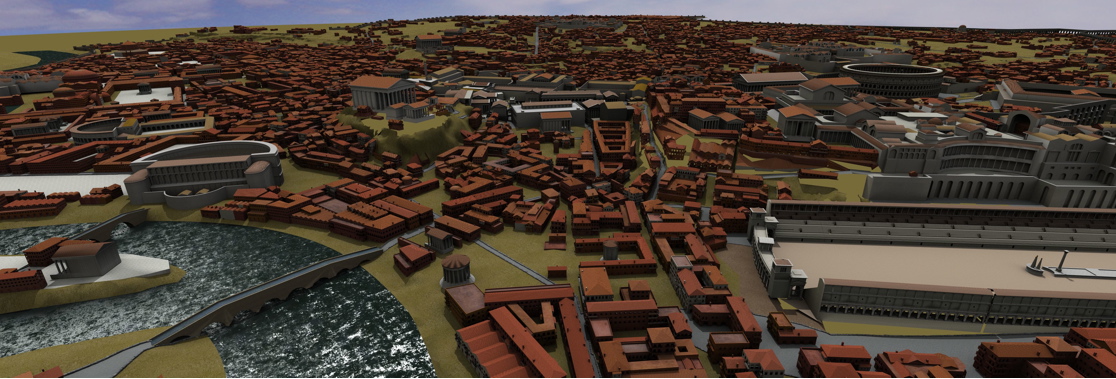
Mirabile browsu: RU students rate Google Earth’s new ‘Ancient Rome 3D’

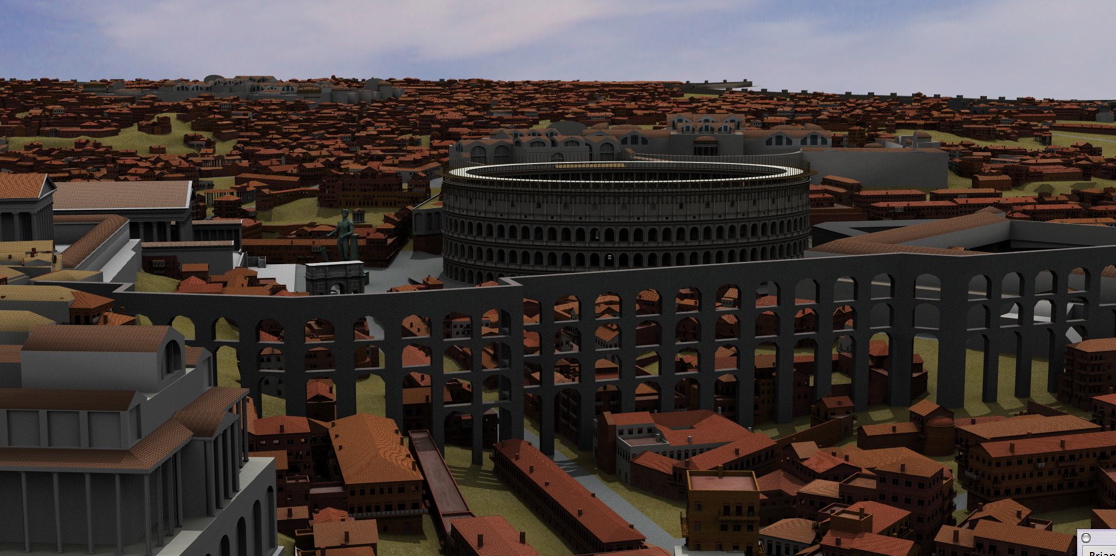
By now, you’ve probably at least heard about a new layer in Google Earth that takes you back to Rome in the day of emperor Constantine the Great. The day 21 June in the year AD 320, to be precise.

Google Earth’s 400 million estimated users are free to navigate the entire ancient city within the circuit of the 13-mile Aurelian Walls, peeking inside many buildings and monuments. More than half a million folks have viewed this YouTube video of what it does within a week of posting:

This collaboration between Google and the University of Virginia’s Institute for Advanced Technology in the Humanities (directed by classicist Professor Bernard Frischer) has instantly been heralded as “the biggest, most complete simulation of an historic city ever created.”

On first seeing it, Rutgers Classics visiting professor Matt Fox put down his well-worn text of Lucan and exclaimed ‘mirabile browsu‘! And RU Classics chair Corey Brennan has written about it in detail here.

But let’s turn to the real experts. A survey of Rutgers undergraduates studying Roman Civ this term suggests that they are overwhelmingly enthusiastic about Google’s latest killer app.

“I thought that Ancient Rome 3D was a fun and simple way to learn about Ancient Rome,” says Ciara Coffman ’09. “The website was so easy to navigate through that I found myself clicking away until I had visited each temple, amphitheater, bathhouse, and garden.”

Adds Mary Stevens ’12, “As someone who traveled to Rome earlier on in the year to see the Roman Forum and Colosseum, I am in awe of how perfectly Google Earth has managed to recreate all of the prominent buildings of early Rome. And with features that allow you to tour the inside of most buildings and acquire more information about them with a simple click of your mouse, there is no doubt that Google Earth for ancient Rome is opening up a whole new world for exploration … I’m amazed!”

aq

Akshar Yagnik ’11 has also been to Rome, and says “I wish I had this tool before I went so I could familiarize myself with what I was about to see. And now several years later I am able to revisit and relearn some of the sights with real non-animated pictures of the actual buildings.”

“Google Earth’s reconstruction of Ancient Rome looks promising to those, like myself” says K. Mistry, a junior Art History and French double major, “who are particularly interested in studying the city’s urban design and architecture…Although the graphics are somewhat cartoon-like, they nevertheless offer the viewer the opportunity to experience Ancient Rome as it looked during the time of the Emperor Constantine.”

cm2

“Being able to virtually climb over the Pincian Hill”, observes Thomas Clickner ’11, “and experience the wonders of the Garden of the Acilii provides a wonderful insight to the world of Ancient Rome through this new program.”

“Visiting this place was nothing different than like a day trip to New York,” says Matt Forbes ’09, “I feel like I’ve ‘been there.’ The sophistication of ancient Rome itself is pretty remarkable. Why don’t we have a Septizodium in NYC!?”

And a junior majoring in Art History at Rutgers: “No longer will people use Google Earth only to view their house and their neighborhood from an aerial perspective. Now they can actually do something of importance!”

palatine1capitoline

Old school lessons in Roman topography: Rutgers glass ‘lantern’ teaching slides from the 1930s

But wait…that’s just half the Google story! Continue reading