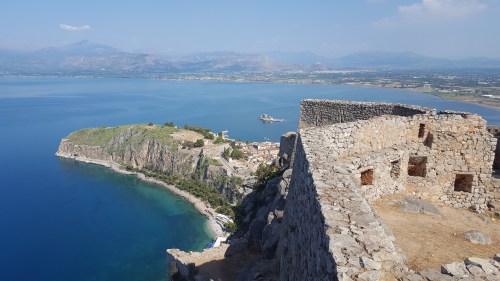
The Palamidi Fortress in Nafplio. Credit (for this and all photos): Emmanuel Aprilakis
Emmanuel Aprilakis is much looking forward to his second year as a graduate student in the Rutgers Classics department, having earned his B.A. summa cum laude from the Macaulay Honors College at CUNY Hunter College in 2015. He is mainly interested in Greek literature and religion with a focus on Attic drama. Emmanuel’s broader research interests include ancient epic, comparative mythology, ancient athletics, sculpture, vase painting, and museum ethics.
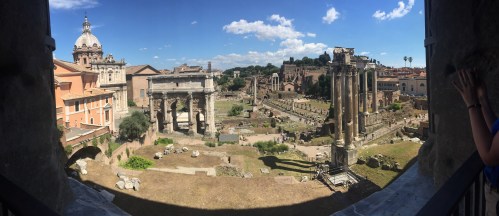
Roman Forum, looking E from the Tabularium. Credit: Alicia Matz
Alicia Matz is entering her second year in the Rutgers Classics graduate program, having earned a 2015 BA in Classics from the University of Puget Sound (Tacoma WA). Her research interests encompass both the Greek and Roman worlds, ranging from Aristophanic comedy, to Augustan literature and material culture, to reception of the classical past, especially in science fiction and fantasy literature.
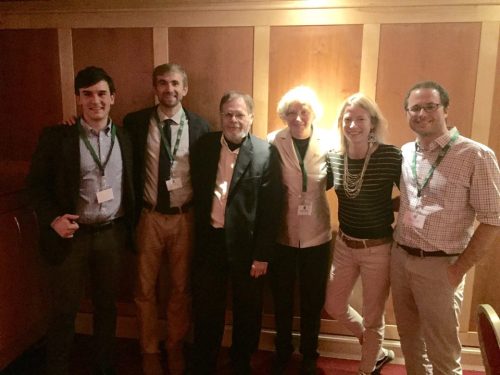
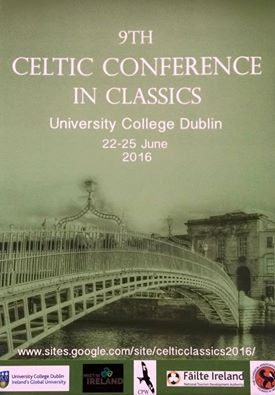
In Dublin’s St. Helen’s Hotel (24 June 2016), RU Celtic Conference presenters (from left) Steve Brandwood, Brian Hill, Prof. Thomas Figueira, Prof. Sarolta Takács, Prof. Emily Allen-Hornblower, and Dave Wright
In the panel, Figueira was joined in presenting a paper (“Language as a Marker of Ethnicity in Herodotus & Contemporaries”) by Associate Professor of Classics Emily Allen-Hornblower with “Emotion and Ethnicity in Herodotus’ Histories”, and Professor of History Sarolta Takács (a member of the Classics Graduate Committee and Director of the Modern Greek Studies Program) with “Herodotus’ (After)life in Byzantium”. Rutgers Classics doctoral Candidates Steven Brandwood (“Ethnicity and Translation”) and Brian Hill (“Protocols of Ethnic Specification in Herodotus”) also presented.
This panel is part of a larger initiative to strengthen intellectual dialogue between Lusophone classicists and ancient historians in Portugal and Brazil and North Americans.
Among Anglophone participants were Renaud Gagné (Cambridge), Rosaria Vignolo Munson (Swarthmore), and Gregory Nagy (Harvard). The videocast of a paper by Gregory Nagy and colloquium with the participants in the panel can be viewed below.
Distinguished alumnae were also presenters (in the panel Modern[Ancient] Epic): Janice Siegel PhD’94 (Associate Professor of Classics, Hampden-Sydney College) with “Apollonius’ Argonautica and the Wizard of Oz” and Liz Gloyn PhD’11 (Lecturer in Classics, Royal Holloway College, University of London) with “Release the Kraken? Ancient Monsters in Modern Epic”.
For full details on the proceedings of the conference, see here (pp. 17-20, 23-24).
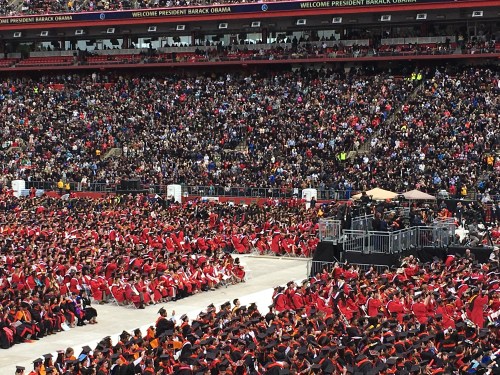
It was a B1G day on the Banks for RU Classics on 15 May 2016 as Rutgers celebrated a super-commencement to mark its 250th anniversary! The site? Rutgers’ High Point Solutions Stadium, where approximately 52,000 people, including more than 12,000 graduates seated on the field, took in the pageantry and proceedings.
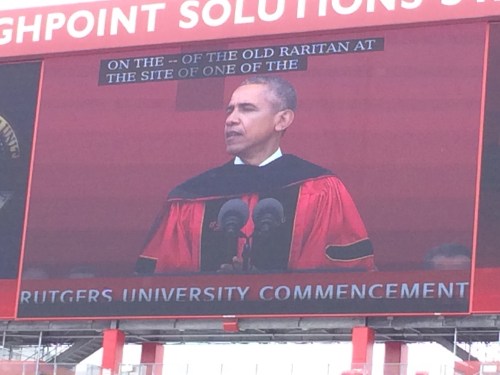
President Barack Obama received an honorary degree and delivered a riveting 45-minute address, in which—among many other points—he referenced the pub where our Department got its start in 1771.
View of the President’s speech from the faculty section. Credit: Emily Allen-Hornblower
Congratulations to our Classics majors who received their degrees with the Class of 2016 at the School of Arts and Sciences Convocation that immediately followed the Commencement: Jessica Bailey, Matthew Klein, Oleksiy Lunhu, Daniel McCann, Margaret Morris, Michael Romero, Thi Trinh, Arya Vaseghi (who earned Departmental Honors), and Jennifer Yook.
And additional congratulations to our new PhD Katheryn Whitcomb, who joins the Classics faculty of Franklin & Marshall College next year as a visiting assistant professor. In the proceedings doctoral candidate David Wright also received a much-prized distinction, the degree of M. Phil.
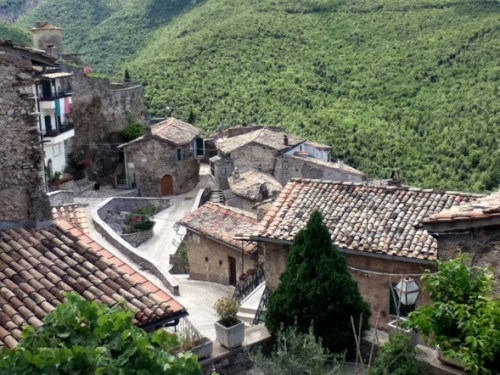
The site could hardly be more evocative. It lies in the Tiber river valley in the northwestern part of the province of Lazio, about 40 miles upriver from Rome. Participants live and work near the small village of Vacone, excavating a Roman villa site with evidence of Republican, Imperial and post-antique occupation and activity. You can read all about it here.
So warm (indeed wild) congratulations are in order for three of our Rutgers—New Brunswick Classics undergraduate students, who will join the field school this summer: Jonathan Finnerty’17, Shannon Gilbert’18, and Molly Kuchler’18. Continue reading →
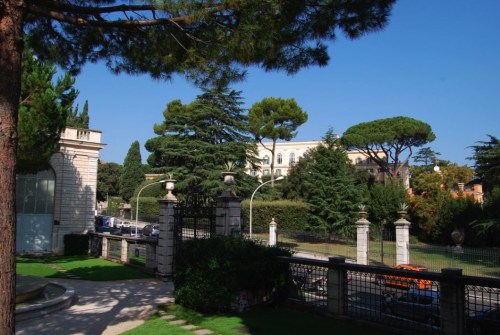
The 17th century Villa Aurelia of the American Academy in Rome, as seen from the AAR’s principal building, designed by McKim, Mead & White and opened in 1914
And now applications are invited for the next iteration of this dedicated fellowship in Rome, for academic year 2016-17.
We aim to send one or two members of the Rutgers Department of Classics community to the American Academy to conduct research that is connected to the city of Rome—its ancient material culture, ancient history and culture, and their reception.
Priority will be given to current Rutgers Classics PhD students, though current faculty in the Department of Classics and graduate alumni/ae of the Department are also eligible to apply. Continue reading →
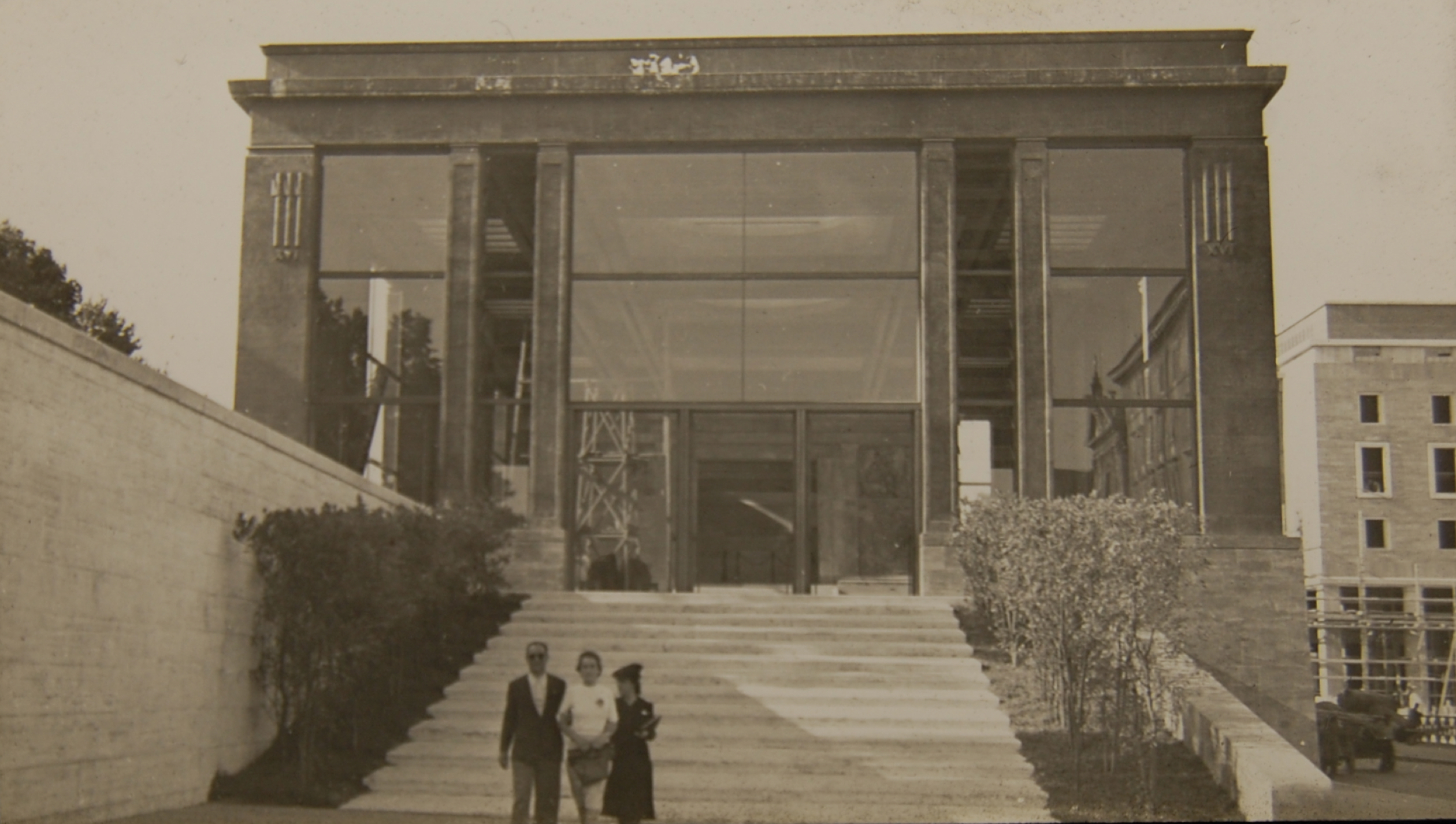
Morpurgo’s pavilion for the Ara Pacis in summer (?)1938 (note interior scaffolding)
The Rutgers Classics lantern slide collection consists of more than 1000 original exposures taken in the 1930s as part of archaeological research done in Italy, Greece, and Turkey, by faculty members of the New Jersey College for Women—now part of Rutgers and known as Douglass Residential College.
The collection—which we thought we completely digitized a decade ago—provides a glimpse into the NJC academic and teaching culture of the 1930s, as well as American women in archaeology and ancient history in the pre-World War II era. For the dramatic story of how these images came into being, and then reemerged after a half-century or more of neglect, see this article in the 20 February 2006 issue of Rutgers Focus.
Well, last month another 150+ lantern slides cropped up in the department’s study collection, enhancing one of the core strengths of the collection, namely images of Mussolini’s Rome in the late 1920s and 1930s.
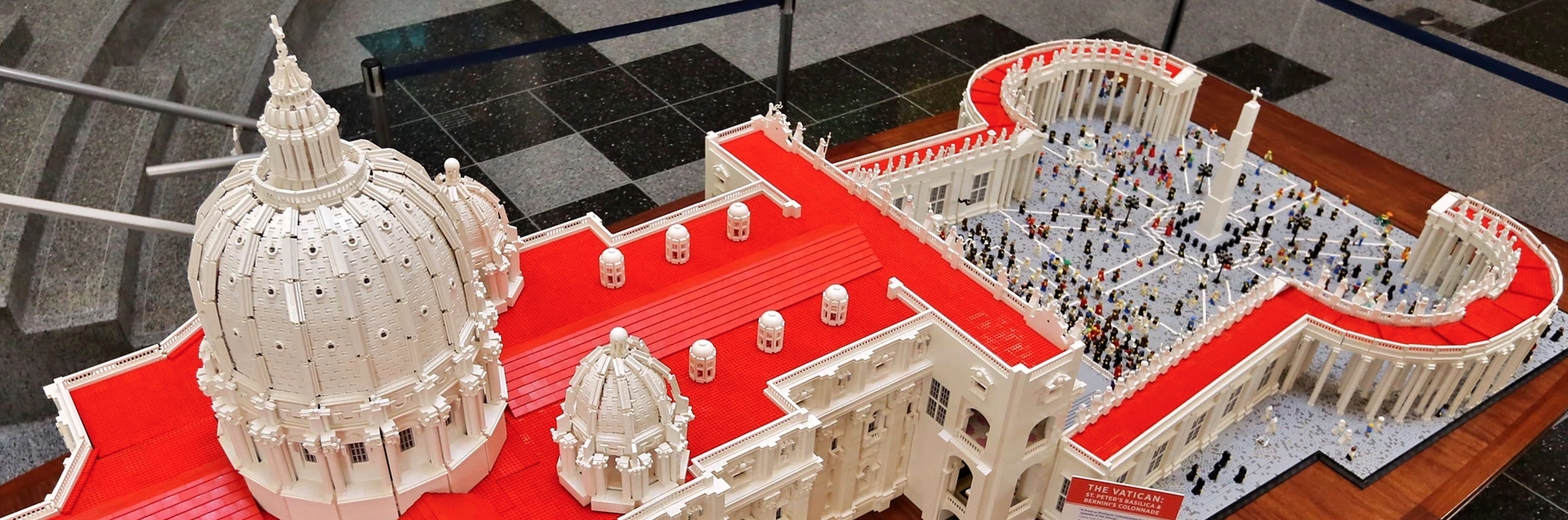
Father Bob Simon (Moscow PA) created this St Peter’s Basilica with 500,000 lego blocks, now on display at Philadelphia’s Franklin Institute. Credit: Darryl W Moran
It’s hard not to get caught up in the excitement of the first visit of Pope Francis to the US, which starts today. Or at the very least—if you live in DC, Philly or NYC—it will be hard not to get caught up in the traffic jams.
As it happens, Rutgers Classics and the university’s School of Arts and Sciences have developed an interdisciplinary fully-online course on the history of the Papacy. It’s called ‘Papal Rome and its People: 1500-Present‘, and is formally listed as ARTS & SCIENCES INTERDISCIPLINARY STUDIES 01:556:251. RU Classics professor Corey Brennan first offered it in spring 2014, and will do so again in spring 2016 (expanding the course to encompass some important themes from the medieval period). Here’s the trailer:
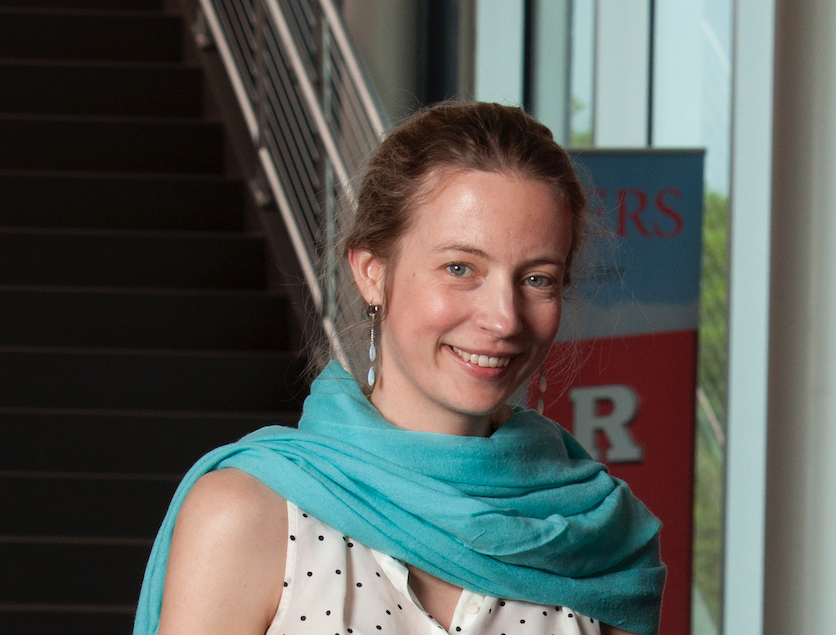
Emily Allen-Hornblower, Associate Professor of Classics at Rutgers-New Brunswick
First things first. Mega-congratulations are very much in order for Rutgers Classics faculty member Emily Allen-Hornblower, who in spring 2015 received tenure and promotion to the rank of Associate Professor. This brings the number of full-time tenured faculty in the Classics Department to seven, plus one additional tenured member with a joint appointment. Well done, to say the least!
But wait, there’s more. One of the most prized distinctions that Rutgers offers its newly tenured faculty members is the Presidential Fellowship for Teaching Excellence. The Fellowship, which includes the establishment of a special research account, honors outstanding teaching and scholarly work. In 2015 just five Presidential Fellowships were awarded across the entire University, i.e., our New Brunswick, Newark and Camden campuses.
One of the two 2015 recipients from the School of Arts & Sciences-New Brunswick was none other than Emily Allen-Hornblower—a significant first for Rutgers Classics. At a 5 May ceremony at the Rutgers Visitors Center, Allen-Hornblower was recognized by Rutgers University President Robert L. Barchi “for her passionate dedication to teaching and mentoring, and her skillful guidance of class discussions, which allows students to discover for themselves how to find the answers to important questions.”
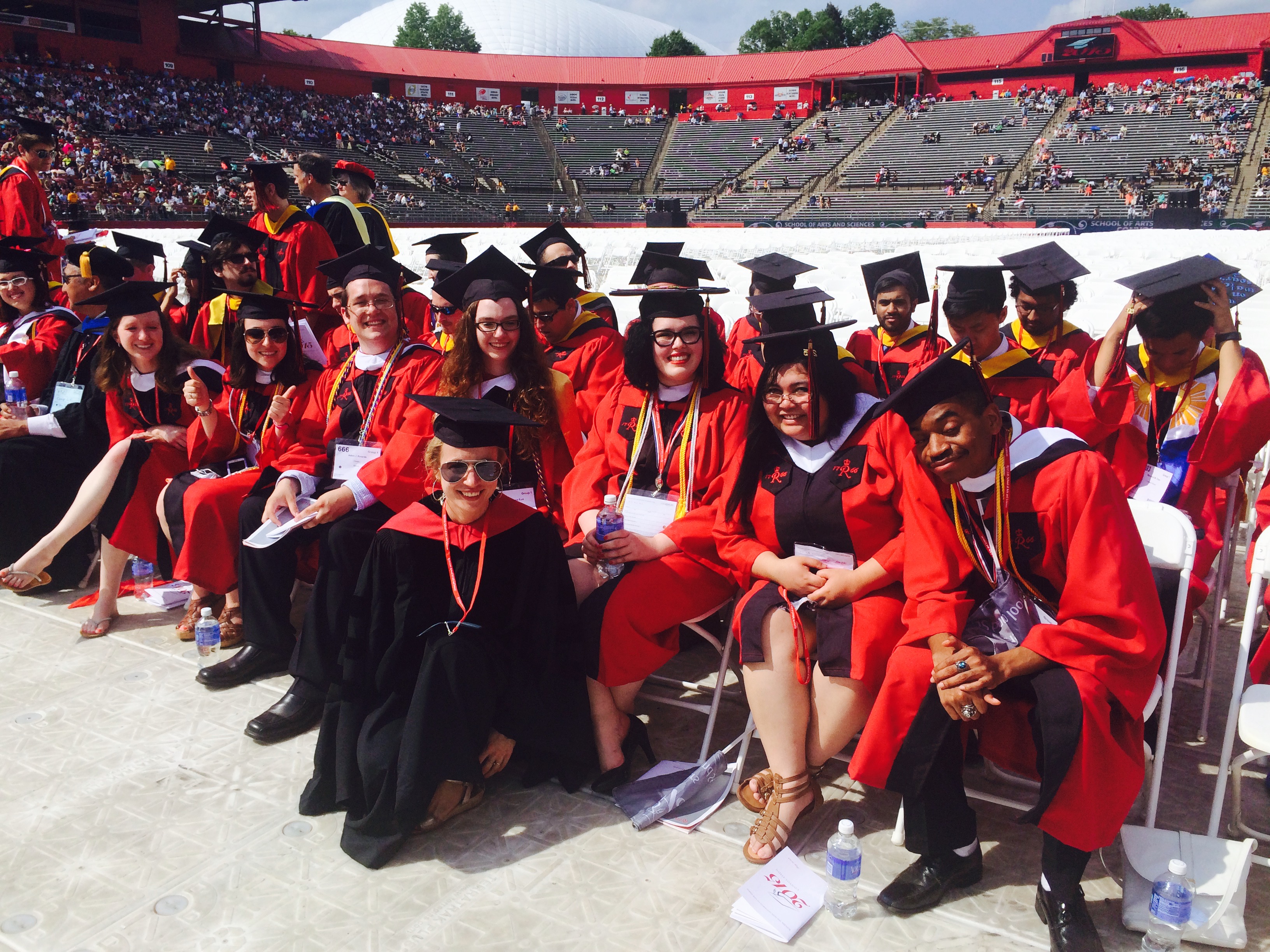
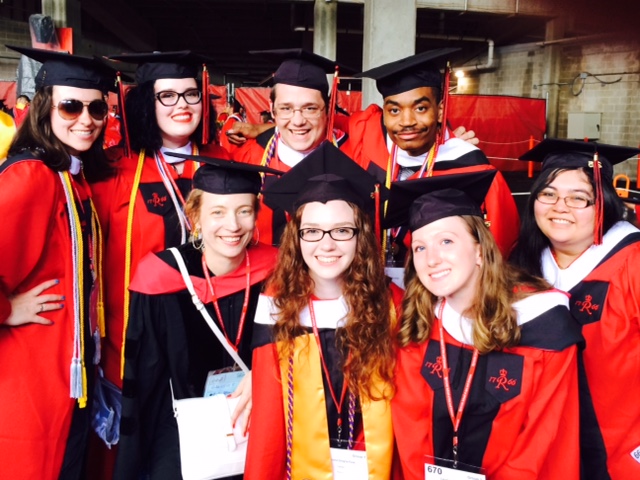
Rutgers Classics’15, accompanied by undergraduate director Professor Emily Allen-Hornblower, take the first seats at the School of Arts & Sciences convocation
First, some numbers. An estimated 16,465 graduates received degrees from Rutgers at graduation ceremonies on 17 May of this year, the 249th since the founding of the university in 1766. Baccalaureate degrees accounted for 10,593 of the 2015 total, give or take a few. Master’s degrees added up to 3,951; doctorates another 1,919.
Many of the graduating students assembled at High Point Solutions Stadium had good reason to feel lost in a crowd. But that wasn’t the case for those from Rutgers Classics, which proudly contributed .0007% of the day’s degree recipients. Though enrollments for the largest classes in our department frequently push capacity, the language-based major and the graduate degrees remain a highly personalized experience, with intensive teaching and close advisement in the best liberal arts tradition.
Rutgers Classics’15—and their undergraduate director—about to take the field at High Point Solutions Stadium

 rutgersclassics.com