Creative director William Whelan takes RU Classics website one step beyond

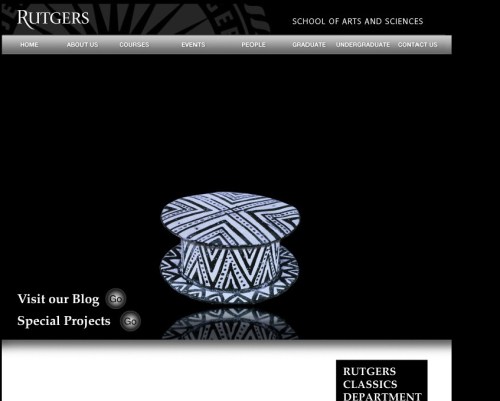
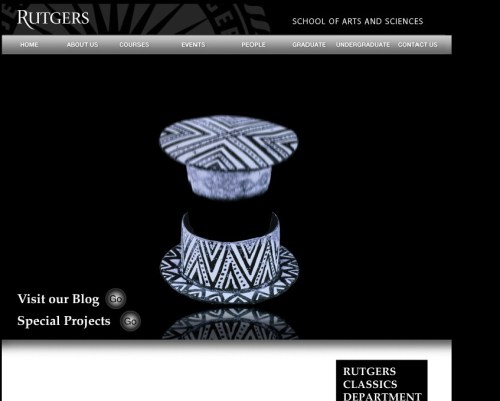
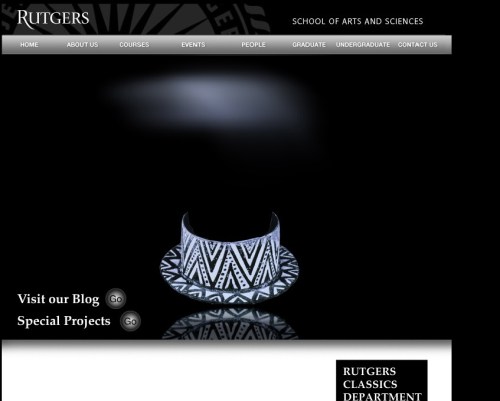
It may be the world’s first exploding pyxis.

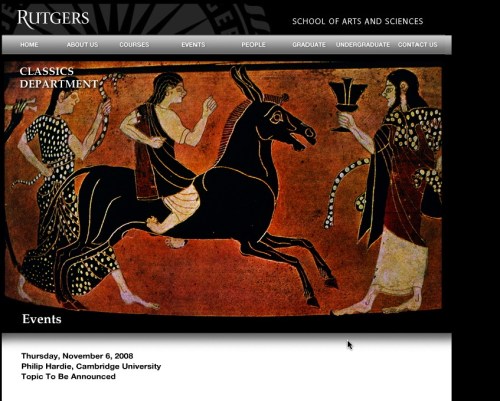
And that’s just the start of the surprises on the new Rutgers Classics website, unveiled 22 August 2008.

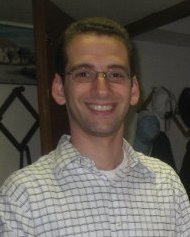
The creator? William Whelan, head of d-stroy advertising, a one-stop creative consulting firm based in Miami. Whelan’s clients have included Volkswagen, Citibank, Home Depot, Sprite, Heineken, Cingular, Qwest—even Yahoo.

Whelan’s work has earned him many of the most coveted juried prizes in advertising and new media, including numerous Francis W. Hatch Awards from Boston’s Ad Club, multiple awards from the One Club in its One Show Interactive competition, Grand Prize in the London International Advertising Awards, and a Grand Clio and a Gold Clio in the prestigious Clio Award festival.

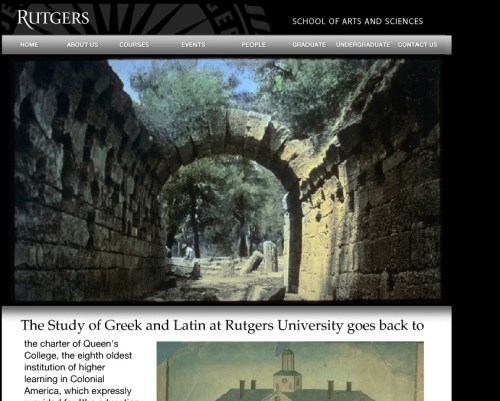
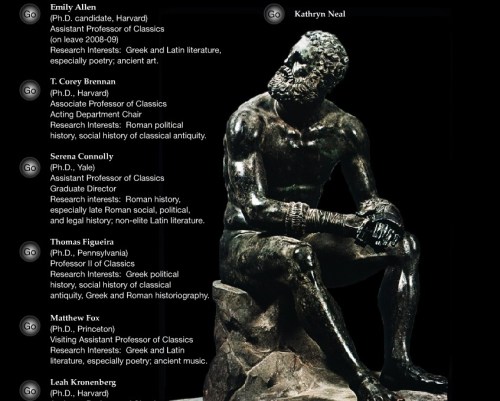
On the new RU Classics web site, Whelan deploys Flash animation to make strikingly innovative use of images from the Department’s large visual studies collection. He even composed original music that plays under the home page as it loads.

(If you’re not getting the pages above and below via the http://classics.rutgers.edu link, but rather the old “terracotta” site, try clearing your web browser’s cache.)

Continue reading

From Belgica to Baghdad, RU Classics digital project nears end

And for yet another unique Rutgers Classics resource…a five year teaching initiative on the visual culture of the ancient world. This project started in 2003 and is now nearing completion.

Here RU Classics has transformed its collection of 16000 35mm slides and almost 1000 lantern slides into archival quality digital images ready for use by faculty and students in Powerpoint or web-based presentations.

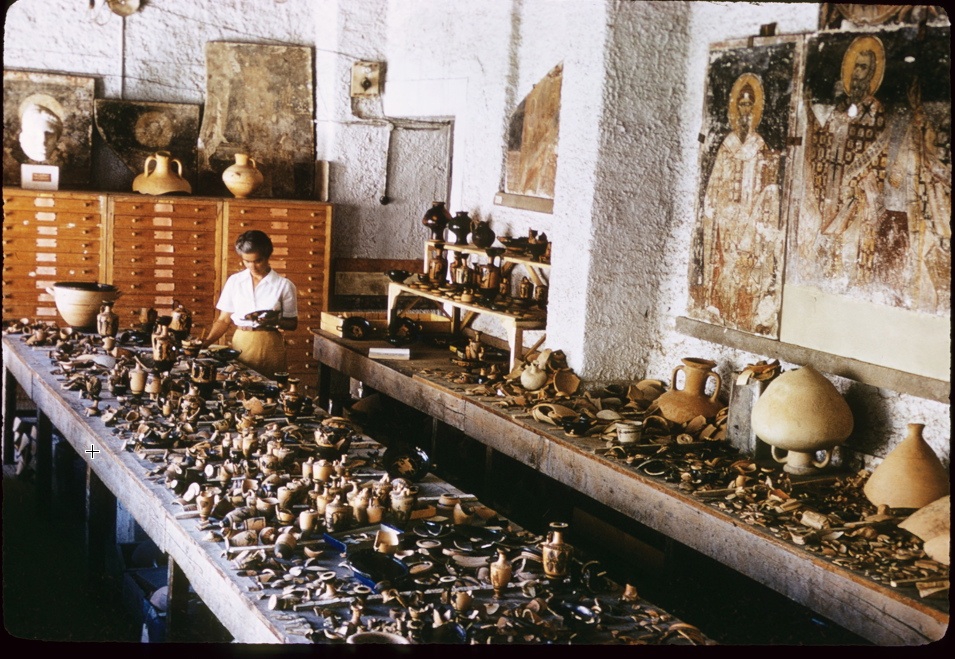
Above: sorting pottery from the Stoa Gutter Well of the Athenian Agora excavations

These images include all aspects of material culture in antiquity. The Rutgers Classics digital collection is awash in vase paintings, landscapes, murals, statues, and monuments from prehistoric to early medieval periods. The regions represented stretch from ancient Britain to Egypt and Spain to Afghanistan, with a focus on the Mediterranean basin. Since the images reflect the work of many decades, they often provide distinctive views and diagrams of archaeological sites before and after reconstruction processes

The bulk of these slides represent on-site, original photographs by scholars such as Rutgers professores emeriti Jack Cargill (History) and Christoph Clairmont (Classics), or longtime University of Michigan professor and (later) ACLS president John D’Arms.

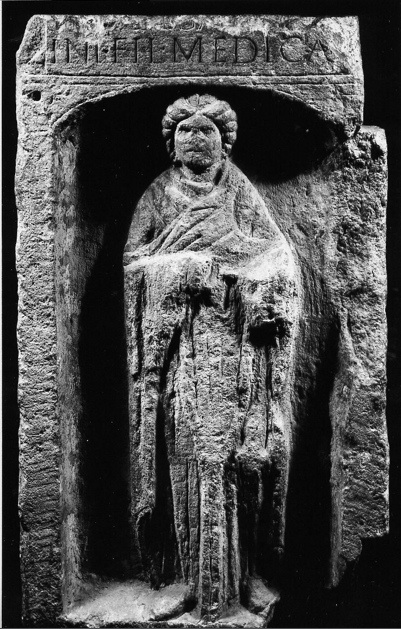
There are several sub-collections, ranging from a large group of glass lantern slides dating to the 1920s and 1930s, to an unusually valuable set of photos of inscriptions honoring Roman medical women, compiled by Zoë Perkins (Bryn Mawr ’97). The basic metadata markup for all the Rutgers Classics digital holdings will be complete by October 2008.

Above, tombstone of a medica from Metz, probably 1st century AD (CIL 13.4334) INI FIL MEDICA

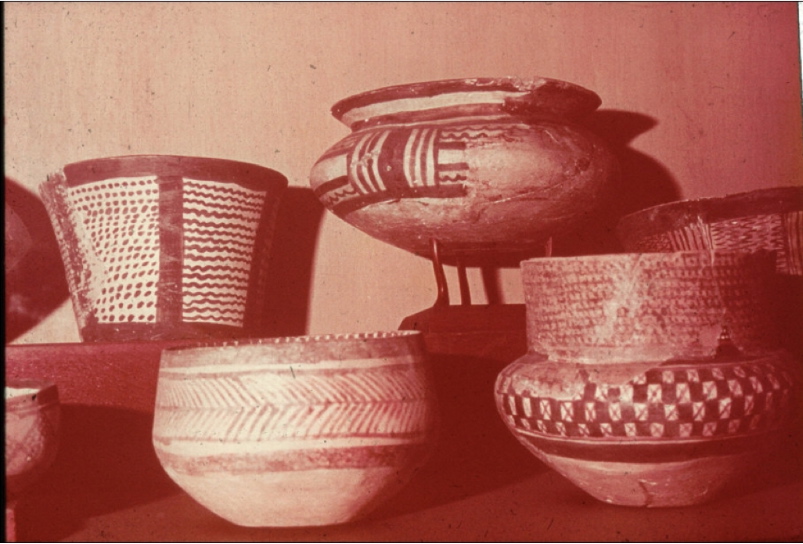
Some of the most striking items in the collection are images of Israel, Iraq and Iran taken by Christoph Clairmont in the 1950s and 1960s.

Above: pottery in the Baghdad Museum, photographed probably in the mid-1950s.

And here is the really exciting bit.

Continue reading

Rediscovered at RU: lantern slides shed new light on women in archaeology

And so long as we’re talking about unique Rutgers Classics resources…

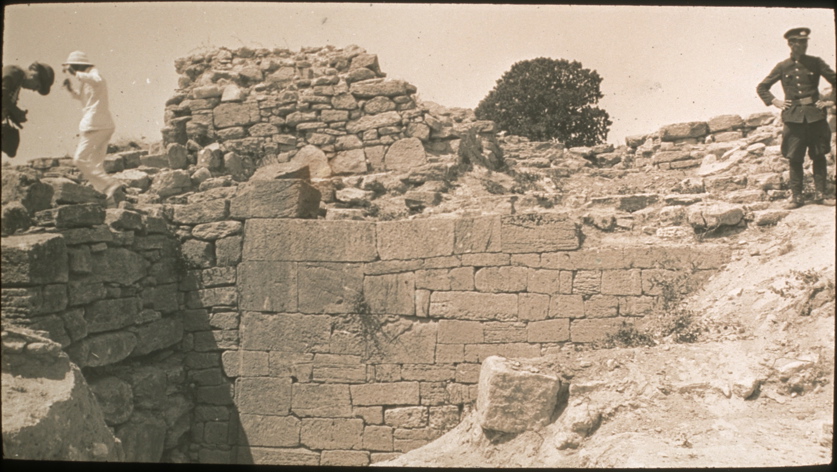
Above: “The House of Paris”, Troy 1935

The Rutgers Classics lantern slide collection consists of almost 1000 original exposures taken in the 1930s as part of archaeological research done in Italy, Greece, and Turkey, by faculty members of the New Jersey College for Women—now known as Douglass College.

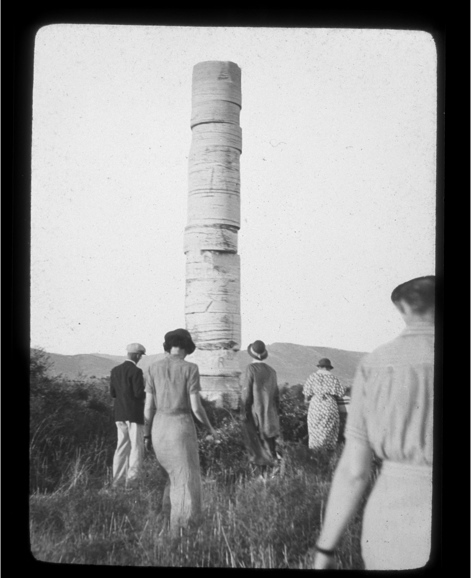
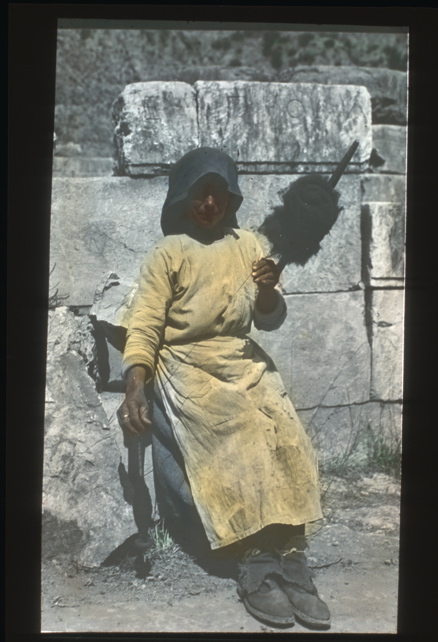
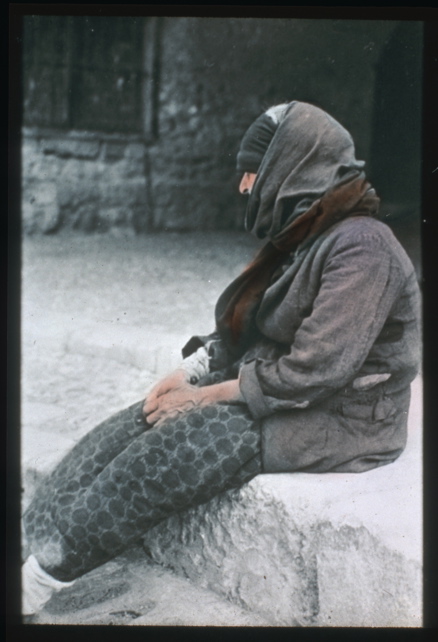
Above (all from 1935): NJC group examines the one remaining column of the Temple of Hera at Samos; an archaeological worker spins at Delphi; noontime musicians at Delphi; veiled woman at Rhodes.

The collection—now completely digitized—provides a glimpse into the NJC academic and teaching culture of the 1930s, as well as American women in archaeology in the pre-World War II era.

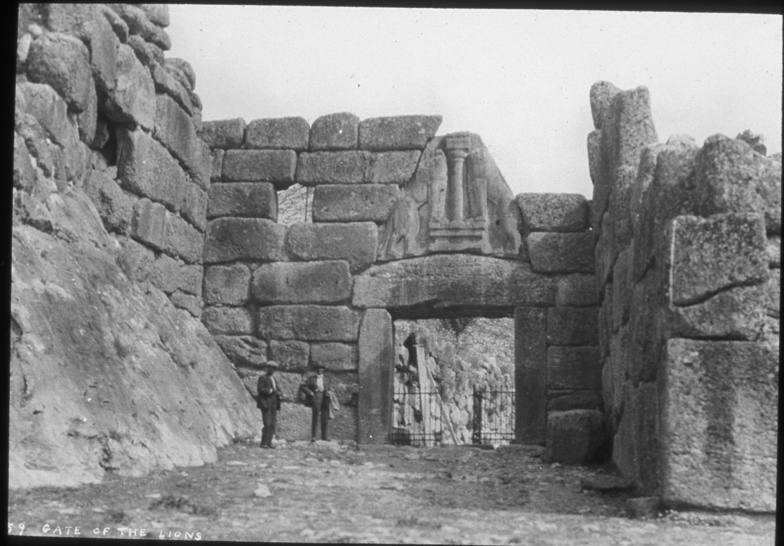
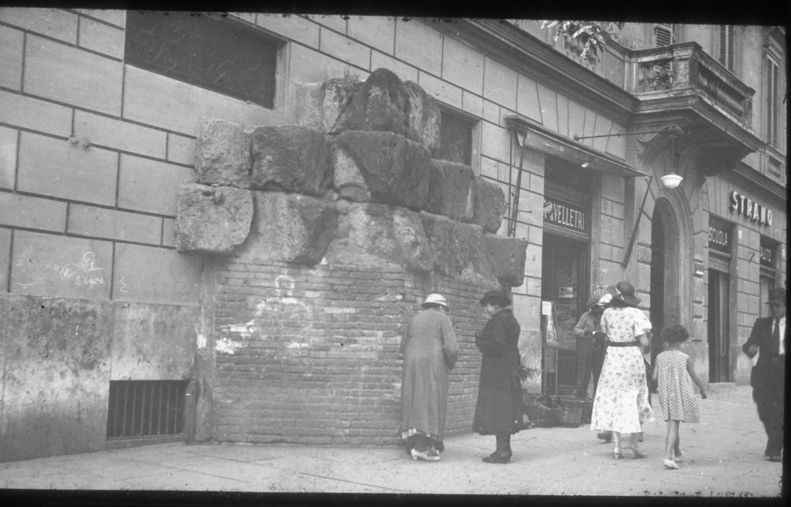
Above, from 1935: Lion Gate at Mycenae; remains of the Servian Wall in Rome.

For instance, one of the main figures in the making of these images is Evalyn A. Clark, then an assistant professor at NJC.

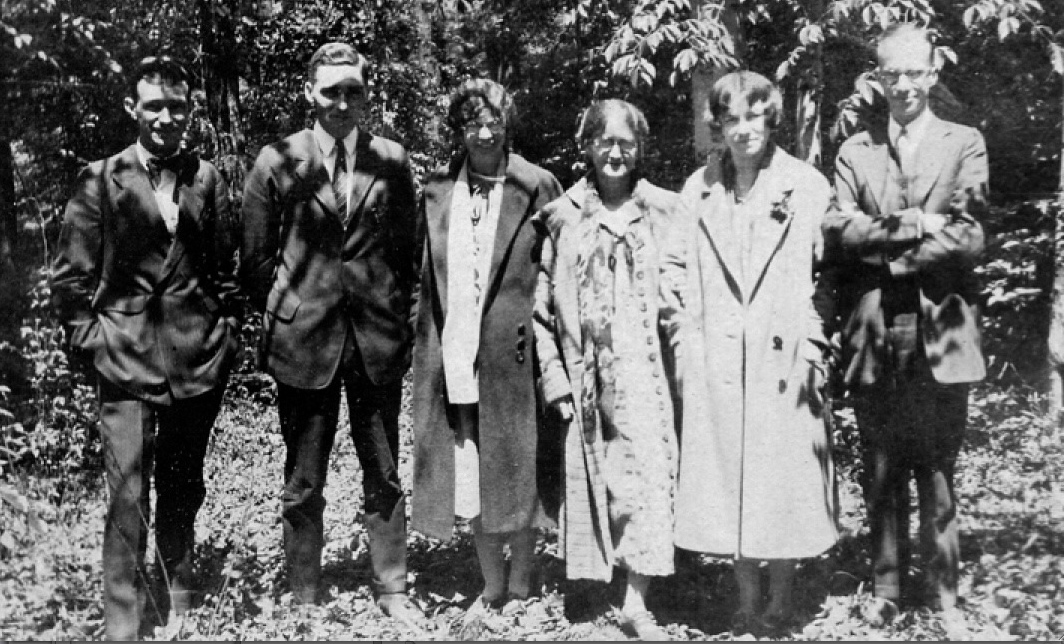
Above (from 1926, second from right), Evalyn Clark as a Johns Hopkins graduate student in Classics. TRS Broughton is second from left.

As a direct result of these travels, it seems, Clark retooled herself at Harvard and Columbia as a historian of modern nationalism. Soon afterward, in 1939, Clark—having left New Jersey to join the Vassar faculty—went on to co-found the Berkshire Conference of Women Historians.

For the dramatic story of how these images came into being, and then reemerged after a half-century or more of neglect, see this article in the 20 February 2006 issue of Rutgers Focus.

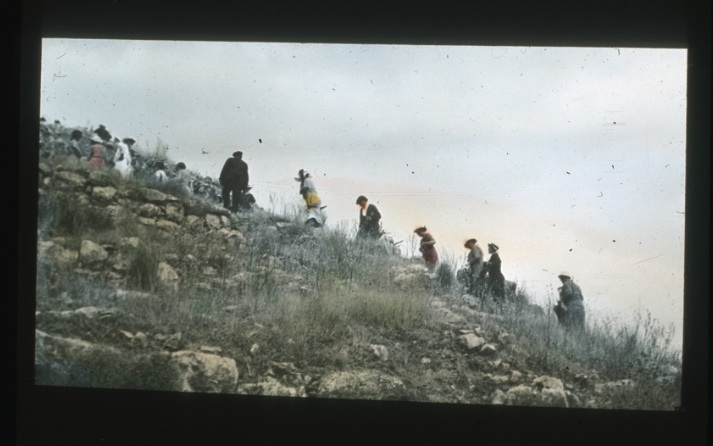
Above: New Jersey College for Women faculty on the ascent, 1935.

At RU Classics, sculptor Evelyn Wilson’s ‘Homerica’ in terracotta

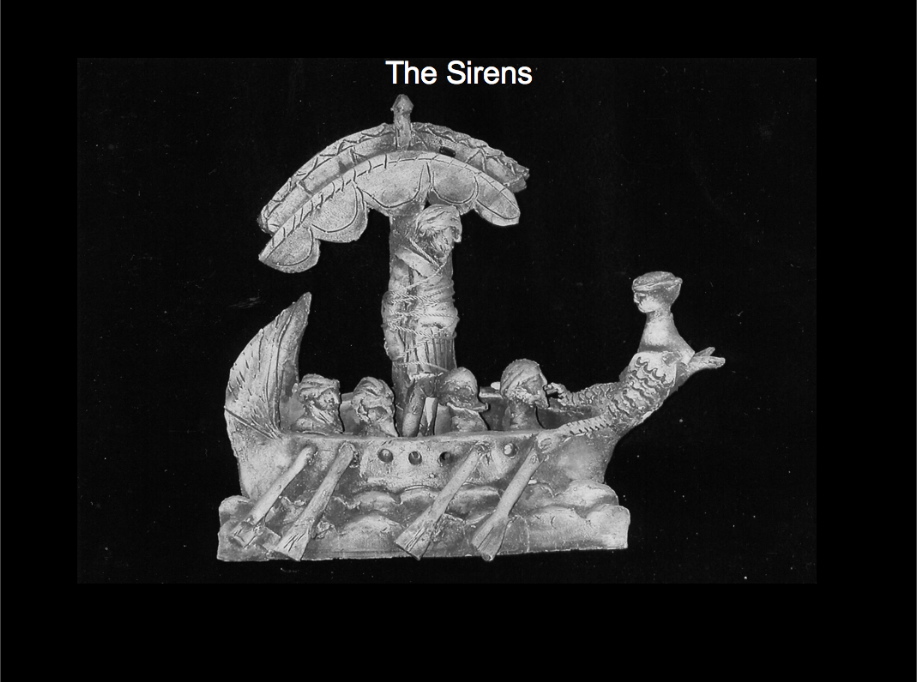
Perhaps you were wondering about that Odysseus tied to the mast on our blog header.

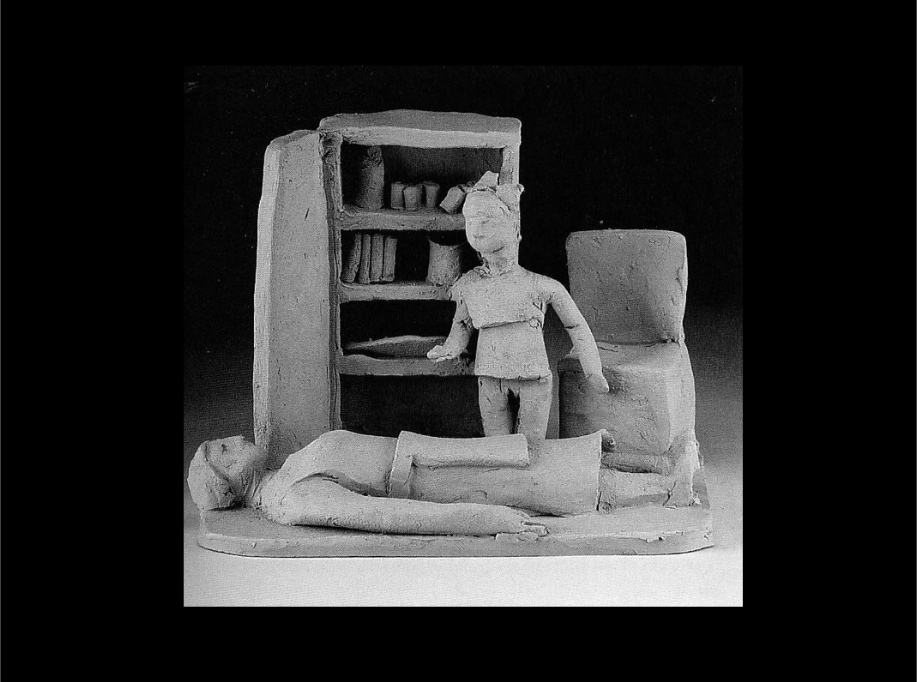
Well, it comes from “The Iliad and the Odyssey” by Evelyn O. Wilson (1915-2006). That’s a narrative group of more than two dozen grey terracotta sculptures, each about sixteen inches in height, executed in the early 1990s.

These works, along with paintings by the sculptor’s husband, noted American artist Ben Wilson (1913-2001), have been on permanent display in the RU Classics department since 2006.

The artists’ daughter, Joanne Wilson Jaffe, and the Ben and Evelyn Wilson Foundation, gave Rutgers Classics this unusually generous gift.

In fact, Rutgers-New Brunswick is building a rich collection of Wilsoniana, with other pieces by the two artists in its Jane Voorhees Zimmerli Art Museum, its Art Library, and (most recently) in the lobby of its Department of Women’s and Gender Studies.

There’s a short film entitled “The Turbulent Ground” that Florida fine arts and antiques dealer Don Elder has made about Ben Wilson. “It’s terrific”, said Joanne Jaffe, “and offers rare insight into Ben’s thinking and paintings.” Wilson was a painter of the Abstract Expressionist school and a veteran of the WPA.

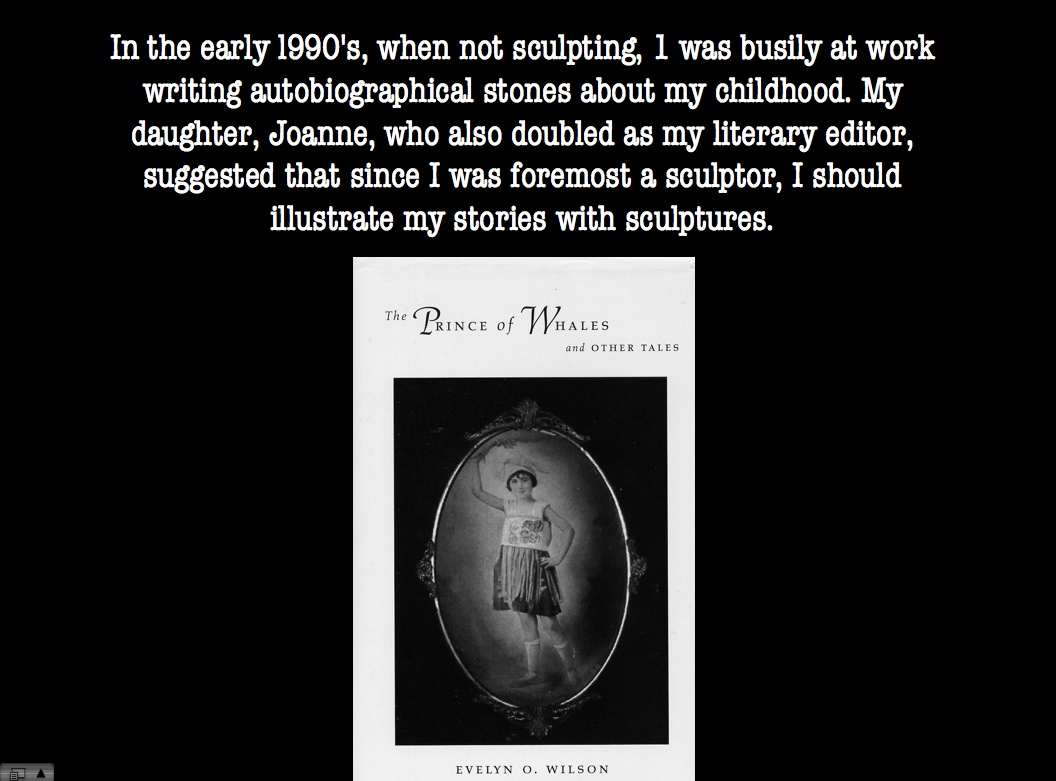
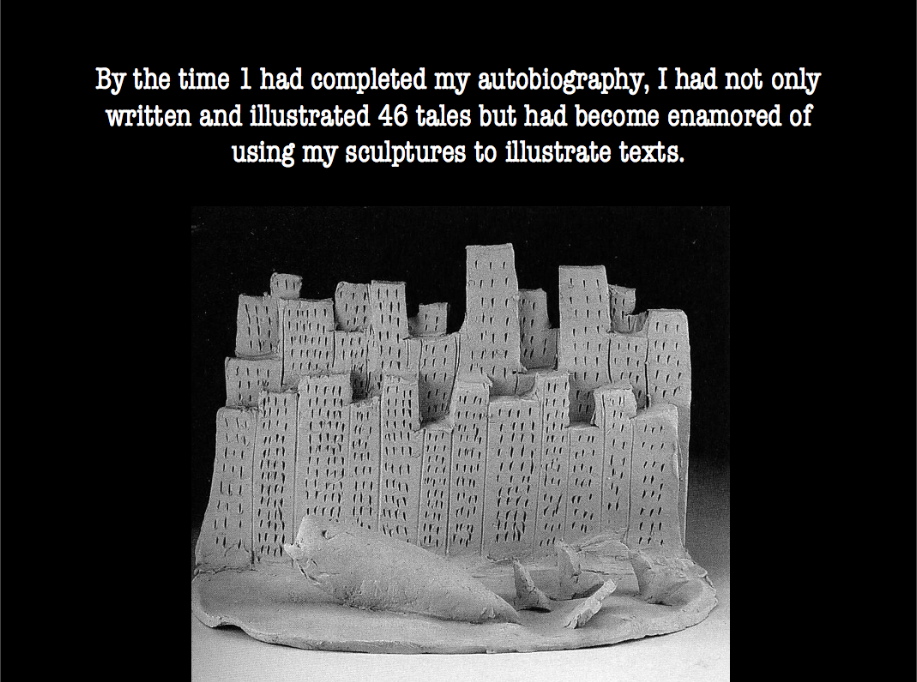
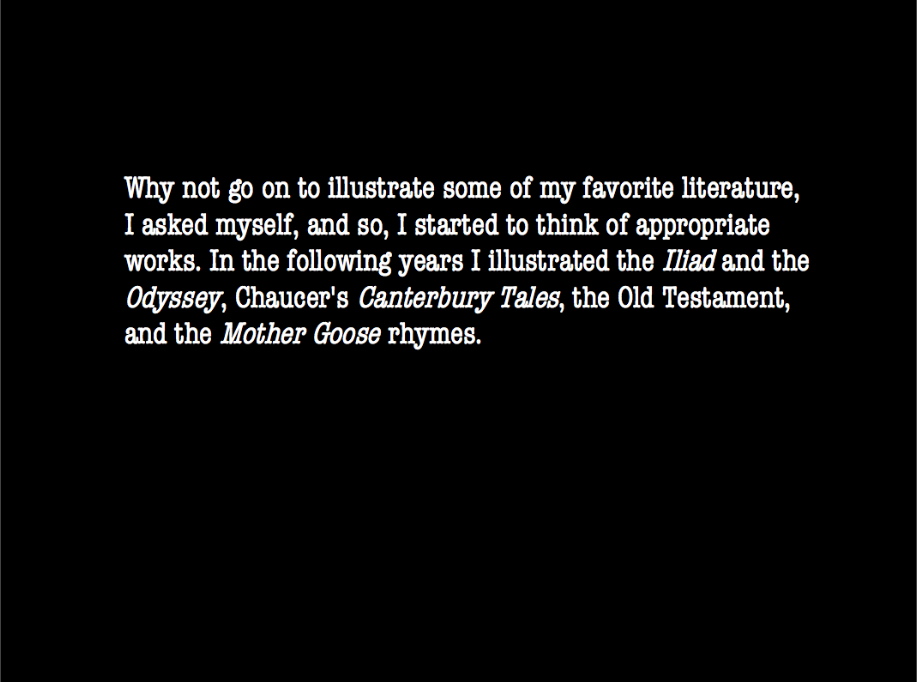
But of the Homeric sculptures at Rutgers Classics, why not let Evelyn Wilson tell the story in her own words?

As it happens, Rutgers was to receive also the Canterbury Tales and Mother Goose cycles. But keep reading–we’ve only just started!

Continue reading

For RU Classics, a teaching collection of Roman Republican coins

Rutgers has an extraordinary collection of Roman Republican coins which is housed in its Alexander Library Special Collections and University Archives. At present it numbers about 750 individual pieces; in time, as a result of an ongoing gift, it will grow to more than double that amount. The Rutgers collection is remarkable for its comprehensiveness, historical value, and the fine condition of most of its individual pieces.

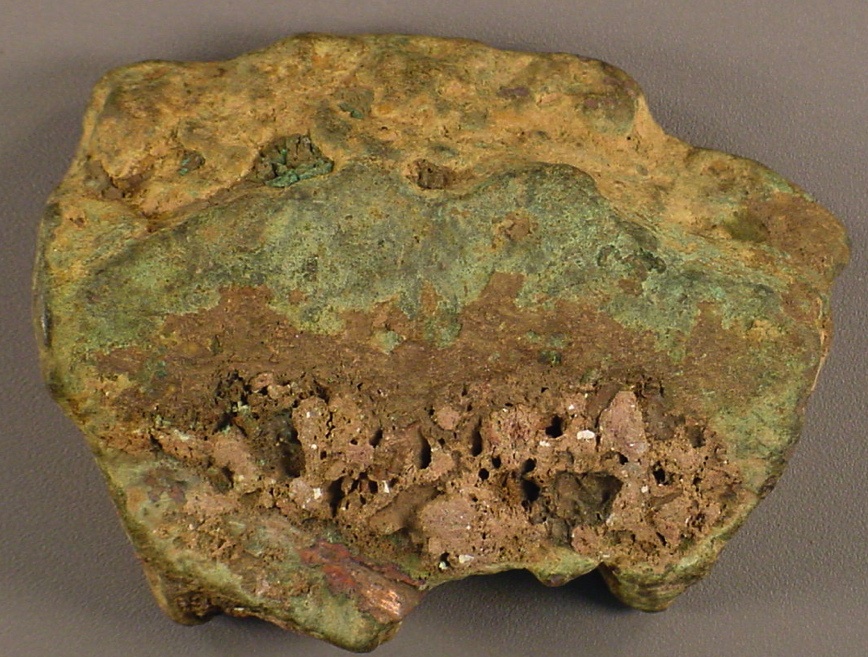
Above: Bronze (unworked) Aes Rude, 5th through 3rd centuries BC. Weight: 481 gm. Size: 78 x 65 x 24 mm.

It was in 2001 that an unusually generous anonymous benefaction brought these coins to Rutgers. The gift of this collection, which had been acquired with an expert eye and much continued effort over many decades, almost overnight made RU an important center for teaching (and, in time, research) in this area.

Above: Bronze (cast) Uncia 280-276 BC. Knucklebone seen from outside; beside */*. Weight: 23.55 gm. Size: 27 mm. Sydenham 13; Crawford 14/6

Since 2001 use of the Rutgers Republican Roman coin collection has been restricted to undergraduate and graduate courses in Classics.

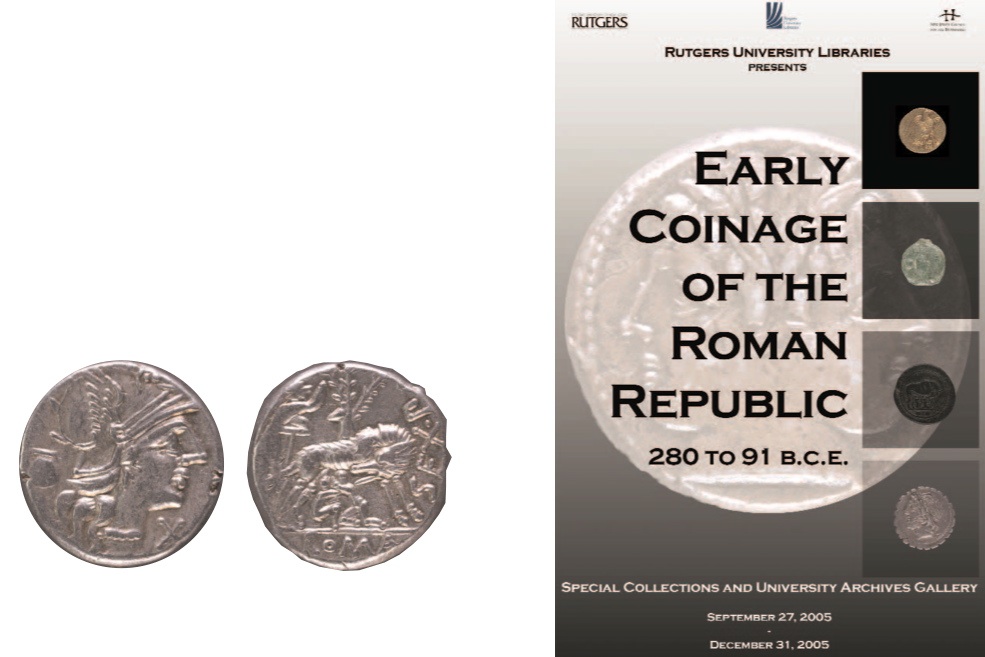
But in fall 2005 Rutgers hosted an exhibition which was the first public display of these coins; Rutgers University Libraries published a 72 page catalogue to accompany the show. The exhibition had as its major themes the evolution of the technical aspects of coinage in the earlier Republic, and political and social developments that are reflected in Rome’s money during the period down to 91 BC, the start of Rome’s “Social War” against its Italian allies, and with it, a new era in the coinage.

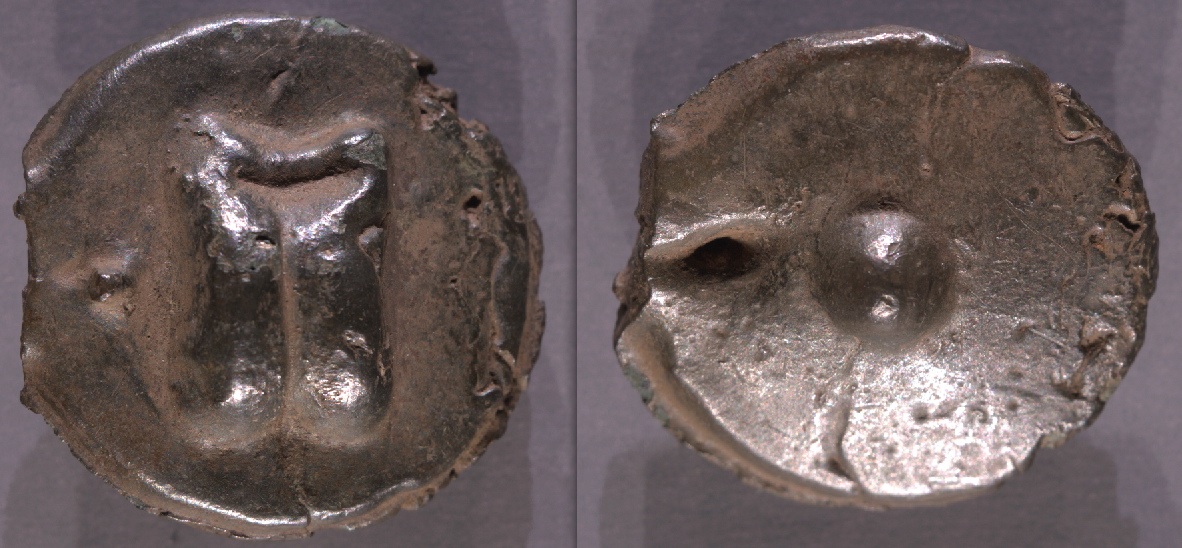
Above left: AR Denarius 137 BC.

Continue reading

Welcoming new Classics faculty (3): Emily Allen


Emily Allen was born in the United States but raised in Paris, where she studied at the Ecole Normale Supérieure and the Sorbonne. She then went to Harvard to pursue a PhD in Classical Philology. She joins the Rutgers Classics faculty in the fall of 2009.

Her dissertation is a study of the representations of pain, both physical and mental, in archaic and classical Greek poetry and culture. This year she will be gearing up to defend her thesis before a French “jury” at the Sorbonne.

Allen has given several papers on both Greek and Latin literature, including at the APA in 2006, 2007 and 2008. This fall, she has been invited to give papers on pain and tragedy at McGill and the Ecole Normale Supérieure. She is also currently working on the first translation into English of August W. Schlegel’s Comparaison entre la Phèdre de Racine et celle d’Euripide, as a contributor to a project directed by Donald Mastronarde (UC Berkeley)

This summer she spent a few sun-drenched weeks in the hills just outside of ancient Olympia, teaching a course on “The Ancient Greeks and the Other” for Harvard’s Summer School, and exploring a few sites of the Peloponnese, including the beautiful Venetian fortress of Methoni and the palace of Nestor at Pylos.

Yale Classics next big step for Thomas Biggs ’08

Seems it’s time for another story about Rutgers (founded 1766) and a slightly older university (founded 1701) located in New Haven CT.

Thomas J. Biggs ’08 will be attending Yale University’s PhD program in Classics starting in the fall.

Tom graduated this May from Rutgers College summa cum laude, Phi Beta Kappa, and with Departmental honors, double majoring in English and Classics.

As a senior, Tom received funding from the Aresty Research Center for Undergraduates to complete his thesis, “Eunuchs and Castration Ritual in the Cult of the Great Mother.” Sarolta A. Takács, Professor of History and Dean of the Honors Program at the RU School of Arts of Sciences, directed the work.

The road to Yale might not have been long for Biggs, but it certainly was winding.

Tom started his undergraduate career at the Rutgers-Camden campus with a major in English. “I began studying Latin after taking a course on Renaissance epic”, Biggs explains, “and was encouraged to further develop my interests in classical literature by several professors who could tell where my interests were going. That year I went to Rome for the first time, and attended my first talk given by a classicist (which was a talk Corey Brennan gave in Camden on Roman games and chariot races). I then decided to transfer to New Brunswick so I could major in Classics as well.”

Hold on, there’s more.

Continue reading

Yale University Press to publish RU master’s thesis by Brian Beyer (MAT’07)

Well, that was quick.

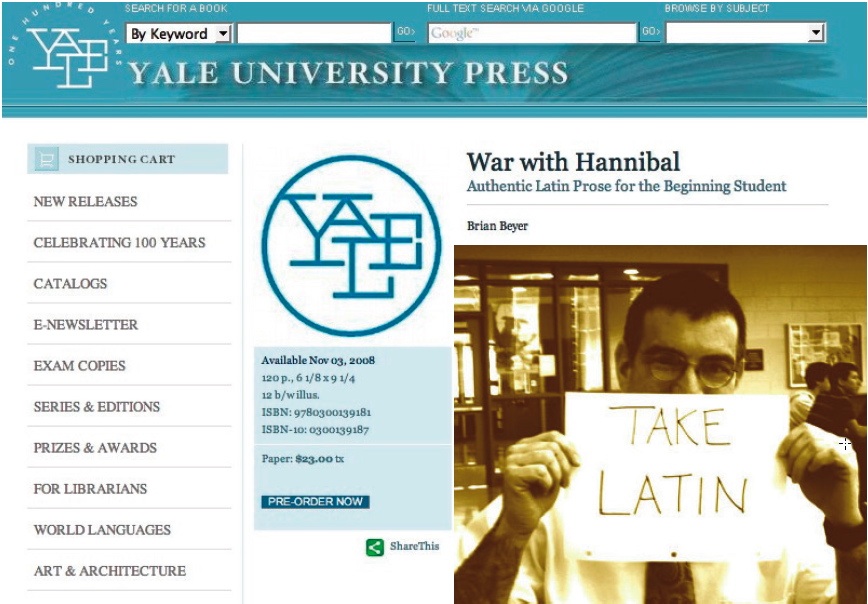
Brian Beyer received his MAT from Rutgers Classics in winter 2007. And in fall 2008 Yale University Press will publish his master’s thesis, an edition of Book III of Eutropius’s Breviarium of Roman history, aimed at the introductory Latin student.

Beyer’s work aims to solve an age-old problem in Latin pedagogy, namely, to supply the beginning Latin student with his/her first “real” Latin text after a semester and a half or a year’s introductory work on forms and grammar.

To address this issue, Beyer has pressed into service Eutropius, a fourth century AD summarizer of Roman history. In just ten books, Eutropius’ Breviarium historiae Romanae somehow manages to cover the story of Rome in a clear and accessible style from Romulus and Remus to the accession of the emperor Valens in AD 361.

Book III of the Breviarium covers the period of Roman history that students often find most interesting—the Second Punic War. In Beyer’s edition of this book—entitled War with Hannibal: Authentic Latin Prose for the Beginning Student—Eutropius’s narrative is presented with no adaptations or omissions past the (digressive) first sentence.

“Eutropius writes in good, standard classical Latin,”, points out UNC-Charlotte’s Dale Grote in the Preface to Beyer’s work, “so we don’t have to undo what we taught our students. His style is lucid and simple, without being insultingly juvenile. It challenges the emerging Latin students without annihilating their confidence, as Cicero does more often than not. Beyer supplements the readings with generous notes, which deftly point out the way without eliminating the little bit of pain that’s necessary to leave students a sense of accomplishment when they’ve worked things out.”

Brian Beyer’s first degree was in English, from Rutgers College. There he was a witness to history. “While an undergrad I took courses with [RU Classics professors] Palmer Bovie during his last semester at Rutgers, and Lowell Edmunds during his first.” T. Corey Brennan advised the MAT thesis.

Beyer currently teaches Latin in central New Jersey at Montgomery High School (“where we have over 120 incoming Latin students next year!”). Previously he taught Latin at Princeton High School, as part of the New Jersey Department of Education’s World Languages Model Program. He also taught English at Birmingham High School in Los Angeles in the Humanitas program.

While earning his MAT in Latin in the RU Classics department, Brian Beyer played an invaluable role as the Interlibrary Loan borrowing coordinator for Rutgers University Libraries. He lives in Highland Park NJ with his wife and three children.

But wait, there’s more.


Continue reading

Michael Sobota ’03, ’08: from Mason Gross to Morningside Heights

When it comes to “double majors”, it’s hard to top Michael Sobota ’08.

Sobota graduated from Rutgers this May in Classics (Greek and Latin option) with a minor in Art History. This 2008 bachelor’s degree is his second from Rutgers, the first being a B.M. with a major in French Horn Performance awarded by Mason Gross School of the Arts in 2003.

This September Sobota starts graduate study as a doctoral candidate in Columbia University’s interdisciplinary Classical Studies program. He aims to use his background in classical philology, music and art history to work toward “a comprehensive social understanding of antiquity”.

During his time at Rutgers’ Mason Gross School, Sobota played french horn in as many performance ensembles as possible: orchestra, wind ensemble, brass ensemble, horn quartet, wind quintet, brass quintet.

“When I came back to Rutgers full-time in September of 2005 to start the second degree,” Sobota recalls, “I played in the wind ensemble for one semester. But when I found myself studying Greek verb flashcards during a recording session, I realized I couldn’t maintain a serious commitment to both performing and Classics beyond that fall.” Still Michael performs in New Jersey as a much sought-after freelancer.

Sobota received a Rutgers College scholarship to attend the Rutgers Summer Study in Greece program in 2006. He also won a scholarship and grant from Rutgers’ Aresty Undergraduate Research Foundation to complete a Henry Rutgers Honors Thesis in 2008 entitled “Greek Lyric: Socio-political Reflections from the Archaic through Classical Periods,” under the direction of Professor Thomas J. Figueira.

So far this summer? “I spent a week in Sicily, with highlights including a visit to the Greek temples at Selinunte, seeing the sculptures in the Archaeological Museum in Palermo, and viewing medieval churches and palaces in the province of Trapani.”

David Danbeck ’08 and his journal The Pinax move to Yale

He sold cars at a Honda dealership, had a career in hotel management (night auditor), and has popped up here and there as an author, exhibited photographer, and musician (playing pretty much everything).

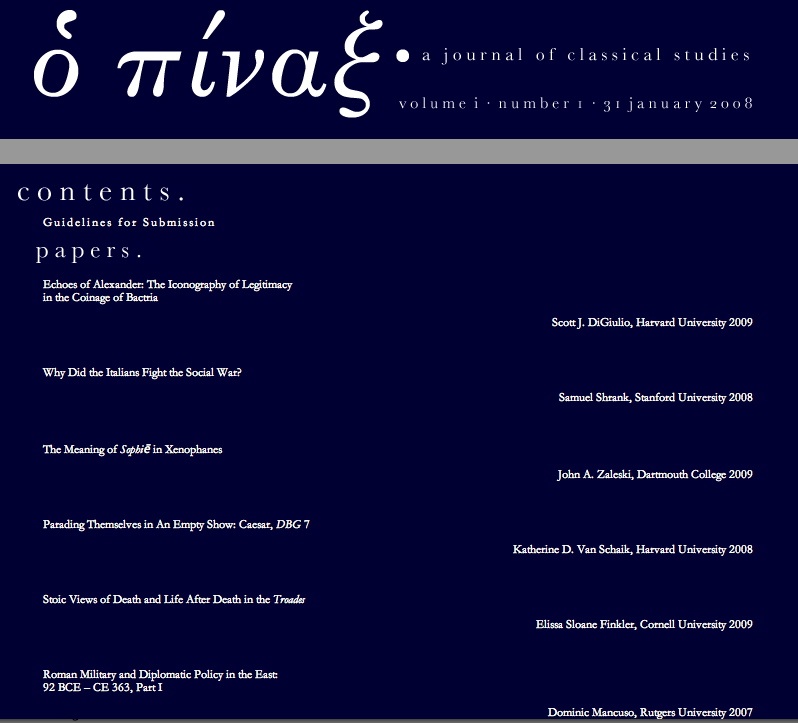
David Danbeck (Rutgers ’08) also founded a new venue for the dissemination of classical scholarship, The Pinax: A Journal of Classical Studies. Danbeck and his journal are soon to move to New Haven, where this September he will start graduate studies in Classics at Yale University.

The Pinax is a refereed journal published online twice yearly and consists of scholarship, reviews and opinion—all written by undergraduates. The inaugural January ’08 issue featured articles written by juniors and seniors at Cornell, Dartmouth, Harvard (bis), Rutgers, and Stanford.

As for its scope, “The Pinax publishes papers on all topics concerning the history and legacy of ancient mediterranean culture”, writes Danbeck. “The Journal is committed to fostering an environment which is conducive to the open exchange of ideas among emerging scholars in all disciplines which inform our knowledge of Graeco-Roman culture.”

Danbeck himself focuses on Greek literature, “especially anything but the 5th/early 4th c… [I’m] wed to Archaic, flirt with Hellenistic, salivate over Imperial and Byzantine.” At Rutgers Danbeck completed the requirements for two separate Classics majors, in Greek and in Latin literature, and graduated Phi Beta Kappa with highest departmental honors.

His Rutgers BA thesis treated the later reception of the Hesiodic Catalogue of Women in the poetry of Gregory of Nazianzus. And he long has been at work on a new edition of the Catalogue, freshly examining and collating the relevant manuscripts and papyri. Danbeck lists as his “current obsessions: ‘Hesiodic poetry’, epithalamia, Fracastoro’s Alcon, and teaching my cat Henry to meow [Charlie Mingus’] ‘Nostalgia in Times Square‘ (a hint: you can teach your cat a tune by whistling).”